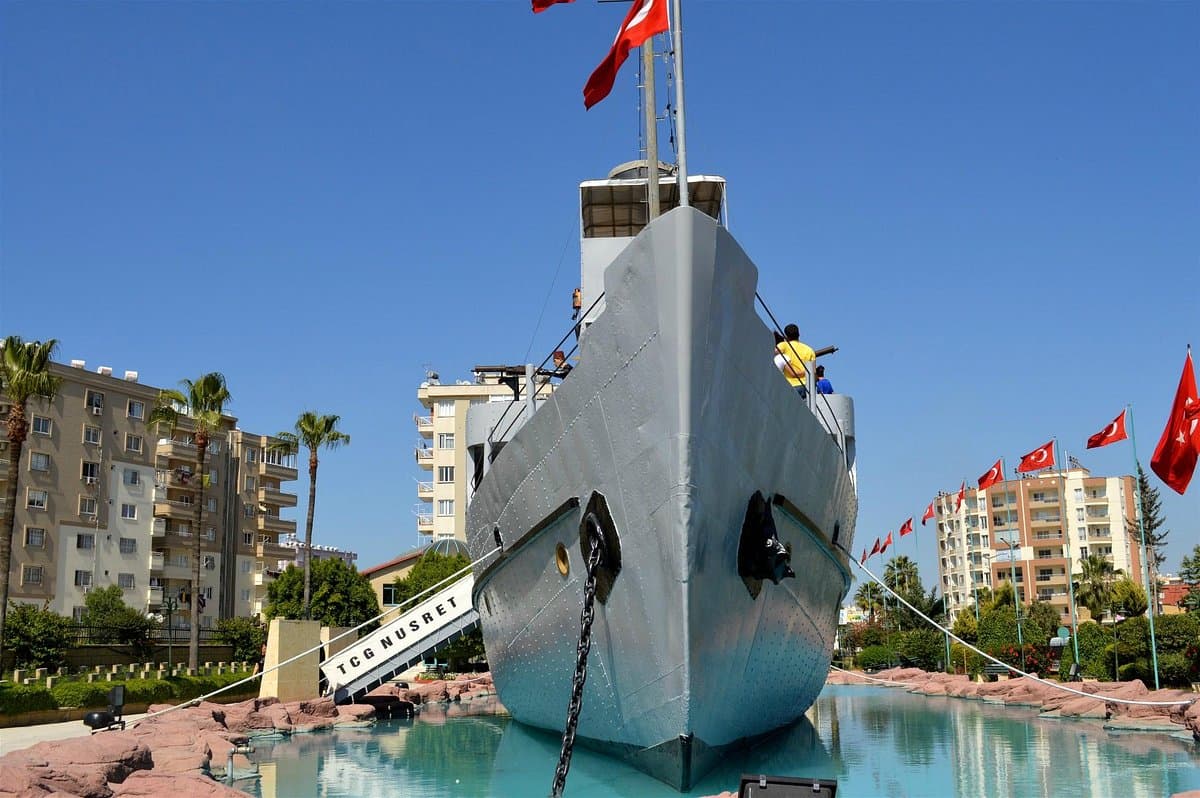
The Nusret Minelayer Museum is dedicated to the legendary Nusret minelayer, a ship that played a pivotal role in the Battle of Çanakkale (Gallipoli Campaign) during World War I. This museum offers a unique opportunity to step aboard a piece of living history, understanding the strategic importance of naval warfare and the sacrifices made during one of the war's most brutal campaigns. The ship's actions, particularly its daring mine-laying operation, are credited with significantly altering the course of the battle and, by extension, world history.
Visitors consistently praise the opportunity to walk directly on the decks of the actual ship, which many find to be a moving and immersive experience. The presence of life-sized replica mines helps visualize the ship's function. Families with children often report that kids enjoy exploring the vessel. Reviewers highlight the unexpected location of such a significant naval vessel miles inland in Tarsus, making it a surprising and rewarding stop. The museum is generally regarded as a great place to learn about the Turkish Navy's history and the Gallipoli Campaign.
To make the most of your visit, allocate about 1-2 hours to explore the ship thoroughly. It's best visited during daylight hours to fully appreciate the outdoor setting. There are no specific items to bring, but comfortable shoes are advisable for walking on the ship's decks. While it's not a traditional museum with extensive indoor exhibits, the ship itself is the main attraction. Consider reading up on the Gallipoli Campaign beforehand to enhance your understanding of the Nusret's historical context.
The museum is conveniently located on the D-400 highway, just west of the turn-off into Tarsus. This makes it easily accessible by car, and visitors often mention its prominent position. If you are driving through the region, it's a straightforward stop. Public transport options directly to the museum might be limited, so a private vehicle or taxi is likely the most practical way to reach it.
A common observation is that while it's an impressive ship, it's not a 'museum' in the conventional sense with many interactive displays or extensive historical texts. Visitors expecting a comprehensive indoor museum experience might find it more focused on the ship itself. To mitigate this, approach it as an opportunity to physically experience a historical vessel rather than a traditional museum, and supplement your visit with prior research on its history.