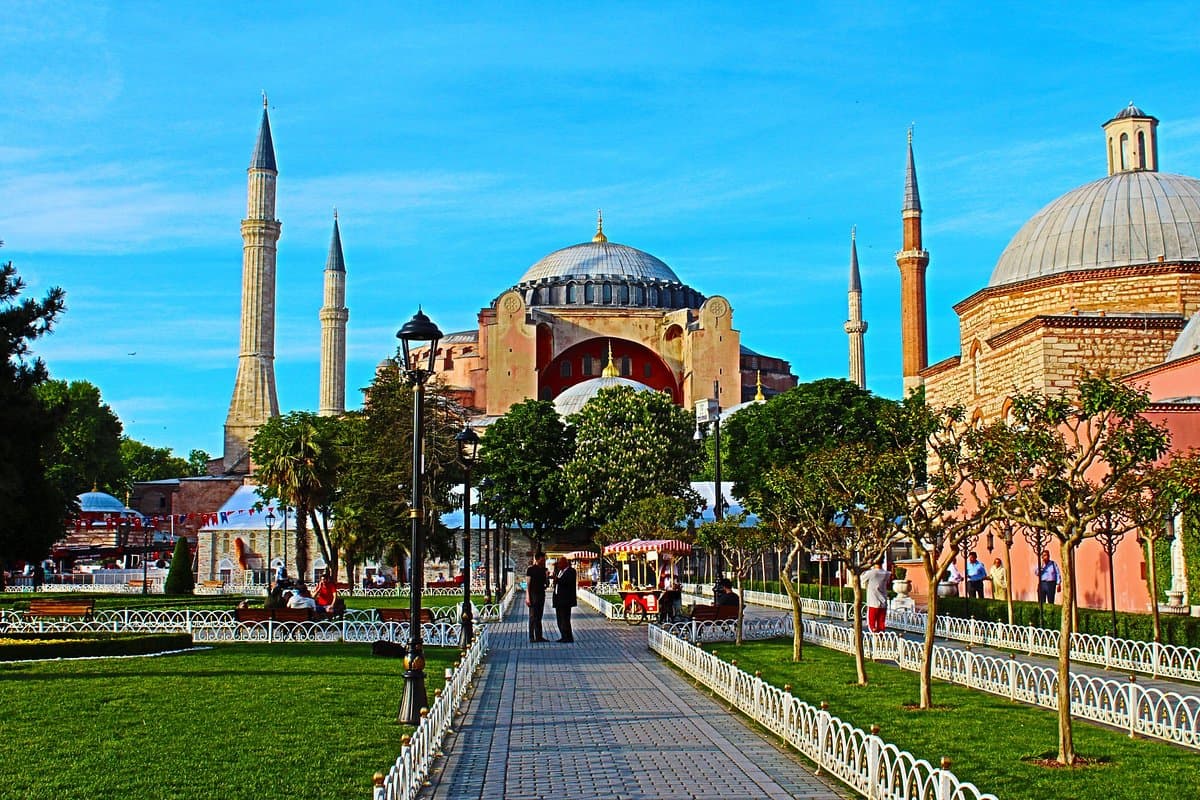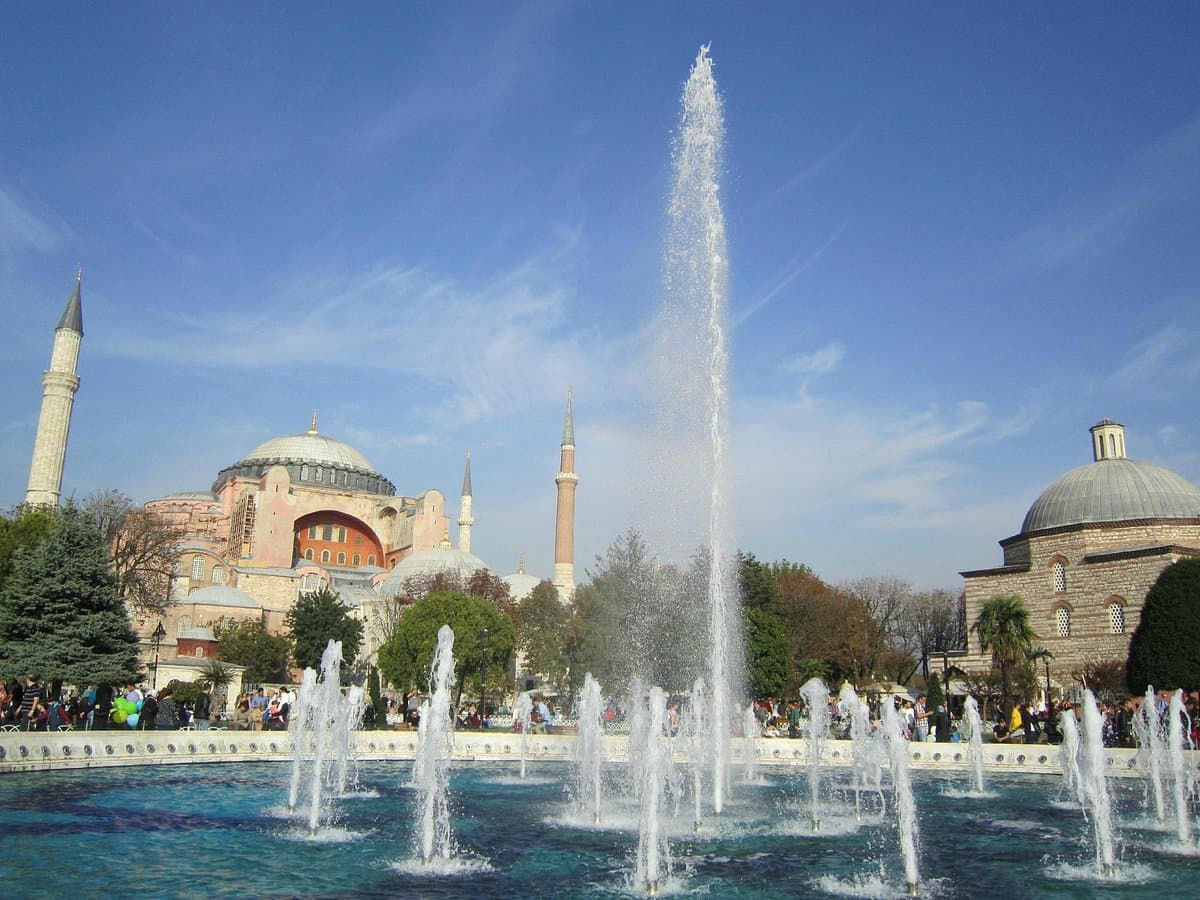
The Hippodrome of Constantinople was a monumental chariot-racing arena built by Roman emperor Septimius Severus around 200 CE and enlarged by Constantine I in 330 CE. It once stretched over 450 metres long and 120 metres wide, with terraced seating for up to 100,000 spectators. Today, the physical structure has vanished entirely, replaced by Sultanahmet Square—a sprawling public plaza that traces the original oval footprint. What remains are scattered monuments positioned along the ancient spina (the central dividing wall where chariots raced), requiring visitors to exercise considerable imagination to envision the site's former glory.
Visitors consistently note that the Hippodrome's appeal hinges almost entirely on historical knowledge and context. Those with a guide or prior research report finding the site fascinating and atmospheric; those without often perceive it as merely an empty, crowded square. The three main surviving monuments—the Egyptian Obelisk of Theodosius (originally from Luxor, dating to 1500 BCE), the Serpent Column (a bronze sculpture from Delphi with its three serpent heads missing), and the Walled Obelisk (once covered in bronze, now stripped)—are impressive individually but require interpretation boards or expert explanation to convey their significance. The German Fountain, a gift from Kaiser Wilhelm II, adds architectural interest but is secondary to the obelisks. Visitors praise the peaceful atmosphere in early morning hours and note that the square is less congested than nearby Sultan Ahmed Park, making it a good spot to pause between visits to the Blue Mosque and Hagia Sophia.
Plan to spend 15–30 minutes here, depending on your interest in history. Early morning (before 9 AM) offers the quietest experience and best photography light. If you lack historical background, download a guide app or hire a local guide (widely available in the square) to unlock the site's meaning; without this, many visitors report feeling the time is wasted. Bring water and comfortable walking shoes, as the plaza is entirely open with minimal shade. The area is crowded with street vendors selling roasted corn, chestnuts, and souvenirs; prices are inflated for tourists. Information boards in multiple languages are posted at key monuments, though they are sometimes difficult to locate. The site is free to access and open 24/7, though it is best visited during daylight hours for safety and visibility.
The Hippodrome is located in the heart of the Sultanahmet district, directly adjacent to the Blue Mosque (Sultan Ahmed Camii) and a short walk from Hagia Sophia. If arriving by tram, get off at the Sultanahmet stop on the T1 line; the Hippodrome is immediately adjacent to the tram station. From Topkapi Palace, it is a 10–15 minute walk downhill. From the Basilica Cistern, it is a 5-minute walk. The site is entirely pedestrian and requires no special access; simply enter the square from any direction. Taxis can drop visitors at the square's edge, though the driver may need clarification that you mean Sultanahmet Meydanı (the square's Turkish name). There is no dedicated parking, but several paid car parks exist nearby for those driving. The area is well-policed and safe, with English-speaking tourist police present during peak hours.
Common frustrations centre on the site's invisibility without context. Many visitors walk through without realizing they are standing on an ancient monument, leading to disappointment. The square is also heavily trafficked by tour groups, street vendors, and casual pedestrians, which can diminish the sense of historical immersion. The ground level has risen approximately 3 metres since Roman times, further obscuring the original structure. To mitigate these issues, arrive early in the morning, use a guide or historical app before visiting, and focus on the three main obelisks rather than trying to mentally reconstruct the entire arena. If you are short on time or uninterested in history, it is safe to skip the Hippodrome entirely and focus on the adjacent mosques and museums, which offer more tangible historical experiences.