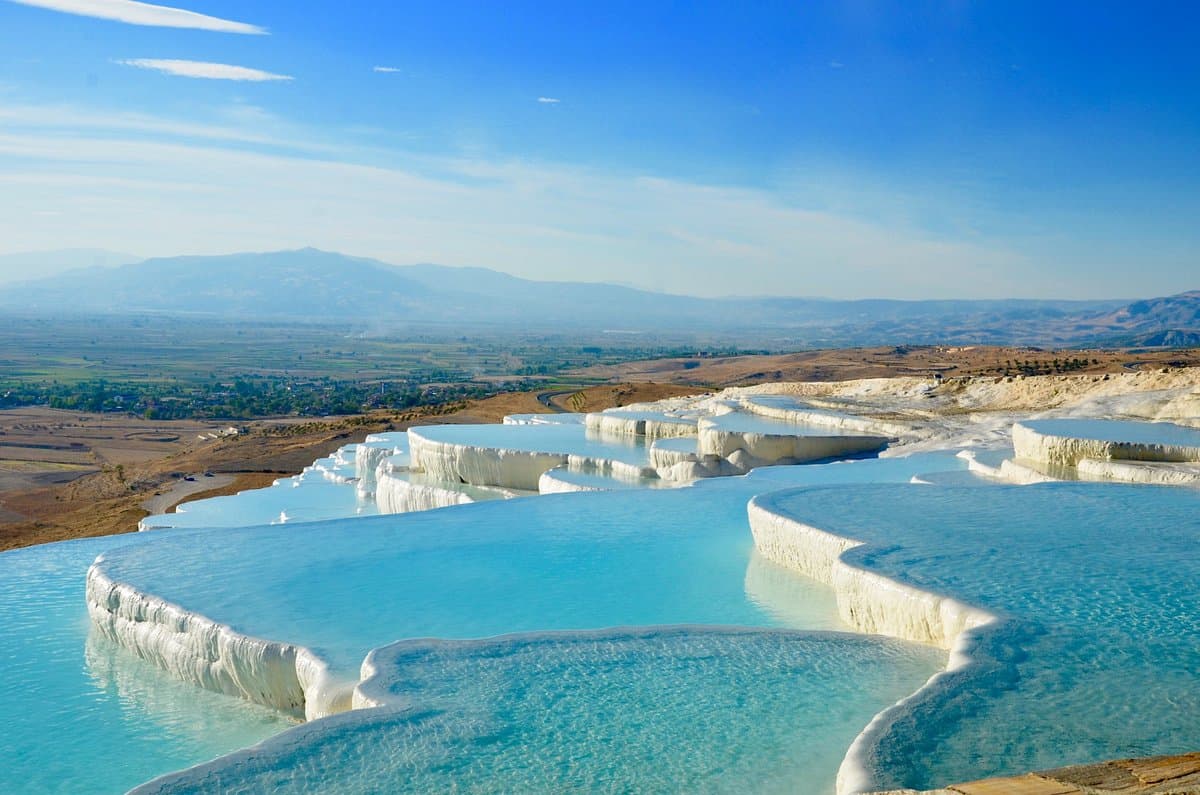
Pamukkale, meaning 'Cotton Castle' in Turkish, is a UNESCO World Heritage site renowned for its dazzling white travertine terraces formed by mineral-rich thermal waters flowing down the hillside for millennia. This natural wonder is uniquely combined with the ancient Greco-Roman city of Hierapolis, offering visitors a dual experience of geological marvel and historical exploration. The site's striking appearance, often compared to snow or cotton, makes it one of Turkey's most iconic and photographed destinations.
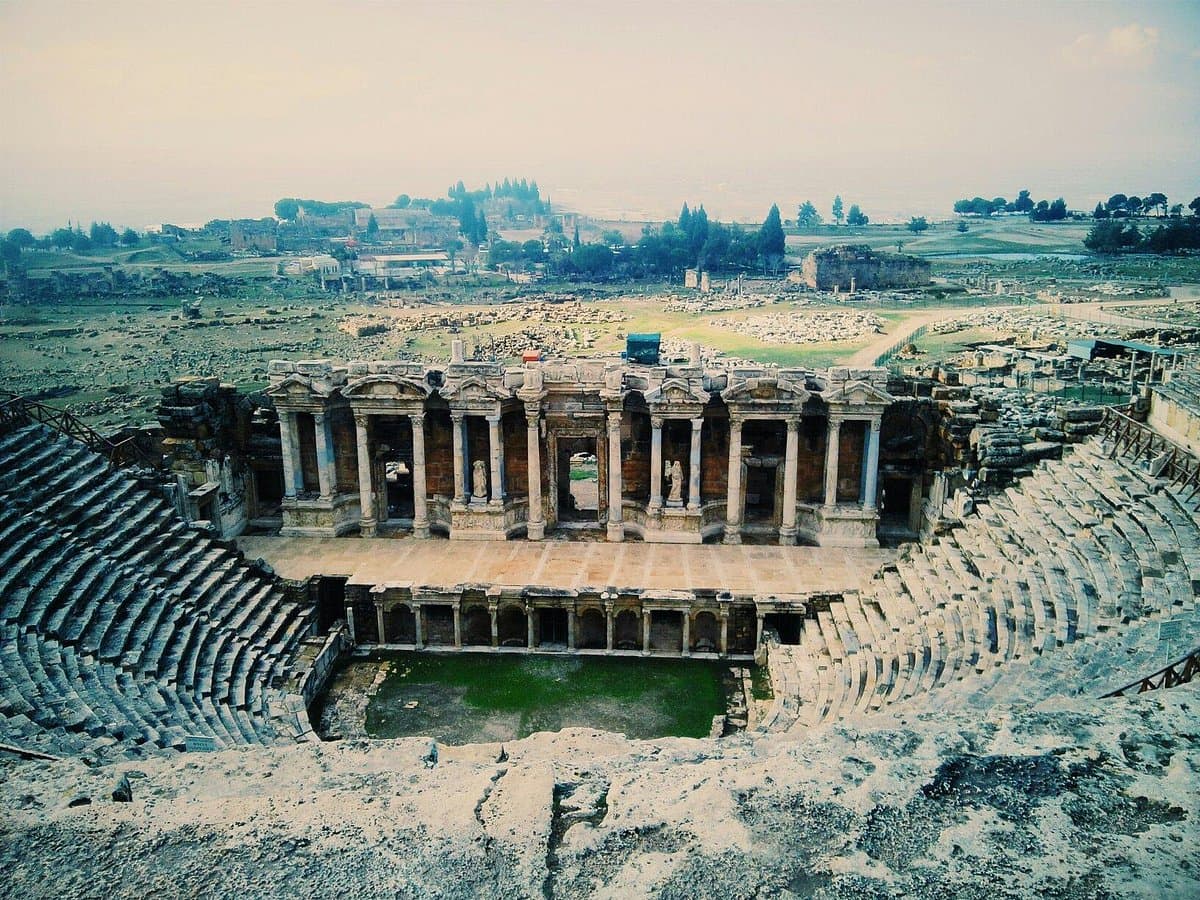
Visitors consistently praise the unparalleled beauty and unique experience of walking barefoot through the warm, shallow pools. Many describe it as a 'must-see' and 'out of this world' destination, with the bright blue water against the white terraces creating stunning photo opportunities, especially at sunrise or sunset. The integration of the Hierapolis ruins, including a well-preserved amphitheater, adds significant historical depth to the visit, with many reviewers recommending ample time to explore both the natural formations and the archaeological site. The feeling of the warm water on tired feet is frequently highlighted as a pleasant surprise.
To make the most of your visit, arrive early (before 8 AM) or late (after 3 PM) to avoid the peak crowds, especially tour buses. Staying overnight in Pamukkale town allows for an early morning entry, which many visitors found significantly enhanced their experience, sometimes even catching hot air balloons over the pools. Bring sunglasses to counter the intense glare from the white surfaces and an extra bag for shoes, as walking barefoot is mandatory on the travertines. While the water isn't always hot, it's generally comfortable for wading. Be prepared for slippery surfaces, especially where moss has grown, and some areas can be rocky and painful for sensitive feet. Consider bringing water shoes or thick socks to wear until you reach the main wading areas, though you'll need to remove them for the terraces themselves. A waterproof bag is advisable for electronics and valuables if you plan to wade extensively.
Pamukkale is located near Denizli. Many visitors arrive by bus from major cities like Antalya, Izmir, or Cappadocia to Denizli, then take a local dolmuş (minibus) or taxi to Pamukkale town. There are three main entrances: the South Gate (often used by tour groups, leading directly to the travertines), the North Gate (closer to Hierapolis and requiring a longer walk to the pools), and the town entrance (convenient for those staying in Pamukkale). If driving, parking is available. Some reviewers mention shuttle services within the site, particularly for reaching Hierapolis from the pools.
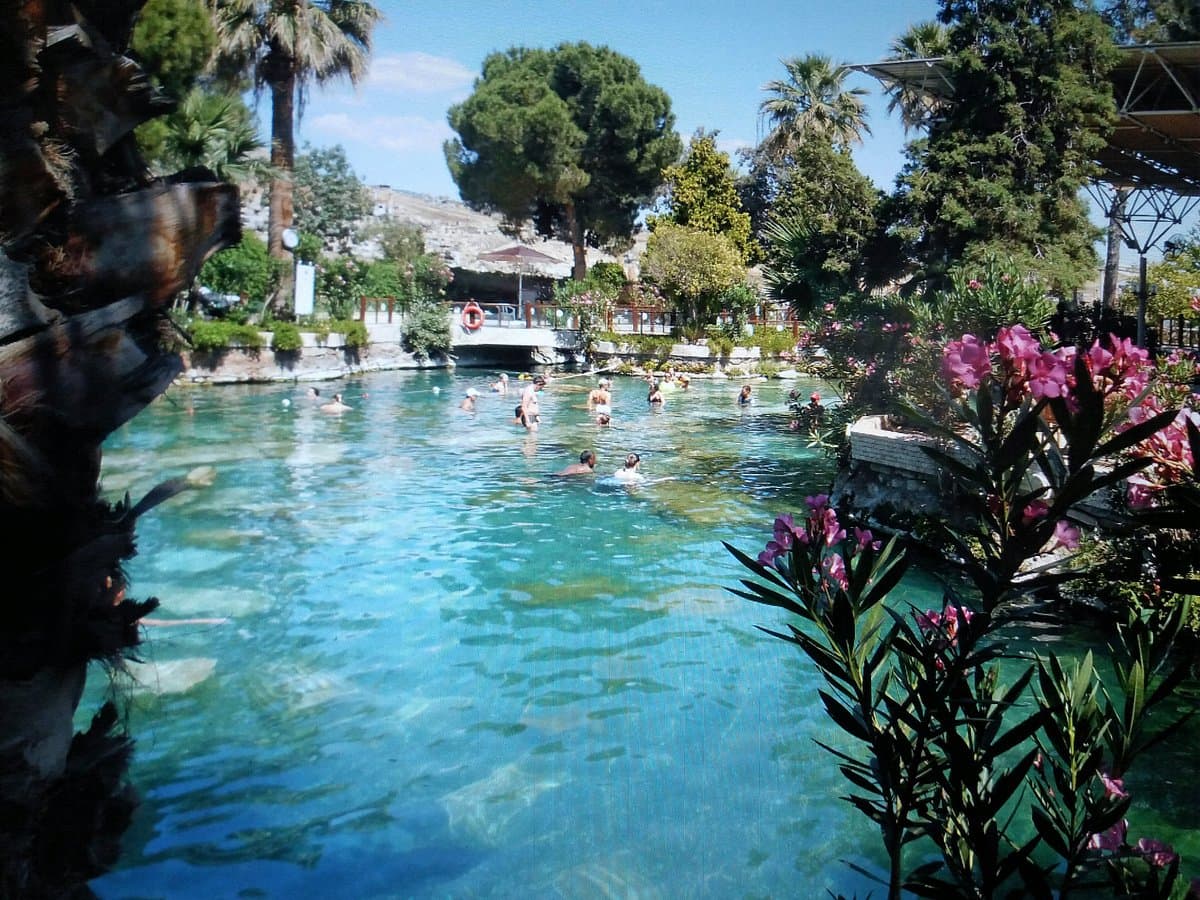
A recurring complaint among visitors is that the actual appearance of the pools often differs from promotional photos, with many terraces being dry or having less water than expected due to water management. The 'Cleopatra Pool' (an ancient thermal pool where you can swim for an additional fee) is also frequently mentioned as being closed for renovation, leading to disappointment for those who planned to swim there. Another significant issue is the ticket pricing and alleged scams at the entrance: foreign tourists pay significantly more (around €30-€40) than locals, and some ticket vendors reportedly try to overcharge or add unwanted audio guides. To mitigate this, be firm about what you want to purchase, clarify the exact price in Turkish Lira, and be wary of unfavorable exchange rates if paying in Euros. While the site can be crowded, especially the main wading areas, exploring the Hierapolis ruins offers a quieter experience.