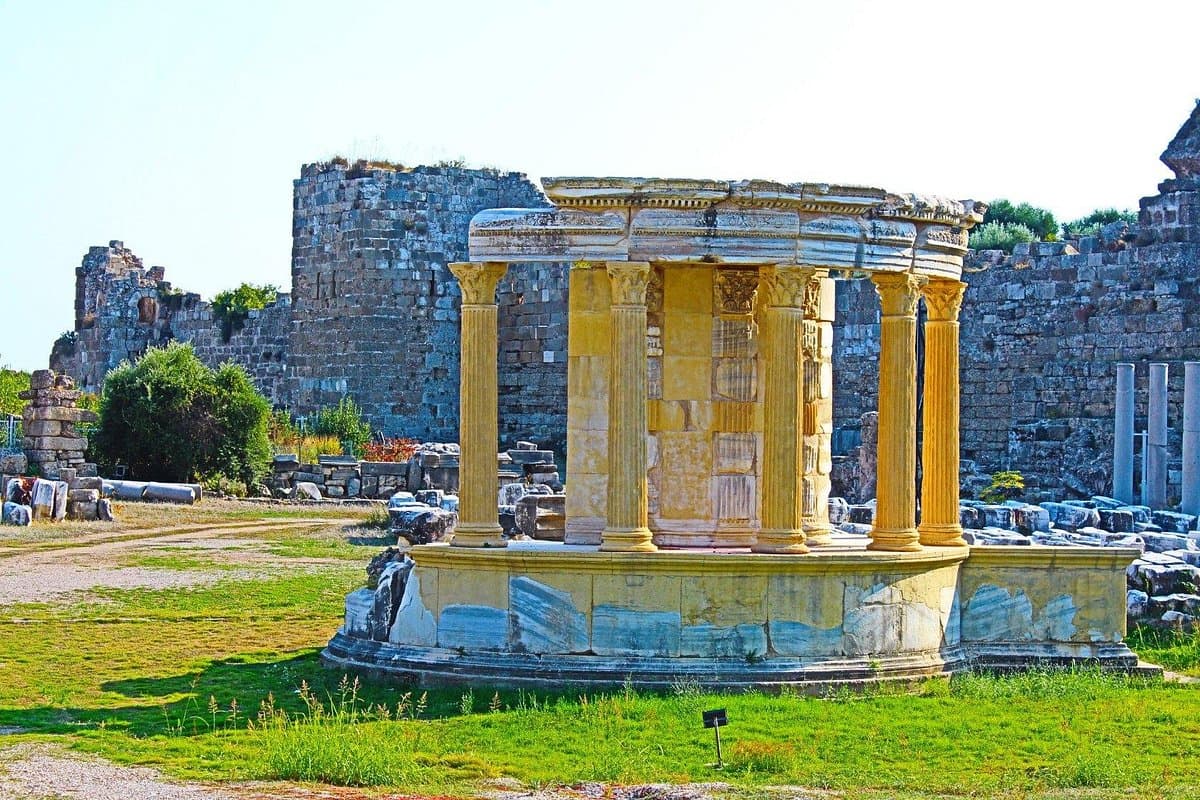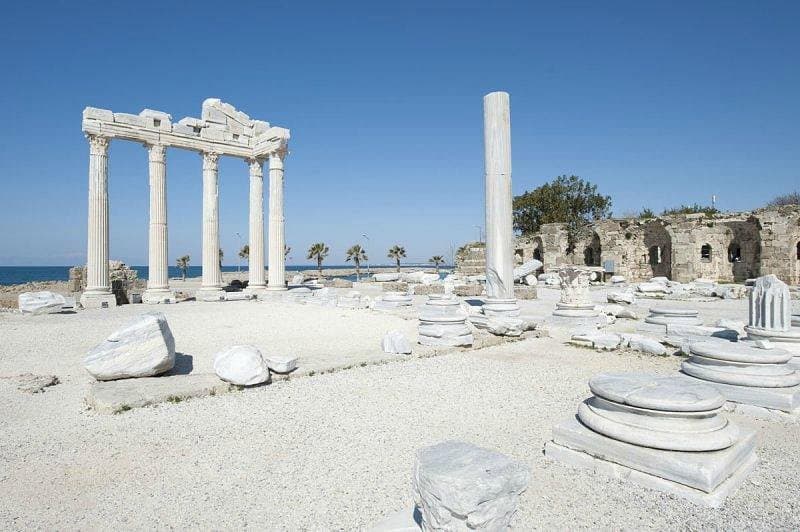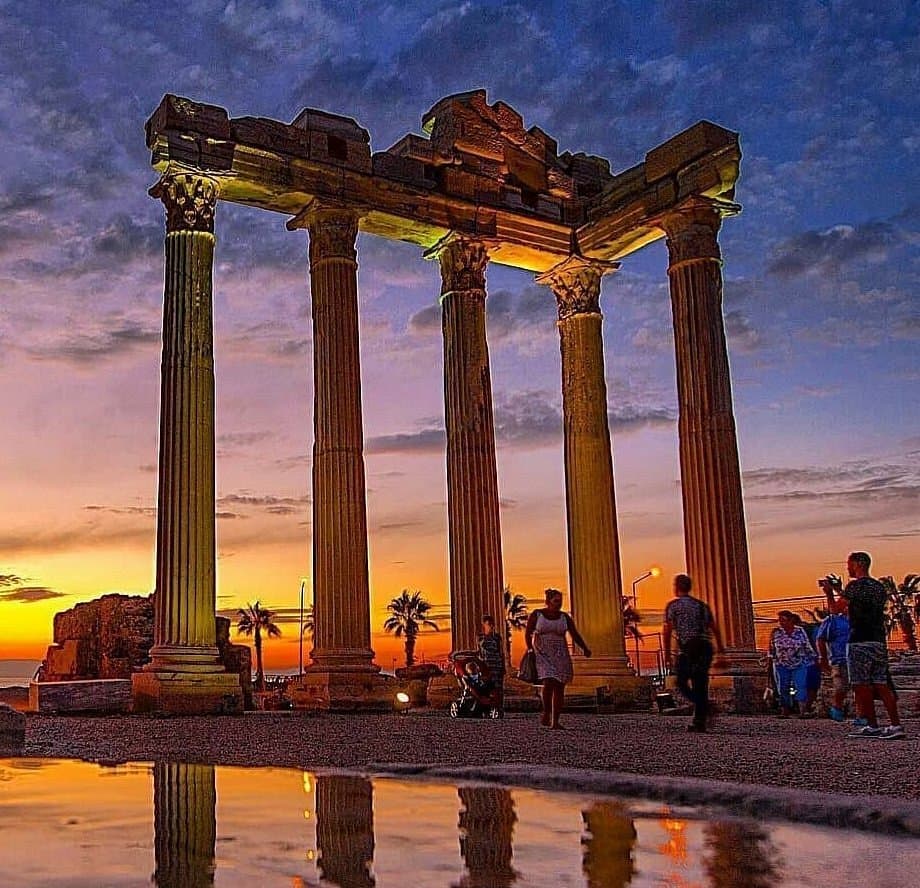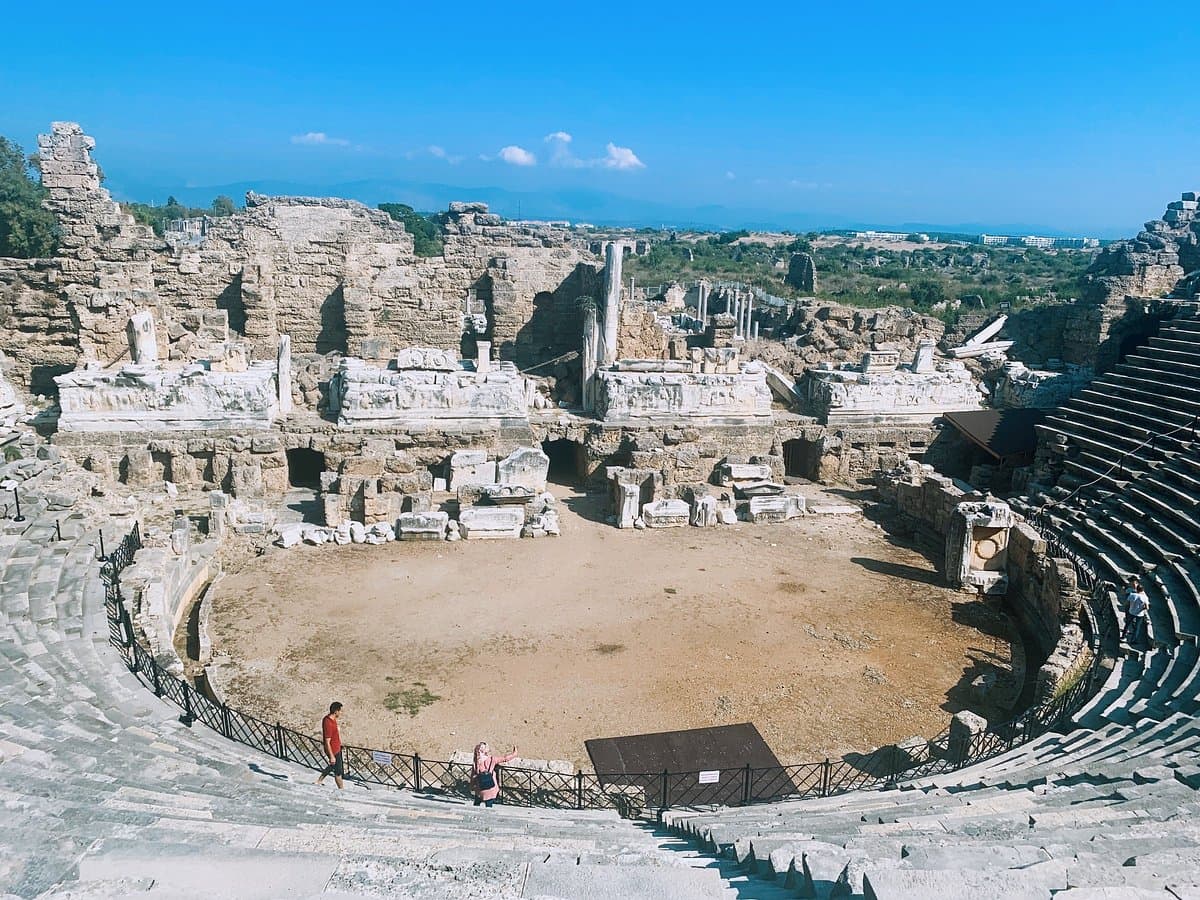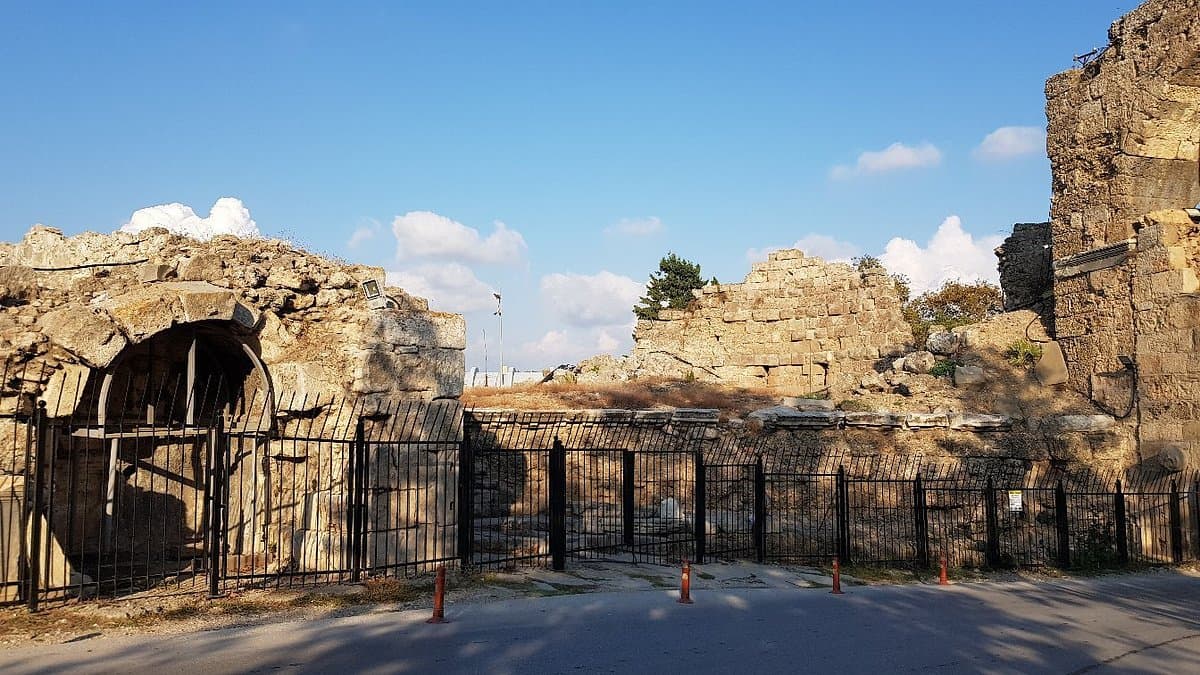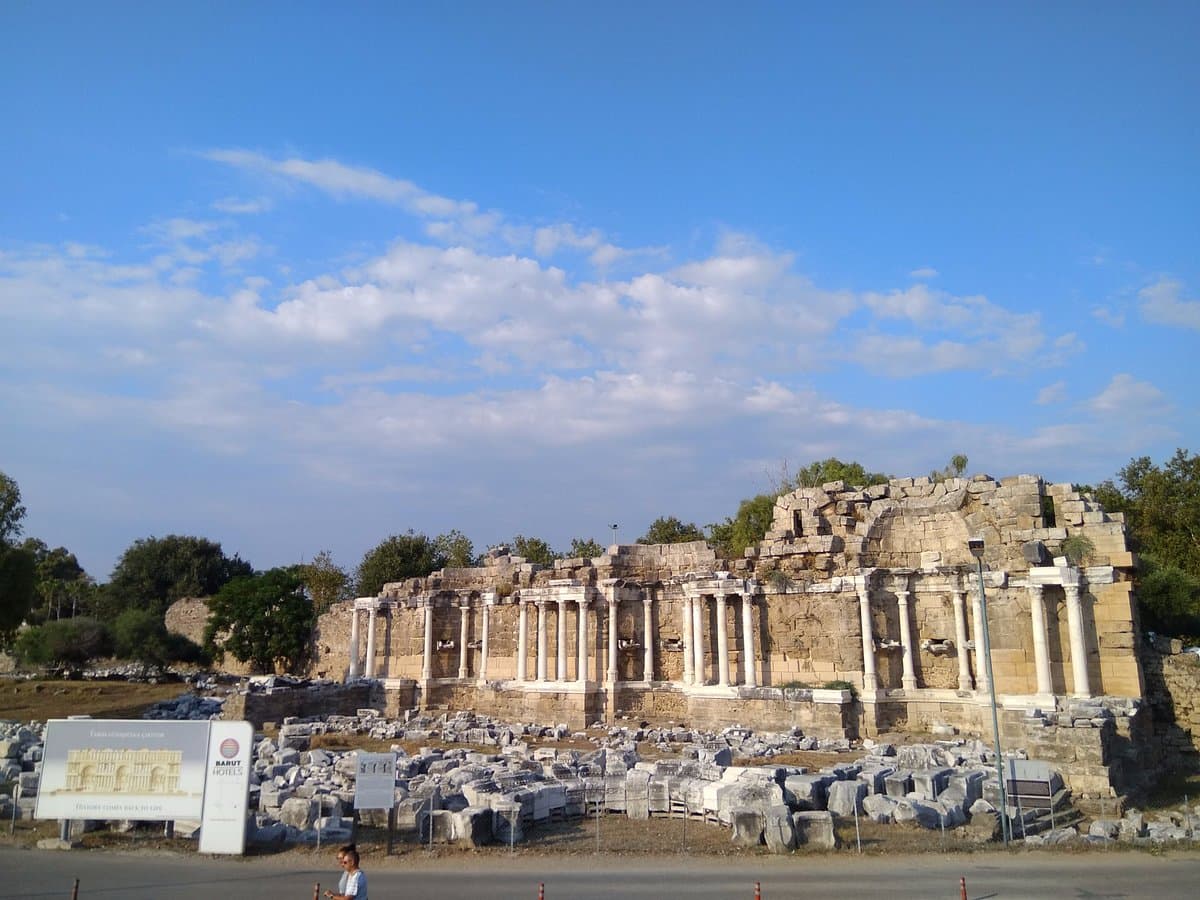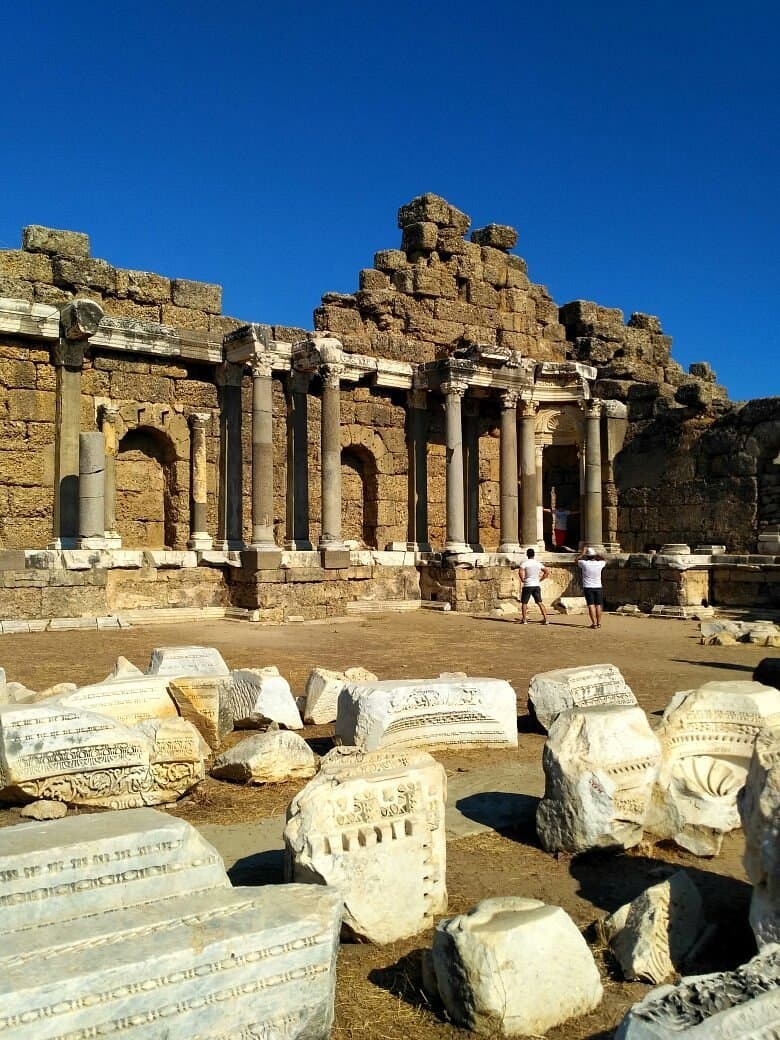
The Vespasian Gate, or Vespasianus Aniti, is a monumental Roman archway that once served as the primary entrance to the ancient city of Side. Constructed in the 1st century AD, it stands as a testament to the Roman influence and engineering prowess in the region. Today, it marks the transition from modern Side to its ancient counterpart, providing a dramatic and historically rich entry point for visitors exploring the extensive ruins.
Visitors consistently praise the gate for its impressive architecture and its atmospheric role as a gateway to the ancient city. Many reviewers highlight the excellent photo opportunities it offers, especially when framed against the backdrop of other ruins. The gate is often seen as a starting point for exploring the nearby amphitheater, museum, and colonnaded streets. However, a recurring theme in reviews is the challenge posed by its location on a busy road. The constant flow of vehicular and pedestrian traffic can make it difficult to fully appreciate the structure or capture unobstructed photographs, with some suggesting visiting early in the morning to avoid crowds and traffic.
To make the most of your visit, allocate about 15-30 minutes specifically for the gate itself, though you'll likely pass through it multiple times if exploring the ancient city. Good footwear is recommended, as the surrounding ancient areas can have uneven terrain. While the gate itself is free to view, the adjacent Side Museum has an admission fee. Consider visiting in the early morning or late afternoon to avoid the midday heat and larger crowds, which also improves photo opportunities. Be mindful of the traffic when taking pictures, as cars can approach quickly.
The Vespasian Gate is centrally located within Side and is easily accessible. Many visitors arrive by walking from their accommodations or by taking a local dolmuş (minibus) which often passes directly through or near the archway. If driving, be aware that the road through the arch can be very narrow and busy, making parking challenging nearby. It's often more convenient to park further away and walk, or to use the free dolmuş service that some reviewers mention.
The main complaint revolves around the heavy traffic that passes directly through and around the arch. This makes it challenging to get clear photos or to stand and admire the structure without feeling rushed or unsafe. To mitigate this, plan your visit for quieter times, such as early mornings. Be extra cautious of vehicles and other pedestrians, especially when stepping off the pavement to get a better view or photo.