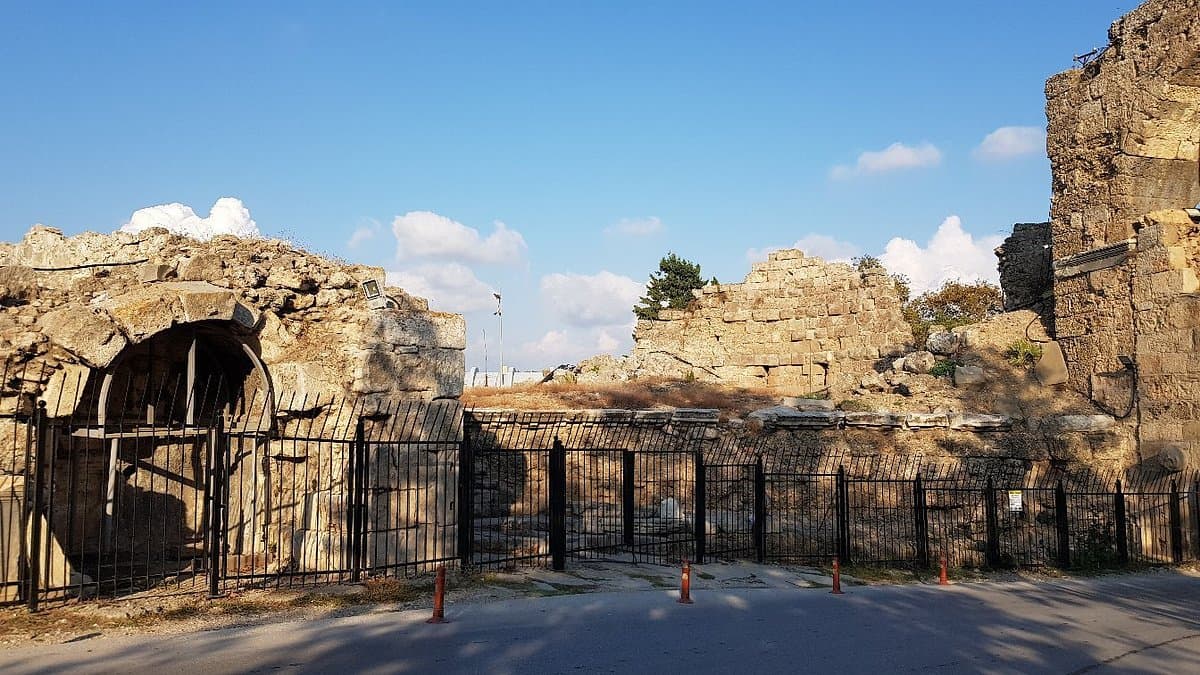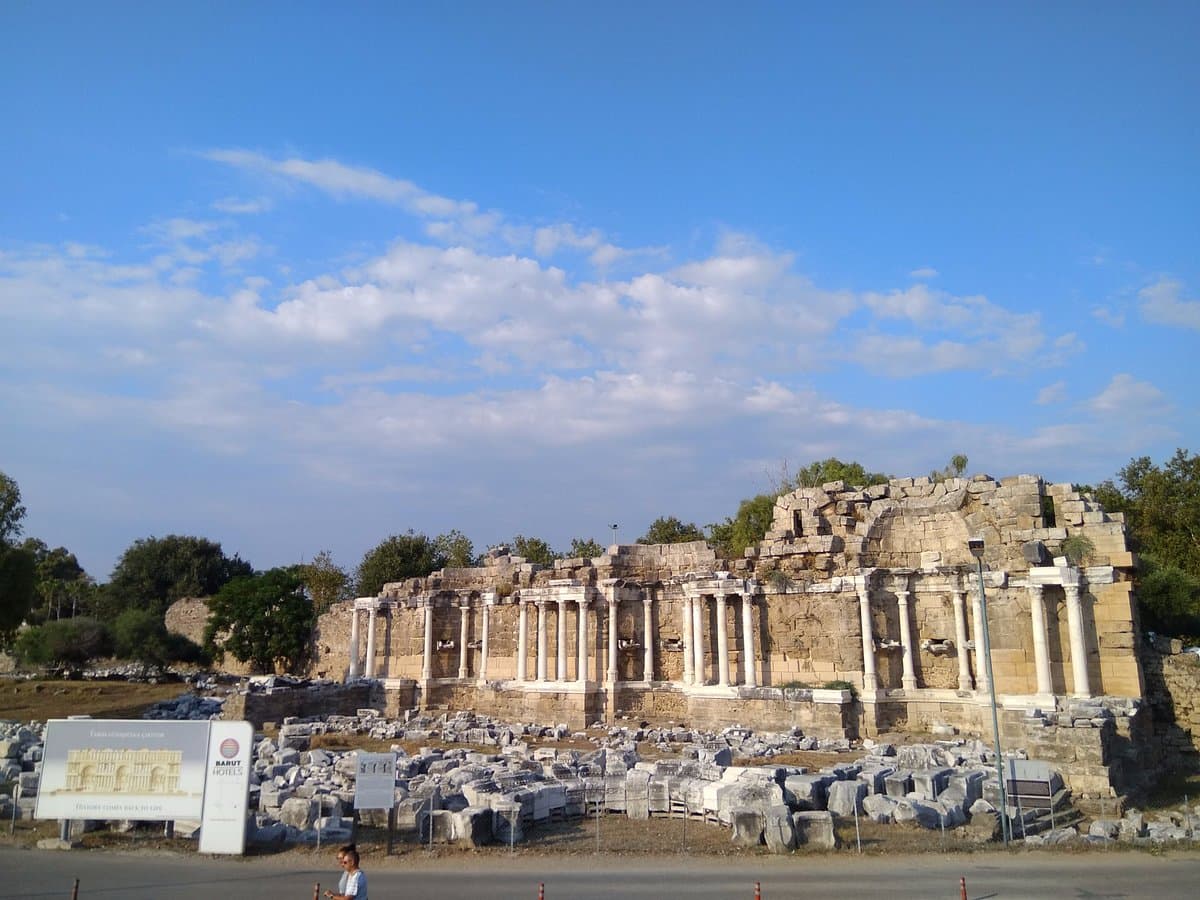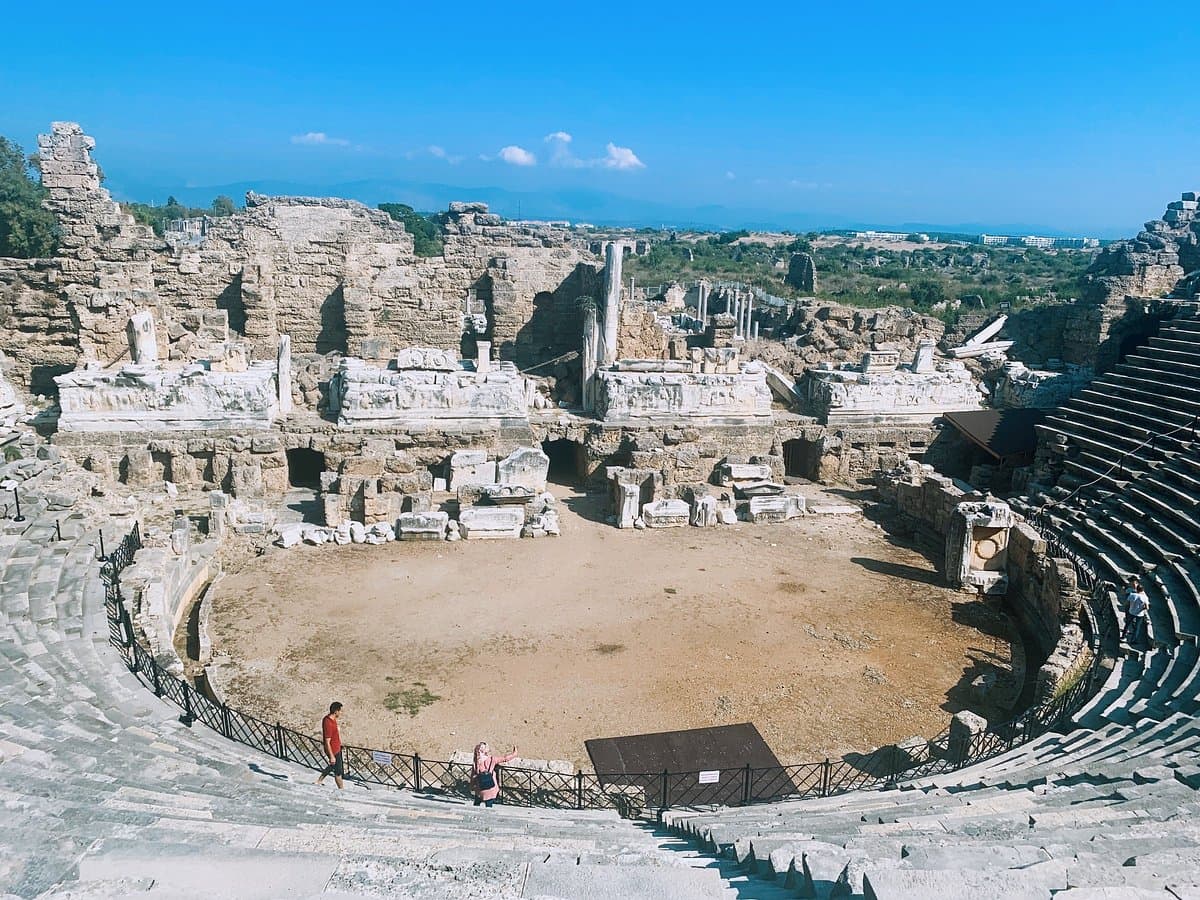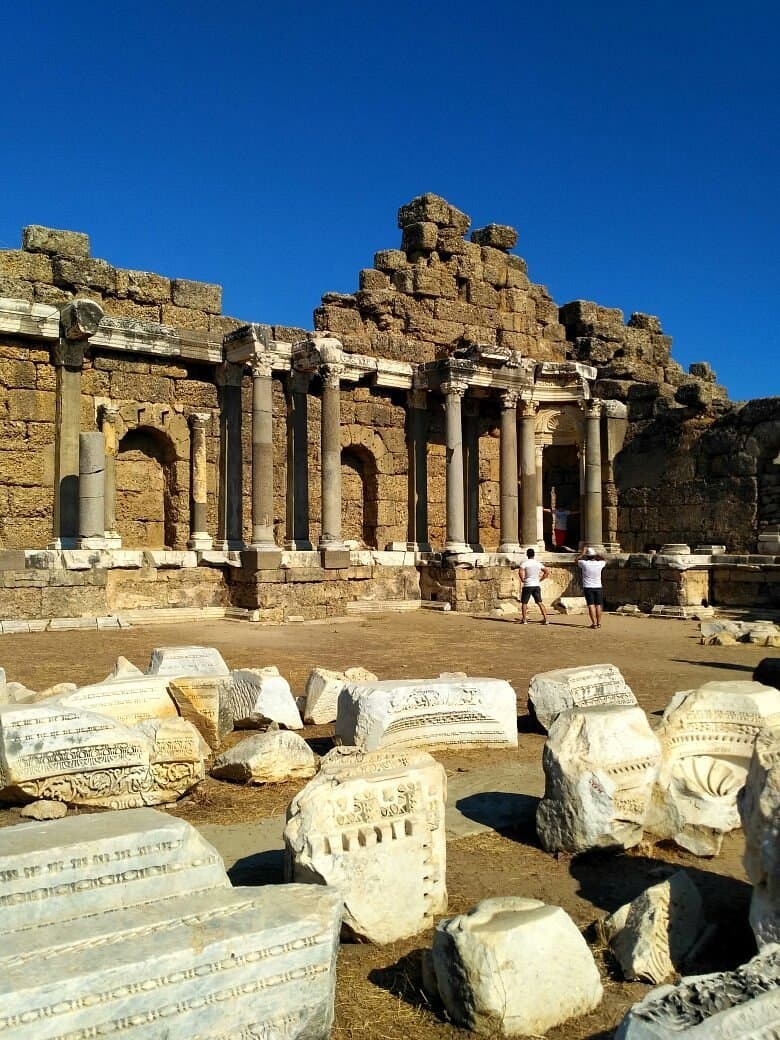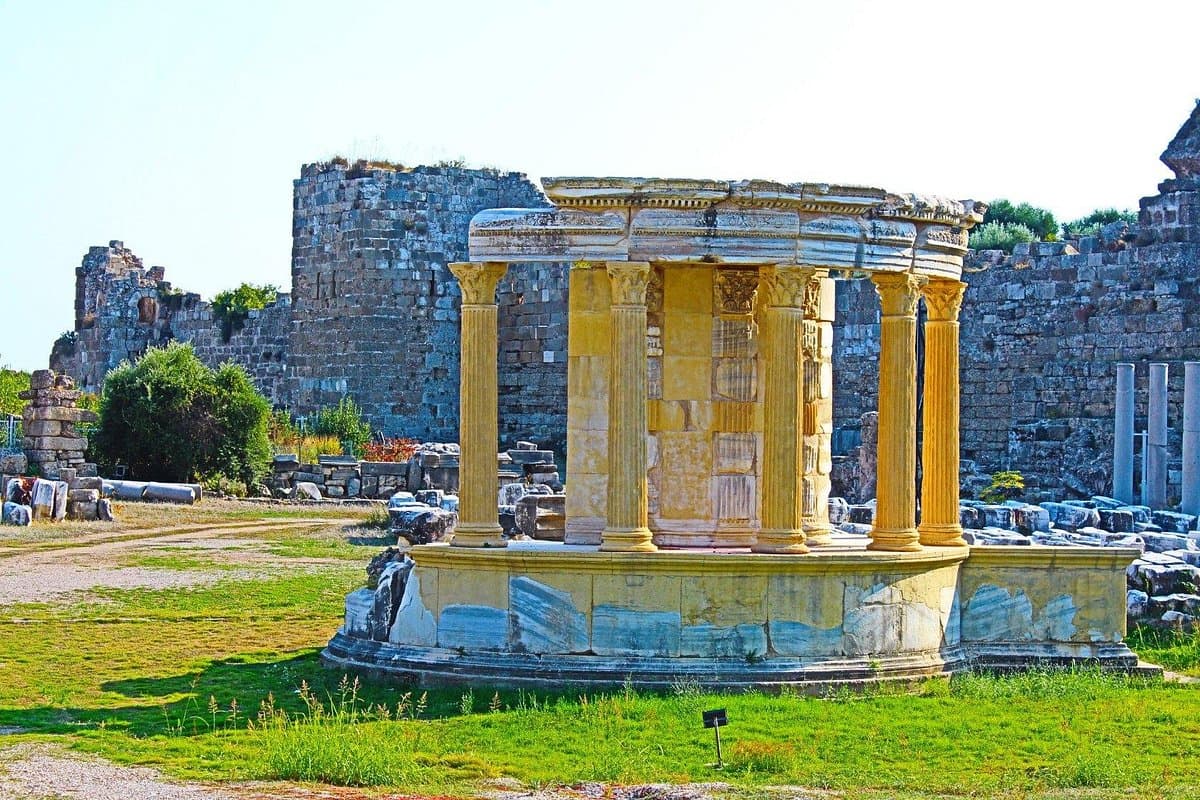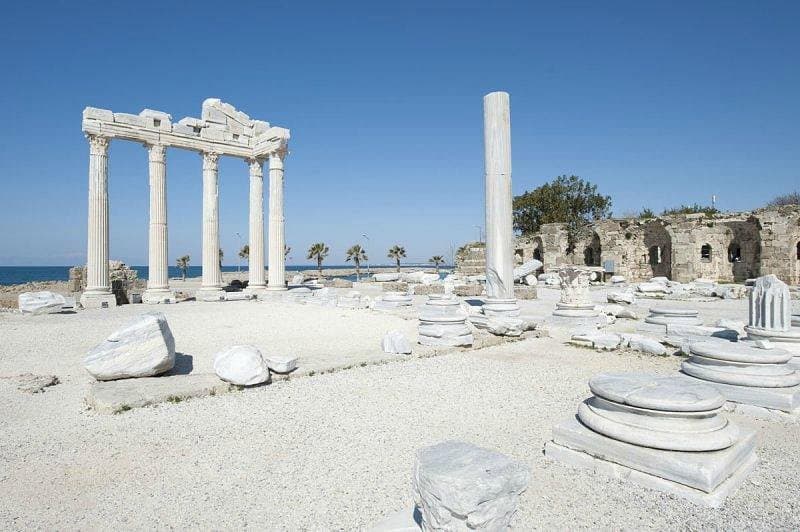
Side Ancient City is a remarkable archaeological site located on a peninsula, offering a unique fusion of ancient history and contemporary Turkish life. Unlike many other ancient cities, Side is not merely a collection of ruins; it's a living, breathing town built directly atop and around its historical foundations. This creates an unparalleled experience where visitors can literally walk through millennia of history, from Hellenistic to Roman, Byzantine, Seljuk, and Ottoman periods, with ancient structures integrated into modern shops, restaurants, and homes.
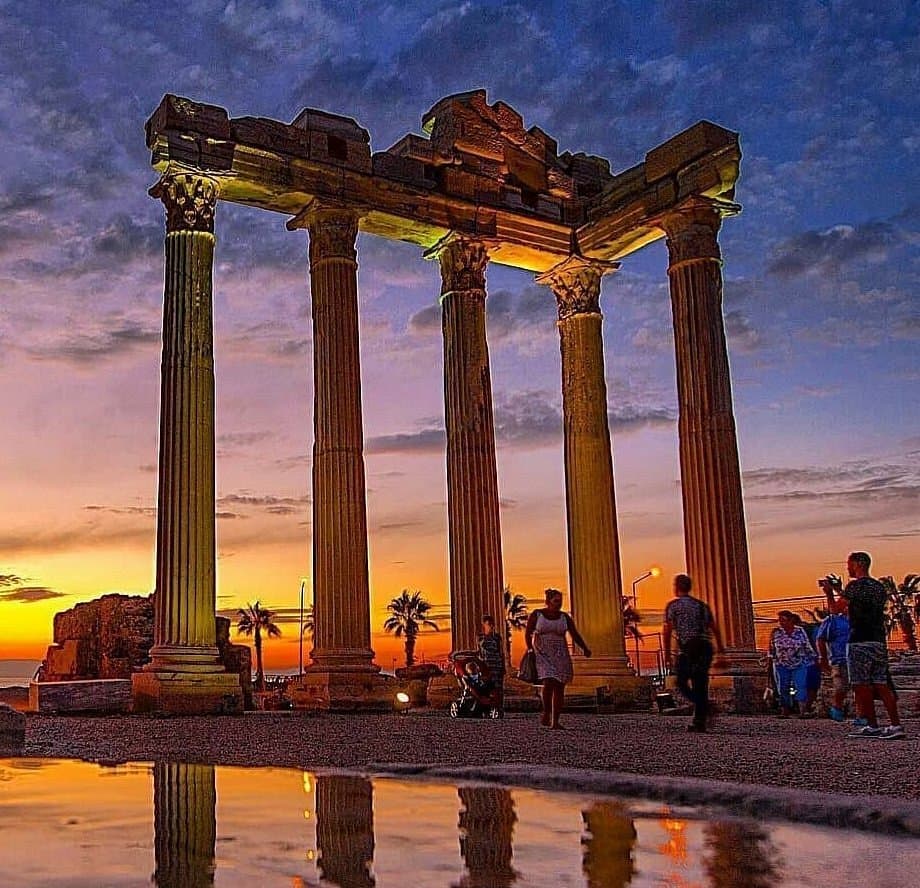
Visitors consistently praise the atmospheric blend of old and new, highlighting the opportunity to explore extensive ruins, including the Roman Theatre, the Nymphaeum, and the iconic Temple of Apollo, often without fences. Many appreciate the ongoing restoration efforts, noting that the site is continually being improved and new discoveries are made. The glass floors installed in some areas, allowing views of underground excavations, are frequently mentioned as an innovative and engaging feature. However, some visitors express frustration with ongoing construction, which can limit access to certain areas like the theater and agora at times. The presence of numerous shops and restaurants within the ancient city is a mixed bag for reviewers; while some enjoy the convenience and lively atmosphere, others feel it detracts from the historical authenticity and can be overly commercial.
To make the most of your visit, wear comfortable shoes as you'll be walking on uneven ancient streets and stones. Many recommend visiting early in the morning or late in the afternoon/evening to avoid the midday heat and larger crowds, especially during summer. The site is beautifully lit at night, offering a different, magical experience. While much of the ancient city is free to explore, the Roman Theatre and the museum typically require a separate entry fee, which some visitors found to be around 17 euros for the amphitheater. It's advisable to carry Turkish Lira for these paid attractions and for purchases in local shops, as some vendors prefer it over euros. Plan to spend at least 2-3 hours, but a full day can easily be filled if you wish to explore thoroughly, visit the museum, and enjoy a meal by the harbor.
Getting to Side Ancient City is relatively straightforward. If you're staying in the wider Antalya region, minibuses (dolmuş) are a common and affordable option, often dropping visitors at the main bus station outside the old town. From there, a free shuttle service provided by the municipality can take you closer to the center, or you can enjoy a pleasant walk. Driving is also an option, with parking available outside the pedestrianized ancient city area. Many visitors note that the main entrance to the ancient city is easily accessible on foot from the bus drop-off points, with the Nymphaeum often being the first major ruin encountered.
A common complaint revolves around the commercialization of the area, with numerous shops and restaurants sometimes overshadowing the historical significance. To mitigate this, focus on the less crowded side streets and areas further from the main promenade. Some visitors also report aggressive shopkeepers or scam attempts, particularly in the harbor area; it's best to be firm but polite if you're not interested in buying. Additionally, the lack of detailed information panels or guides at some points can be frustrating for those seeking deeper historical context. Consider downloading an audio guide or researching key sites beforehand to enhance your understanding.