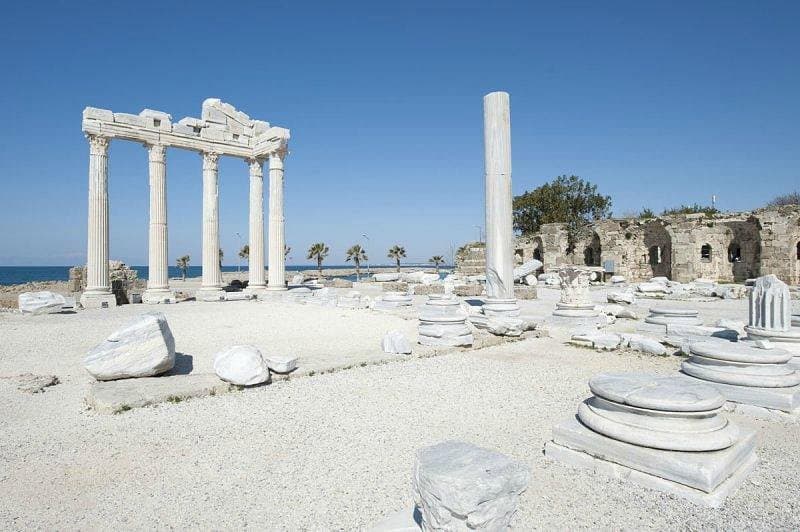
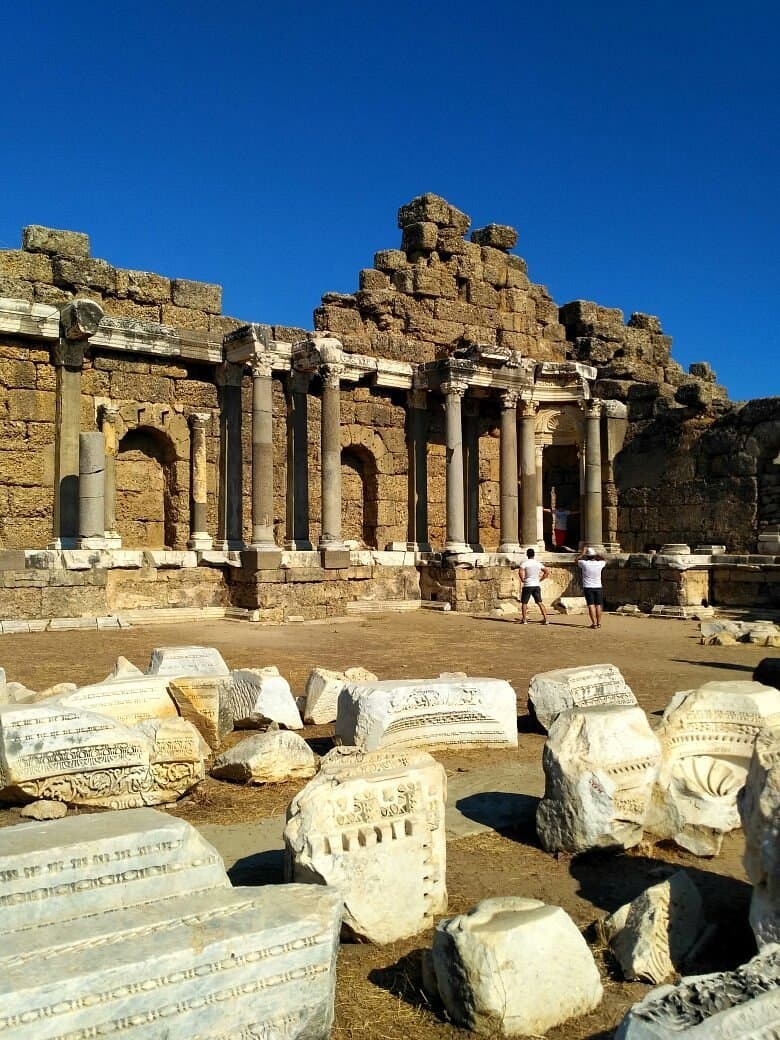
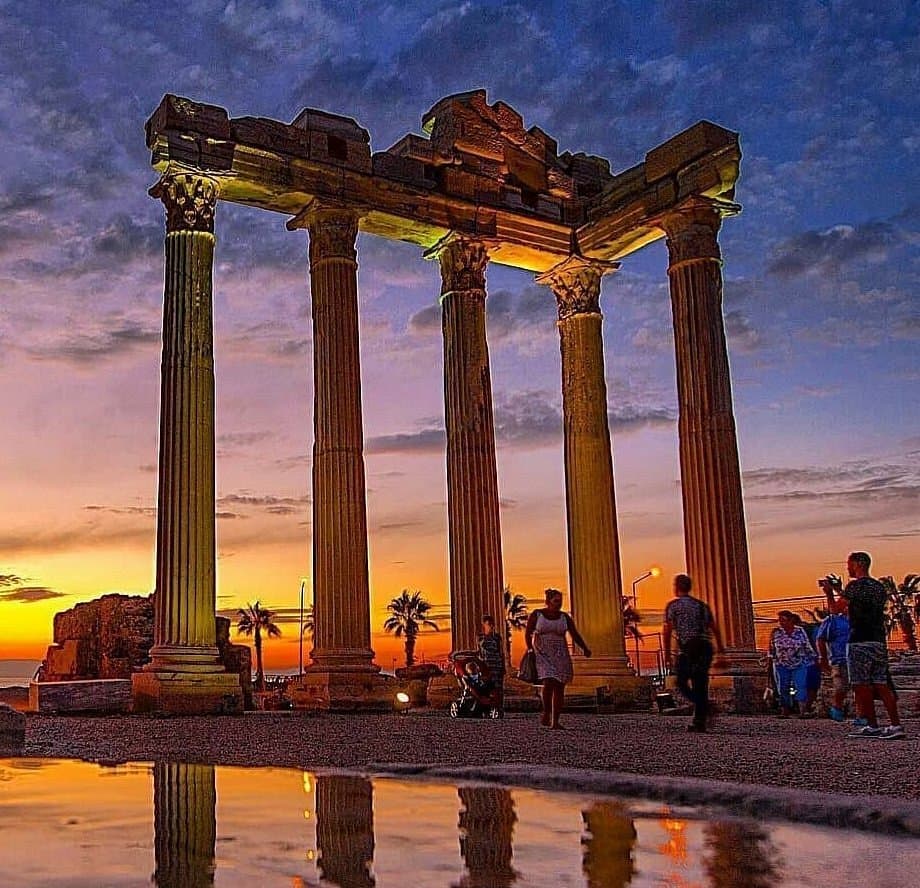
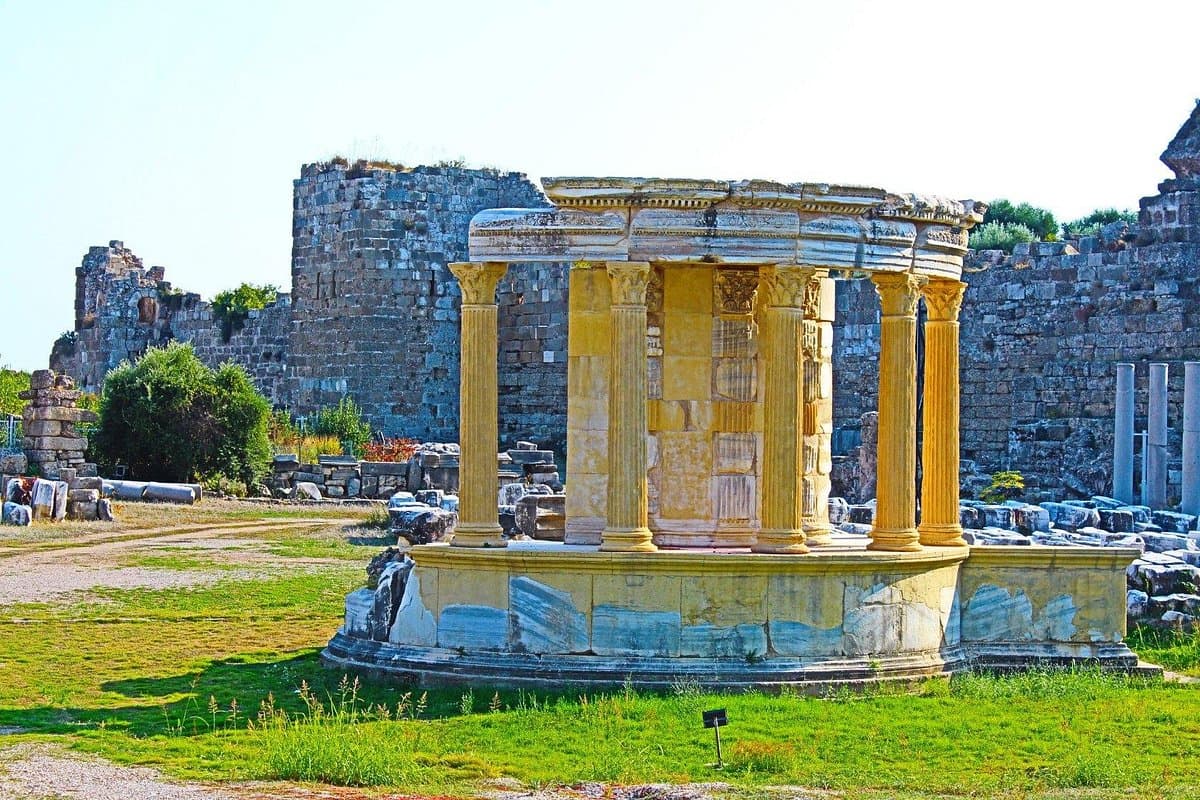
The Temple of Tyche, known locally as Tyche Tapınağı, is a significant Roman-era temple dedicated to the goddess of fortune, Tyche. Located prominently within the ancient city of Side, it stands out among the extensive ruins due to its distinctive circular design and the recent restoration efforts that have brought its Corinthian columns back to a striking golden hue. It offers a tangible connection to the religious and architectural grandeur of Side's Roman past.
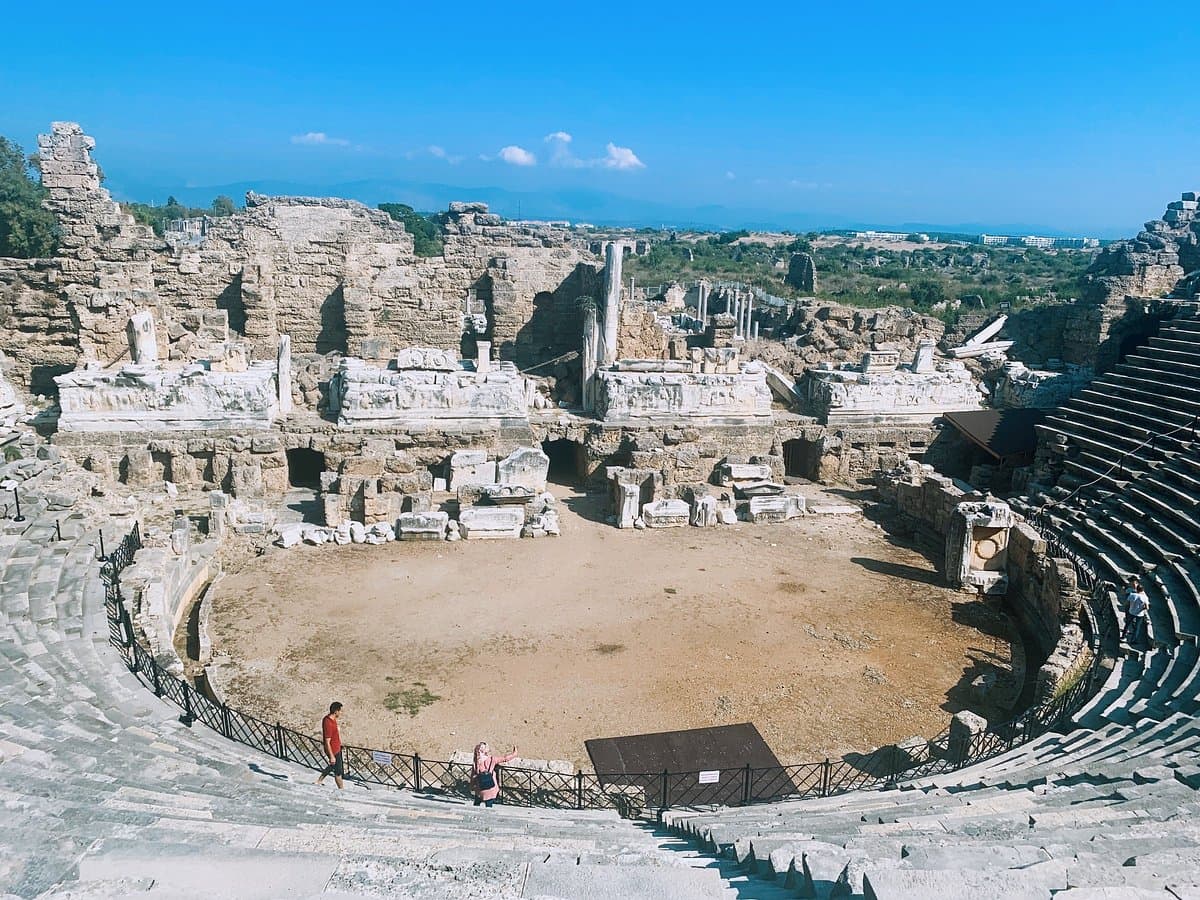
Visitors consistently praise the temple for its picturesque appearance and the excellent photo opportunities it provides, especially against the backdrop of the ancient city. Many appreciate that it's freely visible and easily accessible as part of a larger stroll through the ruins. Reviewers frequently mention its proximity to the ancient theater and the agora, making it a natural stop on a sightseeing route. However, a recurring theme in reviews is that the temple is often fenced off due to ongoing restoration work, meaning visitors cannot get very close or enter the structure itself. Despite this, the general consensus is that its beauty and historical significance are still evident from a distance.
To make the most of your visit, plan to spend about 15-30 minutes here, primarily for viewing and photography. The best time to visit is in the morning or late afternoon to avoid the midday heat and harsh sunlight, which can make photography challenging. Bring plenty of water, especially during warmer months, as the area offers little shade. While the temple itself is free to view from the exterior, the surrounding ancient city may have an entrance fee. Be aware that some areas are still under active excavation or restoration, so respect any barriers or signage.
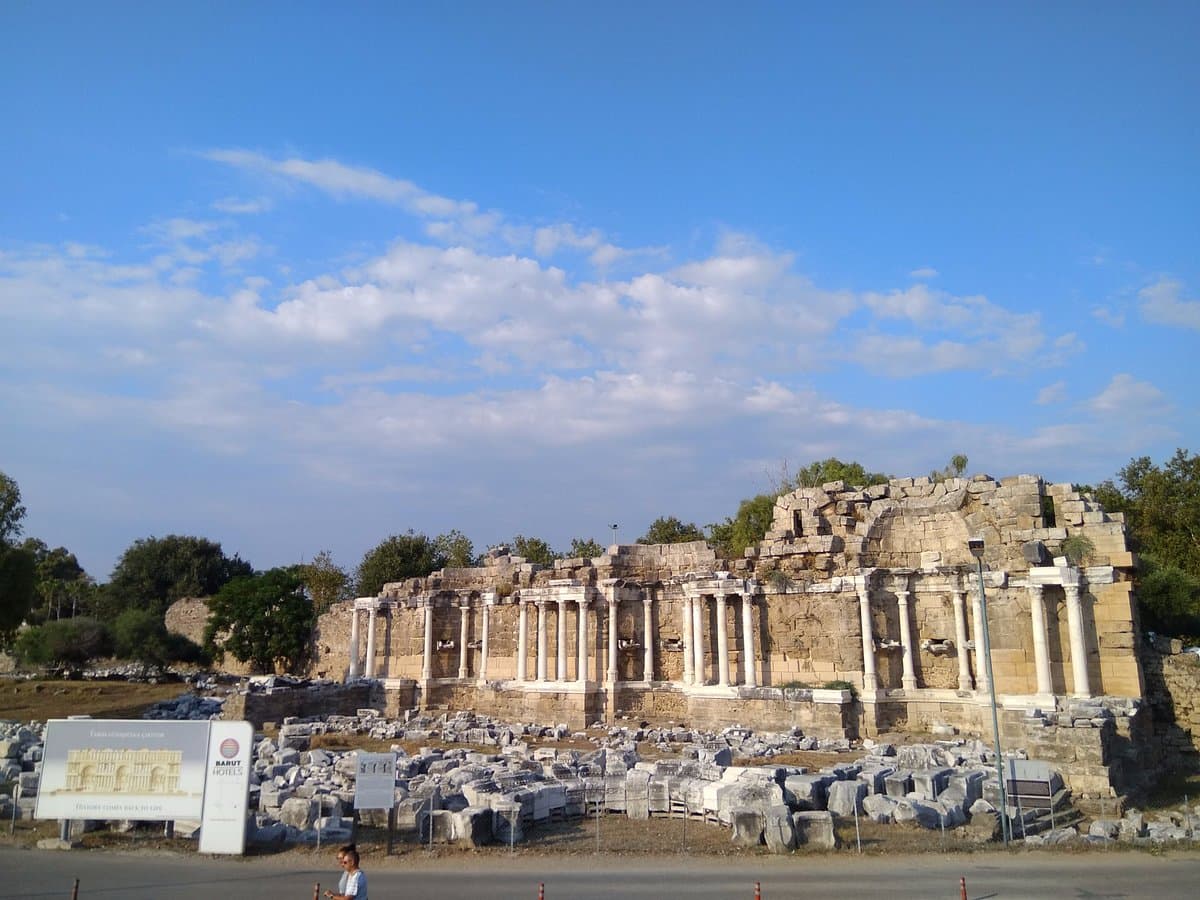
The Temple of Tyche is conveniently located within the ancient city of Side. Many visitors arrive by taking a dolmuş (shared minibus) to the central car park in Side. From there, it's a pleasant walk through the ancient ruins, past the temple, and down towards the harbor. The temple is situated just before the main gate/archway into the old town, next to the amphitheater and agora, making it easily identifiable. If driving, parking is available at the main Side car park, and the ruins are then explored on foot.
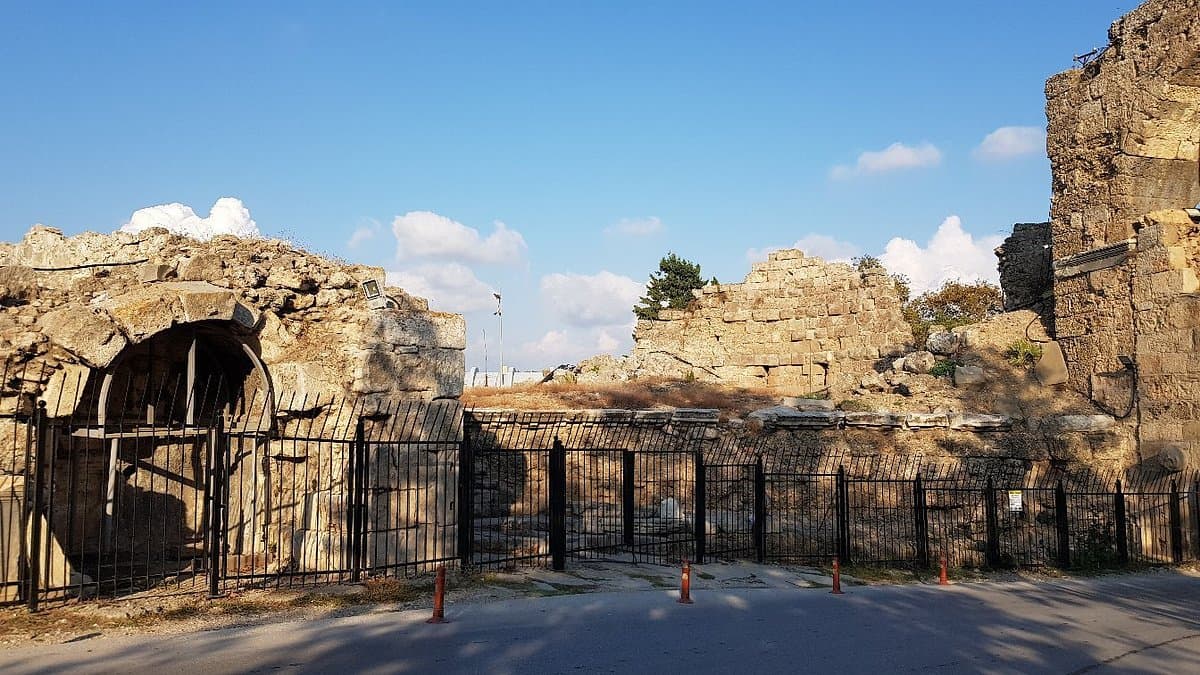
The primary complaint from visitors is the inability to get close to or enter the temple due to restoration work. While this can be disappointing for those hoping for an immersive experience, it's a necessary measure for preservation. To mitigate this, adjust your expectations; view it as an impressive outdoor exhibit rather than an interactive site. Focus on capturing its beauty from the accessible viewpoints and appreciate that the restoration aims to preserve it for future generations. Be wary of unofficial 'guides' who might approach you, as some reviewers reported scam attempts; information boards are generally sufficient.