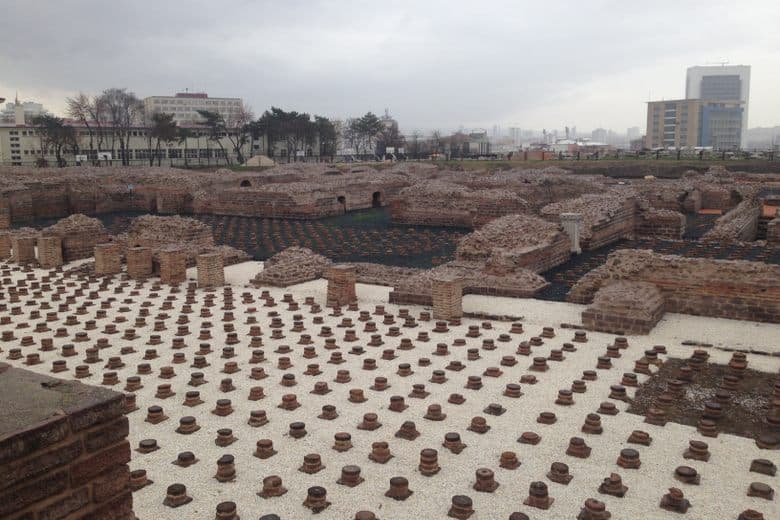
The Roman Baths of Ankara, known in antiquity as Ancyra, represent a substantial archaeological complex dating back to the 3rd century AD. Built by Tiberius Julius Justus Junianus in honor of Asclepius, the god of medicine, these baths were more than just a place for hygiene; they included a palaestra (exercise area) and served as a vital social hub. The site offers a tangible connection to the Roman provincial capital of Galatia, showcasing the architectural prowess and daily routines of a bygone era.
Visitors often praise the scale of the ruins and the opportunity to walk among ancient structures, providing a sense of immersion in history. The open-air museum format allows for a relaxed exploration, with many appreciating the relative lack of crowds compared to more famous Roman sites. Reviewers frequently highlight the well-preserved foundations and the clear layout of the various sections, which helps in visualizing the original grandeur of the complex. Some visitors, however, note that while extensive, the ruins require a certain level of imagination to fully appreciate, as much of the superstructure is gone.
To make the most of your visit, allocate about 1 to 2 hours. It's best to visit during cooler parts of the day, especially in summer, as the site is entirely outdoors with little shade. Bringing water and wearing comfortable walking shoes are highly recommended. While there isn't extensive interpretive signage, a quick online search beforehand can provide valuable context. Consider visiting in the morning to avoid the midday sun and potential crowds.
The Roman Baths are conveniently accessible from the Ulus station of the M1 metro line, making public transport a straightforward option. From the station, it's a short walk to the site. If driving, parking in the immediate vicinity might be challenging due to the busy urban environment, so public transport or a taxi is often preferred by visitors.
A common complaint among visitors is the limited amount of detailed information available on-site, which can leave some feeling that the ruins lack sufficient explanation. To mitigate this, it's advisable to read up on the history of the baths and ancient Ancyra before your visit. Additionally, some find the surrounding urban environment detracts slightly from the ancient atmosphere; focusing on the ruins themselves and imagining their historical context can enhance the experience.