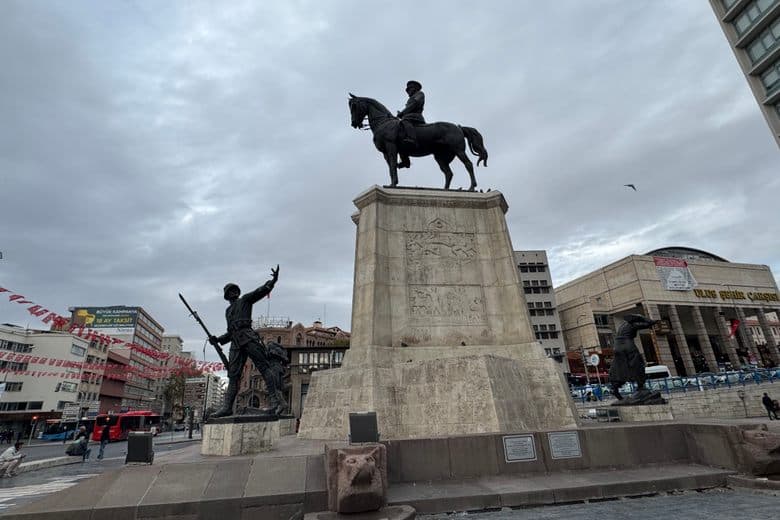
The Ulus Victory Monument is a pivotal landmark in Ankara, erected to honor the Turkish War of Independence and its leader, Mustafa Kemal Atatürk. Inaugurated in 1927, it stands as one of the earliest monuments of Turkey's republican era, strategically placed in Ulus Square to face the old parliament building. Its design by Henrich Krippel features Atatürk on his horse, Sakarya, flanked by soldiers and a Turkish woman carrying a cannonball, symbolizing the collective effort in the war.
Visitors appreciate the monument's historical significance and its central location within the Ulus district, making it an easy addition to a walking tour of the area. Many find it a powerful symbol of Turkish nationalism and a good starting point for understanding the country's modern history. The detailed sculptures, particularly the depiction of Atatürk and the soldiers, are often highlighted for their artistic merit and emotional impact.
To fully appreciate the monument, visitors typically spend about 15-30 minutes observing the sculptures and reading any available informational plaques. It is best visited during daylight hours for clear viewing. Since it's an outdoor monument, no specific items are required, but comfortable walking shoes are advisable if you plan to explore the surrounding historical district. There are no specific money-saving tips as the monument is free to visit.
The monument is centrally located in Ulus Square, a major hub in Ankara. It is easily accessible by public transport, with numerous bus lines serving the Ulus area. The Ulus Metro Station (M1 line) is also within a short walking distance. For those driving, parking can be challenging in the busy Ulus district, so public transport or taxis are often recommended.
Common complaints are rare, given that it's an open-air monument. However, some visitors might find the area around Ulus Square to be quite busy with traffic and pedestrians, which can detract slightly from a serene viewing experience. To mitigate this, consider visiting during off-peak hours, such as early mornings or late afternoons, to avoid the densest crowds.