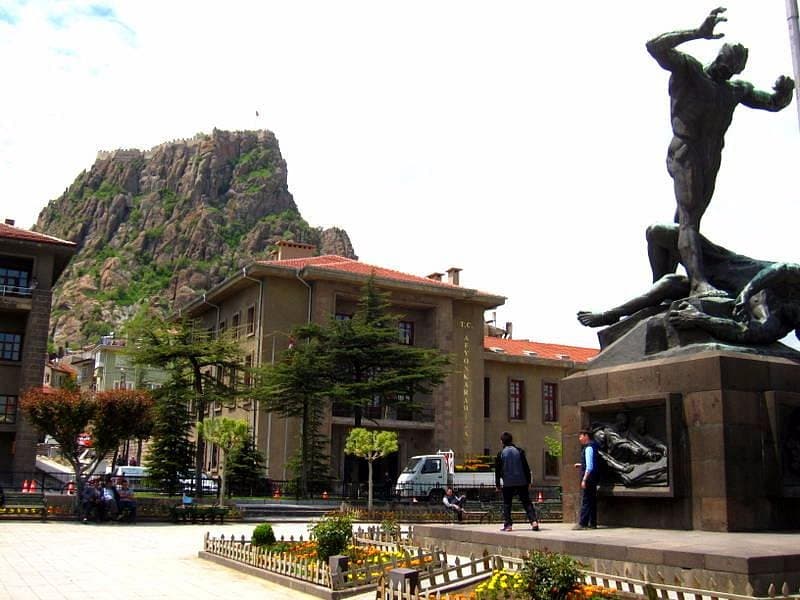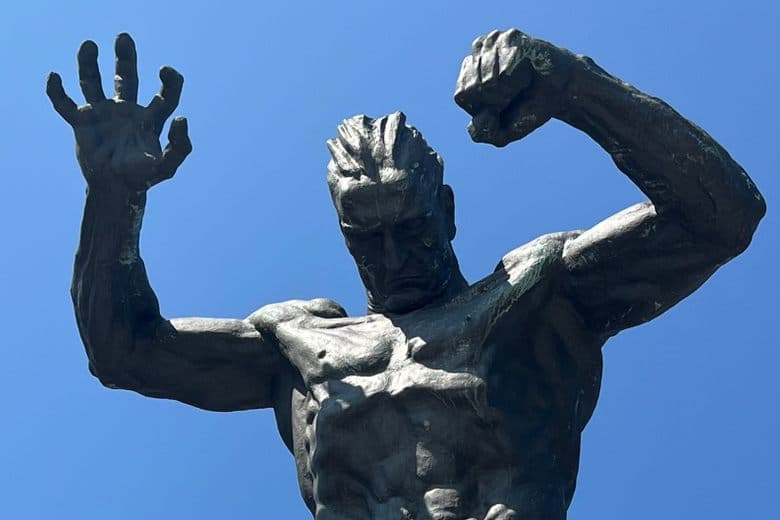
The Monument of the Great Triumph, located in Afyonkarahisar, is a significant, albeit unconventional, piece of public art from the early Turkish Republic. Designed by Austrian sculptor Heinrich Krippel, it was intended to convey the self-confidence and strength of the newly founded nation and its leader, Mustafa Kemal Atatürk, after the War of Independence. Unlike Krippel's earlier, more conventional works, this monument is a bold, expressionistic bronze sculpture depicting two naked, muscular men in hand-to-hand combat, symbolizing the Turkish and Greek armies.
Visitors often find the monument striking due to its dramatic portrayal and historical context. The standing figure, with its slicked-back hair and square jaw, bears a clear resemblance to Atatürk, a detail that adds to its historical intrigue. While the monument was praised by Atatürk himself upon his visit in 1937, it faced criticism for being commissioned to a foreign artist and for its explicit anatomical detail. This led to a decision in the 1950s to alter the sculpture, grinding down a prominent anatomical feature of the protagonist, giving it a more 'sexless' appearance today. Despite this alteration, many still find the monument retains its powerful message and artistic impact.
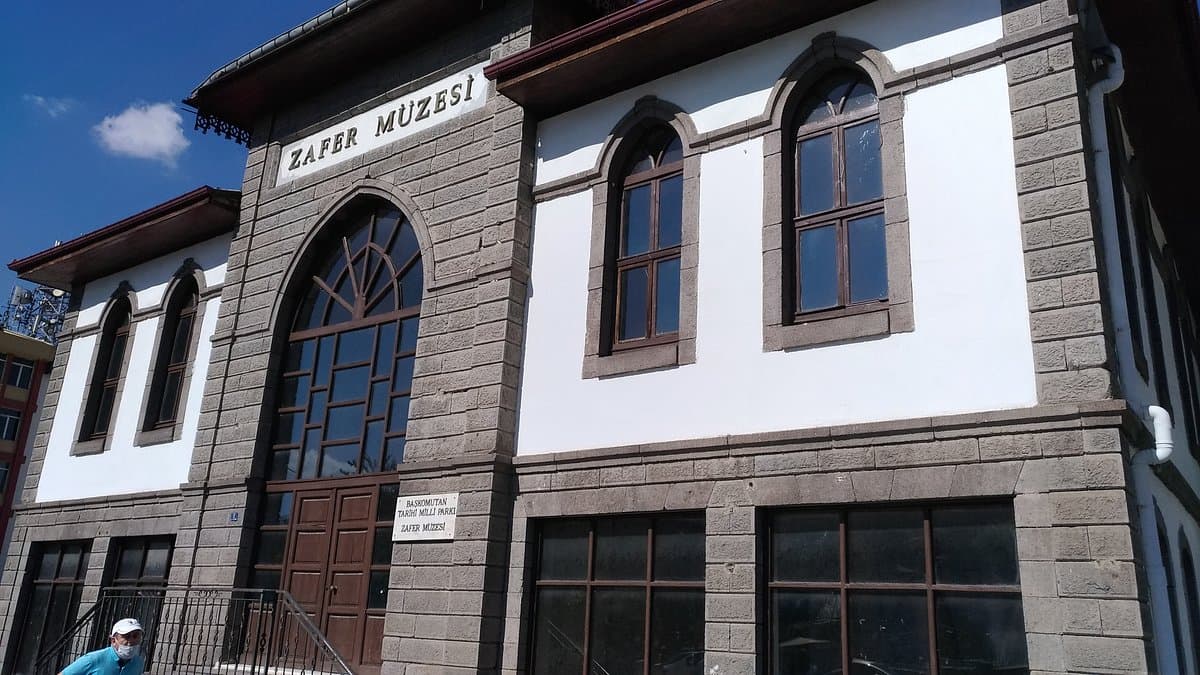
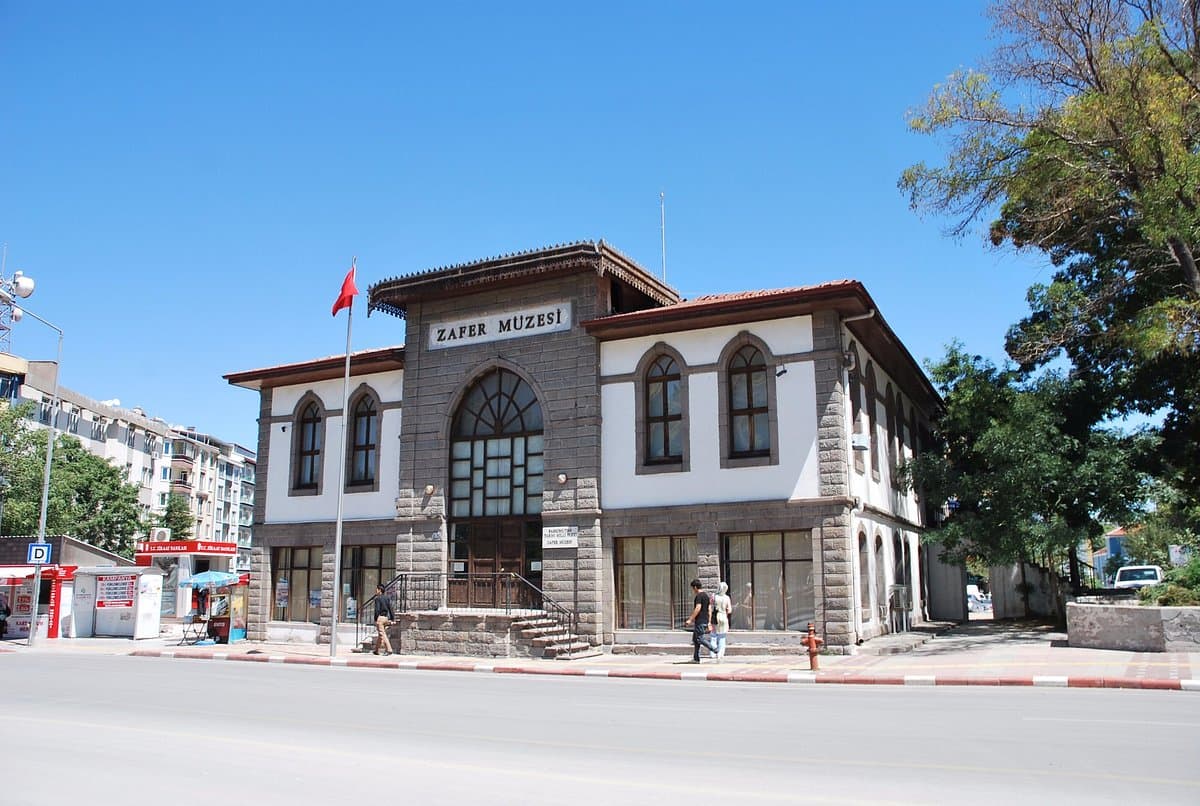
To fully appreciate the monument, visitors should allocate about 30 minutes to an hour. It is best viewed during daylight hours to appreciate the bronze details and its setting. There are no specific items to bring, but comfortable walking shoes are always advisable for exploring the surrounding park and city. The monument is situated in a park facing the Victory Museum, with the majestic Afyonkarahisar fortress as a backdrop, making it a good spot for photography and reflection on Turkish history.
The monument is located in Afyonkarahisar, a city accessible by bus or train from major Turkish cities. Once in Afyonkarahisar, the monument is centrally located within a park, making it easily reachable on foot from many parts of the city center. Taxis are also readily available if needed. Parking might be available in the vicinity for those driving, but public transport or walking is often more convenient for exploring the immediate area.
A common point of discussion among visitors is the historical alteration of the sculpture. While some might be disappointed by the modification, understanding the context of its creation and subsequent changes can enhance the appreciation of its unique place in Turkish art history. It's important to approach the monument with an open mind, recognizing it as a product of its time and evolving cultural sensitivities.