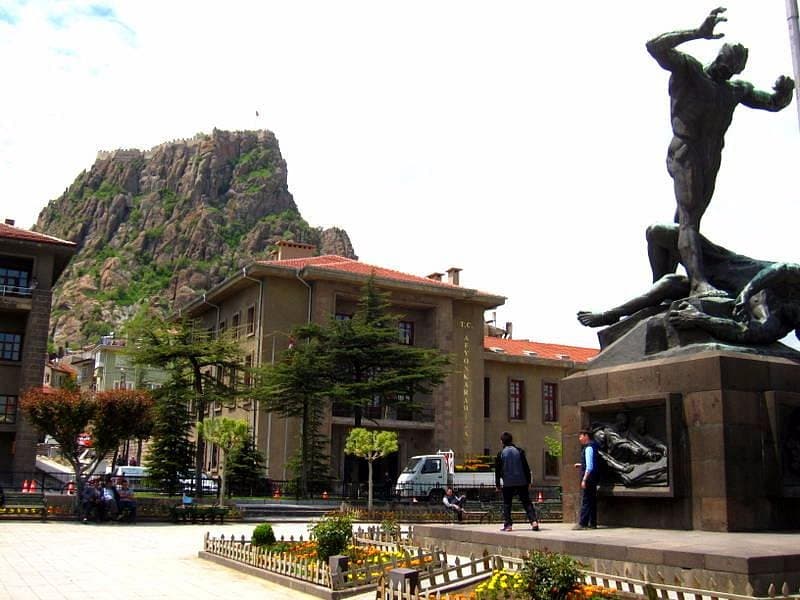
Anıt Park, or Monument Park, serves as a prominent public square in the heart of Afyonkarahisar. It is most notable for its large monument commemorating the Turkish War of Independence, specifically the Great Offensive led by Mustafa Kemal Atatürk. This monument symbolizes a pivotal moment in Turkish history, marking the starting point of the counter-attack that ultimately led to the liberation of İzmir.
Visitors consistently highlight the park's central location, making it an easily accessible landmark. Many appreciate the historical significance of the monument, recognizing its role in narrating a crucial chapter of Turkey's past. The park is also praised for offering excellent photographic opportunities, particularly with the historic Afyon Castle visible in the background. Reviewers note that the monument itself, depicting two figures, one seemingly overcoming the other, effectively conveys the struggle and victory it represents.
For a meaningful visit, allocate about 30 minutes to an hour to explore the monument and take photographs. The park is best enjoyed during daylight hours, especially in summer when the surroundings are more vibrant, though some find it a bit bland in winter. There's no entry fee, making it an accessible stop for all travelers. Consider visiting in the late afternoon for softer light, which can enhance your photographs of the monument and castle.
The park is very centrally located and easily reachable. Several visitors mention its convenience when getting off a dolmuş (shared taxi/minibus), indicating good public transport access. Its position at the central road of the city means it's a straightforward walk from many downtown areas. Parking information is not explicitly detailed in reviews, but its central location suggests it might be best accessed on foot or via public transport.
While generally positive, some visitors find the park's aesthetic somewhat plain, especially outside of the summer months. To mitigate this, focus on the historical context and the photographic potential, rather than expecting elaborate landscaping. The monument's symbolism is its primary draw, so approaching it with an understanding of its historical importance will enhance the experience.