The Çanakçı Heykeli, or Potter's Statue, is a significant ceramic monument located in Avanos, a town renowned for its pottery in the Cappadocia region of Turkey. Commissioned in 1974, this over 15-foot-tall sculpture was the brainchild of master potter Hacı Ömer Taşkın, intended to celebrate the region's rich history and artisanal traditions. It stands as a unique piece of public art, embodying the spirit of local craftsmanship and community life.
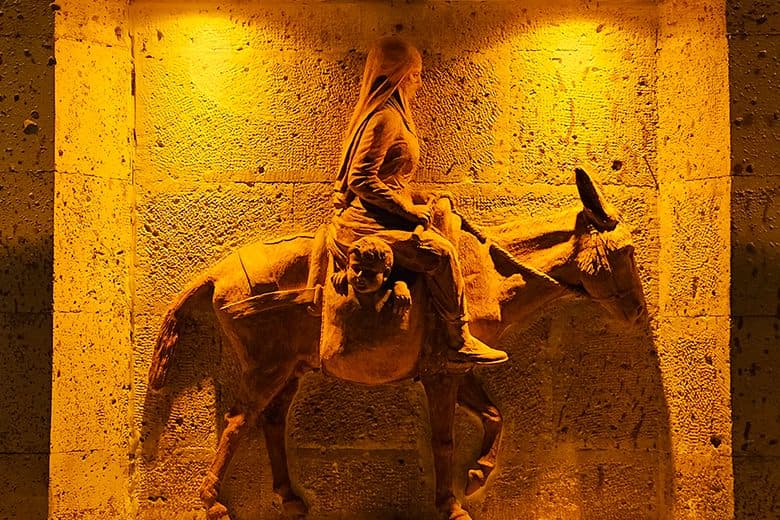
Visitors often appreciate the intricate details and the narrative quality of the statue. It features a man crafting traditional Cappadocian pottery at the top, a mother and daughter weaving a carpet on the front, and a woman traveling on a donkey with a child on the rear. The left side depicts a smiling tourist with grapes, while the right side holds a self-portrait bust of Taşkın, added posthumously as a memorial. Reviewers note that while it's an interesting piece, its location in a busy square means it can sometimes be overlooked amidst the surrounding shops and restaurants.
To fully appreciate the statue, visitors should plan for a brief stop, perhaps 10-15 minutes, to examine its various panels. There's no specific best time to visit as it's outdoors and accessible 24/7, but daytime offers the best light for viewing details. It's illuminated at night, which can offer a different perspective. Since it's in a public square, there's no entry fee. No special items are needed, but a camera might be useful for capturing the details.
The statue is situated in Avanos Cumhuriyet Meydanı (Avanos Republic Square), which is on a major thoroughfare north of the Kızılırmak River. Avanos itself is well-connected and can be reached by car or bus from major nearby cities in Central Turkey, such as Kayseri and Aksaray. Once in Avanos, the square is centrally located and easily accessible on foot from most points in the town. Parking might be available in the vicinity of the square, though it can be busy.
A common observation is that the statue, despite its size, can blend into the background of the bustling square. To mitigate this, visitors should actively seek it out and take a moment to read about its history, which enhances the appreciation of its artistic and cultural value. Some parts, like the weavers' section, have been missing for periods, which can detract from the completeness of the artwork, but generally, the statue remains an intact and meaningful tribute.