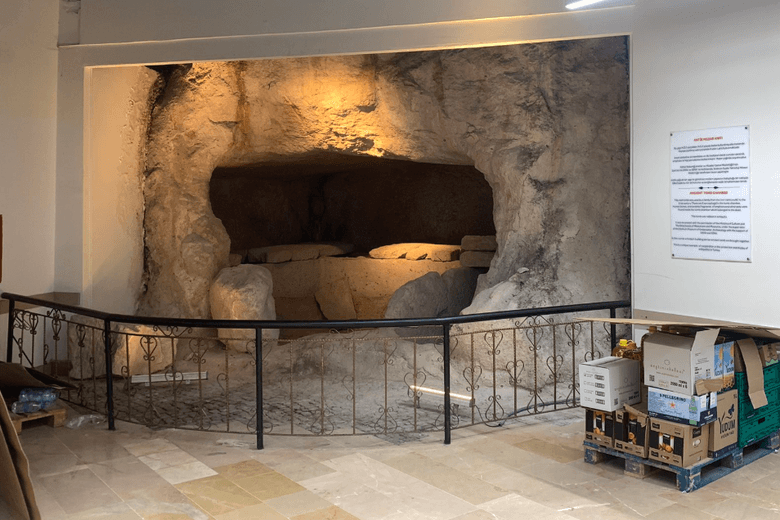
The Museum Market in Bodrum presents a fascinating juxtaposition of ancient history and modern commerce. During the construction of a CarrefourSA supermarket, a 3rd-century rock-cut tomb was unearthed. Instead of relocating this significant archaeological find, authorities and developers opted for an innovative solution: preserving and integrating the tomb directly into the supermarket's layout. This decision created a unique display that highlights Bodrum's rich past as ancient Halicarnassus, once home to one of the Seven Wonders of the Ancient World, the Mausoleum of Halicarnassus.
Visitors consistently praise the novelty and unexpected nature of discovering such an ancient artifact within a contemporary retail space. Many find it a testament to Turkey's commitment to preserving its heritage, even in unconventional settings. Reviewers often highlight the ease of access and the lack of an entry fee, making it an intriguing stop for those already in the area. The tomb itself, though robbed in antiquity and containing only human remains and ceramic sherds, still offers a tangible connection to the past, with six sarcophagi visible.
For those planning a visit, it's recommended to allocate about 15-30 minutes to fully appreciate the tomb, plus any additional time if you plan to shop. The best time to visit is during regular supermarket hours, which tend to be less crowded in the early morning or late afternoon. There's no special equipment needed, and it's an easy, accessible experience for all ages. To save money, simply combine your historical exploration with your grocery shopping!
The Museum Market is located within the CarrefourSA Supermarket in Bodrum. While specific public transport lines aren't widely detailed in reviews, Bodrum is a compact city, and the supermarket is generally accessible by local dolmuş (shared taxi) services or a short taxi ride from the city center. Driving is also an option, as supermarkets typically offer parking facilities. The tomb is specifically noted to be in the back right corner of the supermarket, so head there directly upon entry.
A common 'complaint,' if it can be called one, is that some visitors expect a larger, more elaborate museum-like experience. To mitigate this, approach the Museum Market with the understanding that it is a single, well-preserved tomb within a functioning supermarket, rather than a dedicated archaeological museum. Its charm lies in its unexpected location and the story of its preservation.