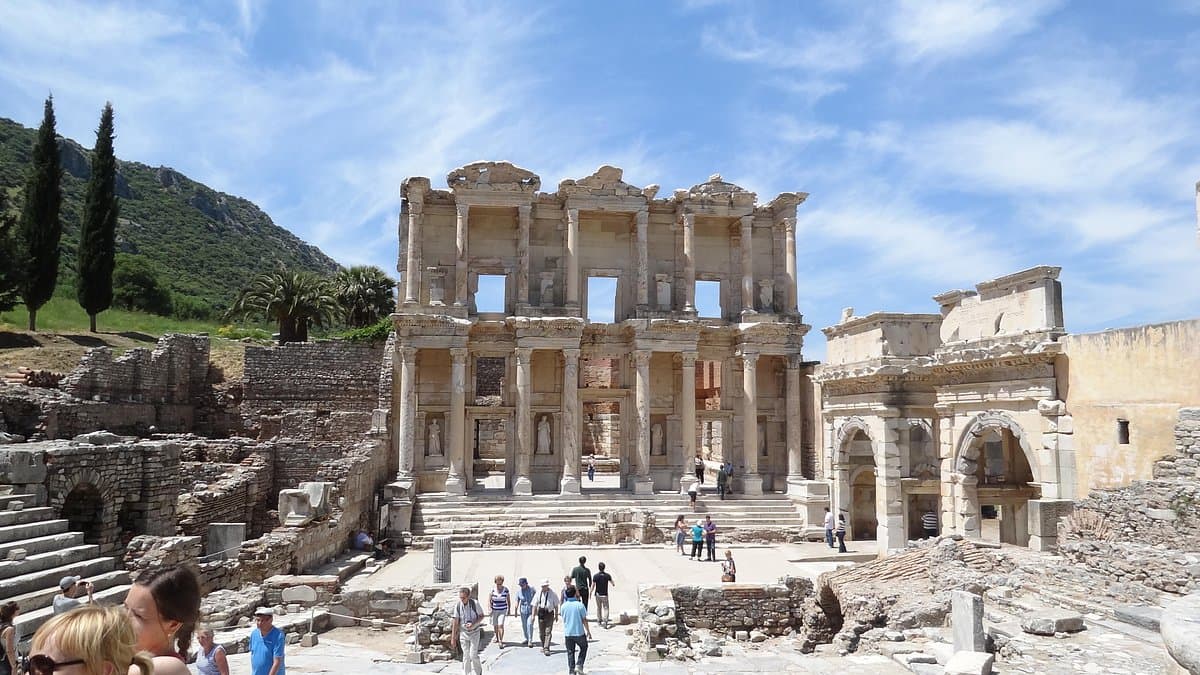
The Great Theater of Ephesus, known locally as Efes Antik Kenti Tiyatrosu, is a monumental structure within the ancient city of Ephesus. Originally Hellenistic and later expanded by the Romans, it is one of the largest and best-preserved ancient theaters in Anatolia, capable of holding an estimated 24,000 to 25,000 spectators. Its historical significance is immense, having hosted not only plays and concerts but also gladiatorial contests and, notably, the riot against St. Paul mentioned in the Bible.
Visitors consistently praise the theater's immense scale and impressive acoustics. Many describe being 'blown away' by its size and the engineering marvel it represents for its time. Reviewers frequently recommend climbing to the upper tiers, despite the steep steps, to fully appreciate the panoramic views of the ancient city and the surrounding landscape. The acoustics are a recurring theme, with many visitors testing them by speaking or singing from the stage, noting how clearly their voices carry throughout the vast space. While some parts are under ongoing restoration, which may involve cranes, visitors generally find the experience still highly rewarding.
To make the most of your visit, wear comfortable shoes suitable for climbing steep steps and bring a hat, sunscreen, and plenty of water, especially during warmer months. Many visitors suggest arriving early in the morning or later in the afternoon to avoid the midday heat and larger crowds. While some areas might be restricted due to ongoing restoration, the majority of the seating and stage area is accessible. Allow at least 30-60 minutes to explore the theater thoroughly, including time to climb to the top and soak in the views. Consider purchasing a Museum Card if you plan to visit multiple sites in Turkey, as it can offer significant savings.
The Great Theater is located within the Ephesus archaeological site. If entering from the northern entrance, it's one of the first major attractions you'll encounter. If entering from the southern entrance, it's typically one of the last structures before exiting. The site itself is easily reachable by public transport (dolmuş) from Selçuk, or by taxi/private car. Parking is available at the entrances, though a fee may apply. The theater is a significant walk from either entrance, so be prepared for extensive walking within the ancient city.
A common complaint among visitors is the ongoing restoration work, which sometimes includes visible cranes that can detract from photographs. While this is a temporary inconvenience for preservation, the sheer grandeur of the theater still shines through. Another point mentioned is the heat, especially in summer; mitigating this with early morning visits, hats, and water is crucial. Some visitors also note that the preservation level, while good, isn't perfect, with the stage area being less intact than the seating. However, the overall historical impact and scale remain undiminished.