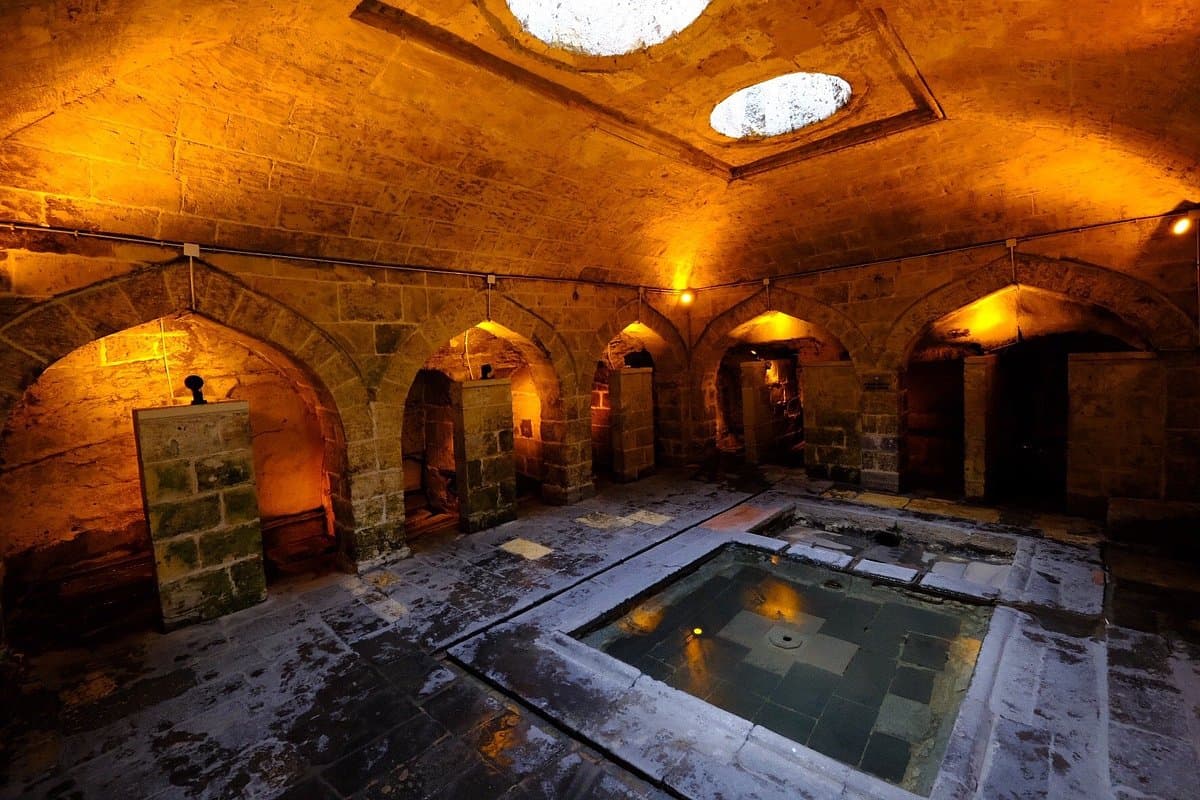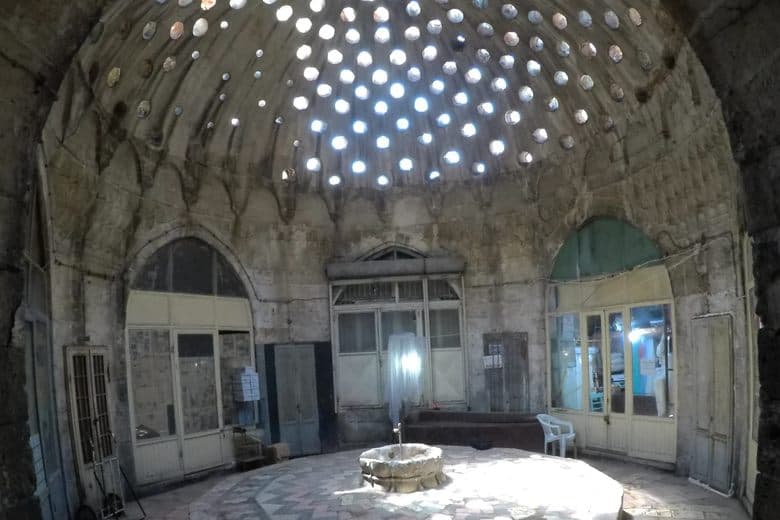
The Abandoned Turkish Bath in Gaziantep is a disused hamam, a historical structure that once served as a public bathhouse. It stands as a silent testament to the city's rich past, offering a unique opportunity to witness the architectural beauty of a traditional Turkish bath in a state of natural decay. Unlike active hamams, this site provides a stark, atmospheric contrast, appealing to those who appreciate the raw beauty of abandoned spaces.
Visitors consistently praise the bath's photogenic qualities, particularly the way natural light filters through its domes, creating dramatic shadows and highlights. Many describe the experience as serene and contemplative, noting the echoing silence that amplifies the sense of history within its walls. It's often highlighted as a hidden gem, providing a quiet escape from the bustling streets outside. However, some visitors warn that its abandoned state means there are no facilities or services, and the interior can be dusty or have uneven surfaces.
For the best experience, bring a camera to capture the unique lighting and textures. A visit typically takes about 30-60 minutes, primarily for exploration and photography. The best time to visit is during daylight hours, especially when the sun is high, to fully appreciate the natural light effects. There are no entry fees, making it an accessible stop for budget-conscious travelers. Wear comfortable shoes suitable for walking on potentially uneven surfaces.
Locating the bath can be challenging, as the stone passage leading to it is described as very hard to find amidst the crowded streets of Gaziantep's old city. It is advisable to ask locals for directions or use precise GPS coordinates. The bath is situated in a central, historic area, making it accessible on foot if you are already exploring the old town. Public transportation options like local buses or dolmuş (shared taxis) would likely drop you within walking distance of the old city center.
The primary complaint revolves around its difficult-to-find location. To mitigate this, consider having the exact address or coordinates ready and don't hesitate to ask shopkeepers or residents in the vicinity for guidance. Another point to note is the lack of any interpretive signage or information, so visitors interested in its history might want to research it beforehand.