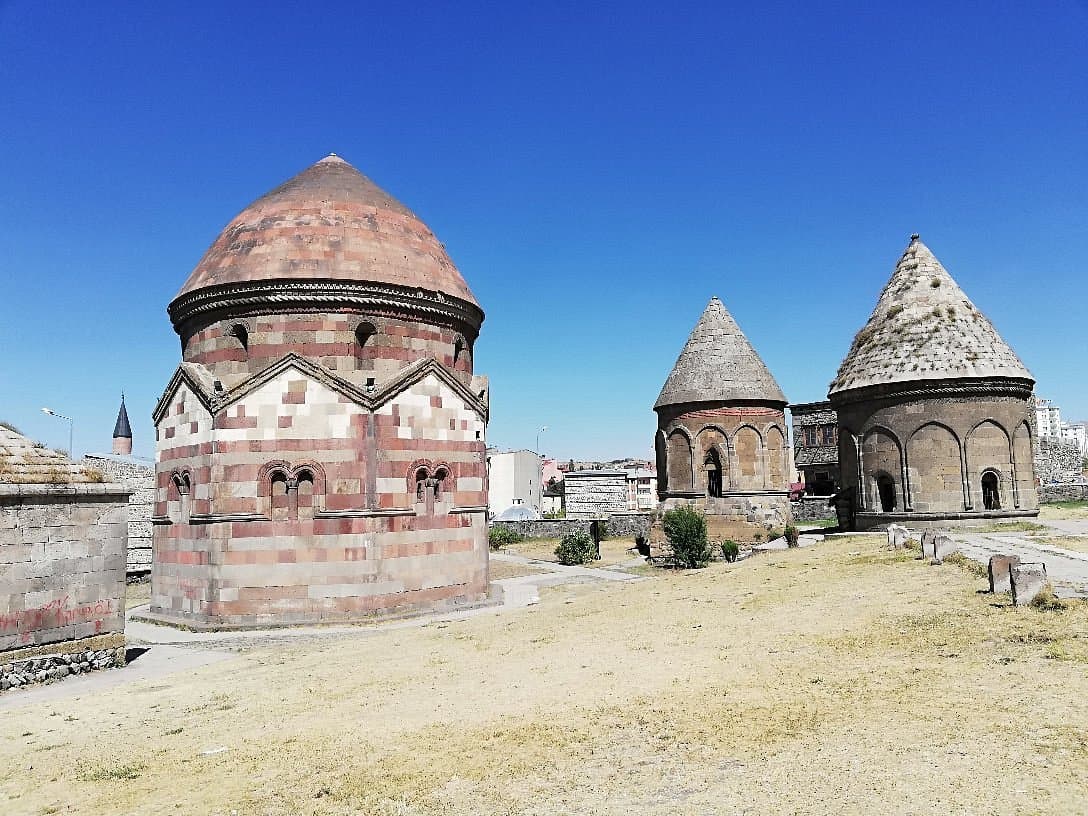
The Three Tombs (Üç Kümbetler) represent some of the oldest and most significant examples of Seljuk funerary architecture in Erzurum. These domed mausoleums, or kümbets, stand as a testament to the region's rich history, with the largest tomb reportedly dating back to the late 12th century and possibly belonging to Emir Saltuk, a feudal lord who ruled the area after the Turkish conquest. They offer a fascinating glimpse into the artistic and engineering prowess of the Seljuk period.
Visitors consistently praise the well-maintained condition of the tombs themselves and their scenic location on a small plateau, often with views of the surrounding mountains. Many appreciate the information boards available in both English and Turkish, which provide some historical context. However, a recurring theme in reviews is the limited access; most visitors report being unable to enter the tombs, which can lead to a feeling of 'not much to see' beyond the exteriors. The area around the tombs is described by some as peaceful and beautiful, while others note that the immediate surroundings, such as the meadow or former cemetery, can sometimes appear unkempt with weeds.
To make the most of your visit, allocate about 30-60 minutes. Since interior access is generally not possible, this time allows for appreciating the exterior architecture, reading the information panels, and enjoying the views. The best time to visit is during daylight hours, especially on a clear day to fully appreciate the mountain backdrop. Consider combining your visit with the nearby Double Minaret Madrasa and Yakutiye Madrasa, as the tombs are a short walk away. There is no entry fee, making it an accessible historical site.
The Three Tombs are conveniently located in Erzurum Merkez, just a 10-minute walk behind the Double Minaret Madrasa (Çifte Minareli Medrese). This central location makes them easily reachable on foot from other major historical sites in the city center. Visitors often mention walking to the tombs as part of a wider exploration of Erzurum's historical core. Given their proximity to other attractions, public transport to the city center followed by a short walk is the most practical way to arrive.
The primary complaint from visitors is the lack of interior access and the limited depth of information available on-site. To mitigate this, consider researching the history of Seljuk kümbets and the Saltukid dynasty before your visit to enrich your understanding of what you are seeing. While the immediate surroundings might sometimes be less pristine, focusing on the architectural details of the tombs themselves and their historical significance can enhance the experience.