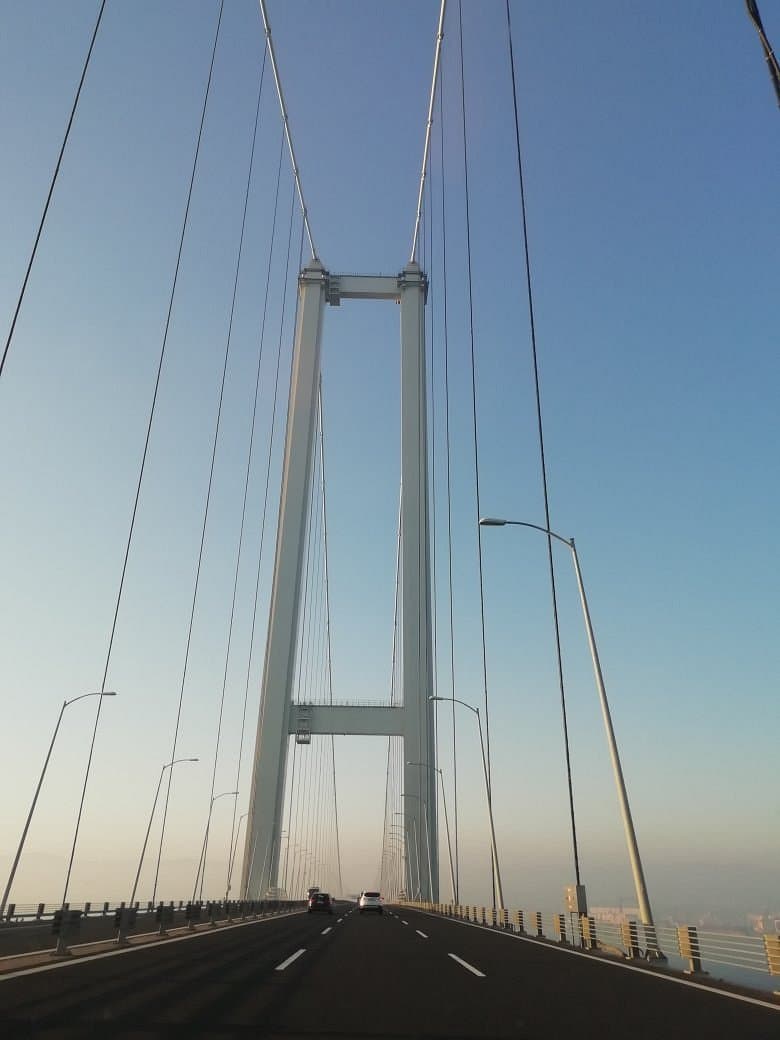
The Osmangazi Bridge is one of the longest suspension bridges in the world, spanning the Izmit Bay in Turkey. It serves as a crucial link on the Gebze-Orhangazi-Izmir Motorway, dramatically reducing travel time between Istanbul and the Aegean region. Beyond its functional purpose, the bridge is celebrated as a significant engineering achievement and offers impressive panoramic views of the surrounding landscape and the bay.
Visitors consistently praise the bridge for its efficiency and the stunning vistas it provides. Many note that it offers a far more comfortable and quicker journey compared to the traditional ferry crossing, making it a preferred route for those heading to Bursa or Izmir. The opportunity to take photos of the expansive bay and the bridge itself is a recurring highlight. Reviewers also appreciate its contribution to environmental protection by reducing traffic around the Izmit Bay and preserving the Hersek Lagoon ecological system.
When planning a crossing, be aware that the bridge is a toll road, and the fees are substantial. While some visitors mention that the toll is less expensive than the ferry, others highlight issues with online payment systems. It's advisable to ensure you have a reliable payment method or be prepared for potential payment challenges. The best time to cross for scenic views is during daylight hours, especially on a clear day, to fully appreciate the scale of the bridge and the bay. There isn't a specific recommended duration for visiting, as it's primarily a transit point, but allowing a few extra minutes for photos if you're a passenger is a good idea.
The Osmangazi Bridge is located near Dilovası, connecting the northern and southern shores of the Izmit Bay. It is an integral part of the O-5 Motorway (Gebze-Orhangazi-Izmir Motorway). Access is directly via this motorway, which is well-signposted from Istanbul and other major cities. There are no specific public transport options to 'visit' the bridge as a standalone attraction; it is experienced as part of a road journey. Driving is the only practical way to cross the bridge.
A common complaint revolves around the high toll fees and occasional difficulties with the payment system, particularly for international visitors or those attempting online payments. To mitigate this, ensure your vehicle's HGS (Fast Pass System) or OGS (Automatic Pass System) is properly loaded, or be prepared to pay with cash or card at the toll booths if applicable. Always check the latest toll information and payment methods before your journey to avoid unexpected issues.