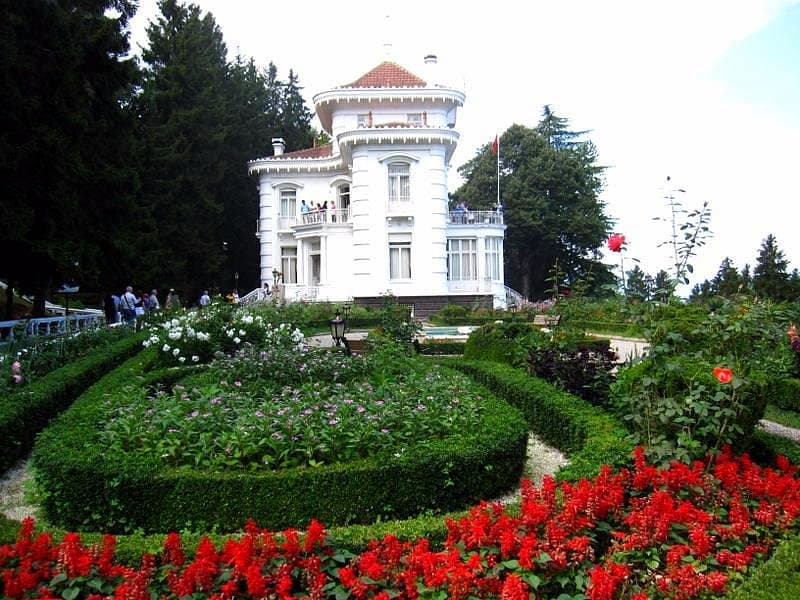
Atatürk's Pavilion (Atatürk Köşkü) is a significant historical house museum in Trabzon, originally built in the late 19th century by a wealthy Greek banker. It gained prominence as the residence where Mustafa Kemal Atatürk, the founder of the Turkish Republic, stayed during his visits to Trabzon, and notably, where he drafted his will. The villa's architectural style, combining European and local influences, and its connection to a pivotal figure in Turkish history, make it a cultural landmark.
Visitors consistently praise the pavilion's beautiful and well-maintained gardens, often describing them as a peaceful oasis with stunning views, especially from the balcony overlooking the Black Sea. Many appreciate the opportunity to see the interior, which is preserved with period furniture and numerous photographs and artifacts related to Atatürk's life, offering an intimate glimpse into his personal spaces. Reviewers frequently mention the sense of history and the emotional connection they feel to Atatürk within the house. However, some visitors note that the interior itself is not particularly grand or luxurious compared to other palaces, and can feel a bit small or crowded during peak times.
For a pleasant visit, allocate about 1 to 2 hours to explore both the house and the gardens. The best time to visit is in the morning to avoid crowds, especially on weekends, and to enjoy the tranquility of the gardens. Bringing a camera is highly recommended for the picturesque views and the charming architecture. While there's a cafe on-site for refreshments, some visitors suggest bringing your own water, especially during warmer months. The entrance fee is generally considered reasonable, and museum cards are often accepted, offering potential savings.
The Atatürk Pavilion is located on a hill in the Soğuksu district, about 5-10 kilometers from Trabzon city center. Many visitors recommend taking a local minibus (dolmuş) as a cost-effective and convenient option; these can be found near Meydan Square. Alternatively, taxis are readily available, though more expensive. Driving is also an option, but parking can sometimes be a challenge, especially on busy days. The journey up the hill offers scenic views, and the location is generally easy to reach.
A common complaint among visitors, particularly those not fluent in Turkish, is the limited availability of English information or guides inside the house. While some staff may speak English, detailed explanations for exhibits are often only in Turkish. To mitigate this, consider hiring a local guide or doing some research on Atatürk's life and his connection to Trabzon before your visit to fully appreciate the historical context. During crowded periods, the small rooms can feel congested, making it difficult to move around and view exhibits comfortably; visiting during off-peak hours can alleviate this.