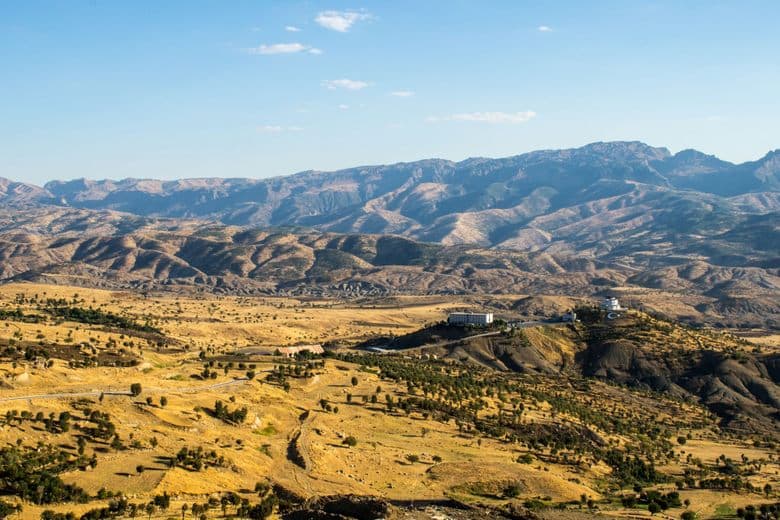
Mount Judi is a small mountain in Turkey's Şırnak Province, near the borders with Iraq and Syria, which holds a significant place in certain biblical traditions. Unlike the more commonly cited Mount Ararat, some literalists believe Judi was the actual landing site of Noah's Ark after the Great Flood. This belief, rooted in Syriac and Armenian traditions, has persisted for centuries and gained renewed attention following geological findings in the 1950s.
Visitors to Mount Judi are primarily drawn by its historical and religious significance, rather than conventional tourist attractions. The landscape is arid and sparsely populated, offering a stark, rugged beauty. The mountain's elevation, just over 7,000 feet, provides a sense of scale to the ancient narratives associated with it. While there are no established visitor facilities, the remote nature of the site allows for a contemplative experience for those seeking a connection to its profound past.
For those planning a visit, it's crucial to understand that Mount Judi is not a developed tourist destination. There are no marked trails, visitor centers, or amenities. Visitors should be prepared for a challenging, self-guided experience. It is advisable to bring ample water, food, and appropriate gear for hiking in a remote, arid environment. Given the region's geopolitical sensitivity, it is essential to research current travel advisories and local conditions thoroughly before planning a trip. A local guide familiar with the area and its regulations would be highly beneficial, if not essential, for safe navigation.
Reaching Mount Judi requires significant planning due to its remote location in southeastern Turkey. There is no direct public transport to the mountain itself. The nearest major city is Şırnak, but even from there, onward travel would likely require a private vehicle, preferably a 4x4, and potentially local assistance. The roads in the region can be unpaved and challenging. Visitors should anticipate long travel times from any major Turkish city and consider the logistical complexities of navigating a sparsely populated border region.
A common complaint among those who attempt to visit is the sheer difficulty of access and the lack of infrastructure. To mitigate this, thorough preparation is key: secure reliable transportation, consider hiring a local guide, and ensure you have all necessary supplies. The area's remoteness also means limited communication, so inform others of your travel plans and expected return. Be aware of the security situation in the broader region and prioritize safety above all else.