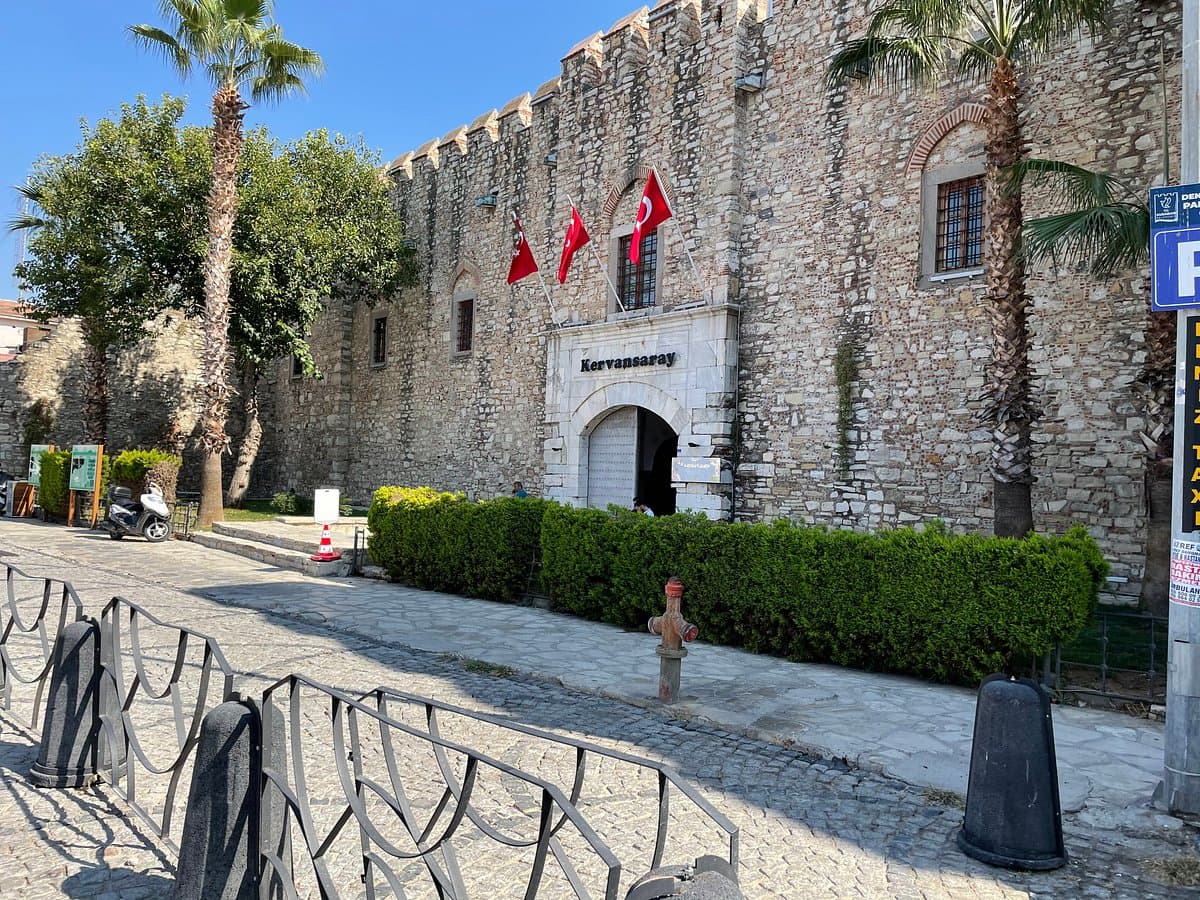
The Öküz Mehmet Pasha Caravanserai, constructed in 1618 by Grand Vizier Öküz Mehmet Pasha, served as a fortified inn for merchants and travelers during the Ottoman era. Its castle-like appearance and strategic location near the harbor highlight its historical importance as a trading hub. Today, it stands as a significant architectural landmark in Kuşadası, offering visitors a tangible connection to the region's rich past.
Visitors consistently praise the caravanserai for its beautiful and harmonious Ottoman architecture, characterized by arches and balconies. Many appreciate that it's free to enter and offers a quiet, peaceful escape from the busy streets of Kuşadası. Reviewers often mention its well-preserved condition and the opportunity to observe typical Turkish architectural styles. Some note that while it's not a spectacular attraction, its historical charm and serene ambiance make it a worthwhile, quick visit.
To make the most of your visit, allocate about 15-30 minutes to explore the caravanserai. It's best visited during the day, perhaps as a cool resting spot during warmer hours. Since admission is free, it's an excellent budget-friendly option. There isn't much to skip, as the main draw is the structure itself. Some rooms inside may be closed, but the central courtyard and architectural details are the primary points of interest.
The caravanserai is conveniently located right next to the Kuşadası harbor, making it easily accessible for cruise ship passengers. It's just a 5-minute walk from the cruise ship terminal, past the maze of shops. Its central location in the heart of Kuşadası means it's also within easy walking distance for anyone staying in the town center or exploring the old town promenade.
A common complaint among visitors is that there isn't much to do inside, with some rooms being closed or unused. While it once housed a hotel, shops, and restaurants, its current use can vary, sometimes hosting cultural events or exhibitions. To mitigate this, approach the visit as an appreciation of historical architecture and a moment of tranquility rather than an interactive museum experience. Don't expect extensive exhibits; instead, focus on the structure's beauty and its historical context.