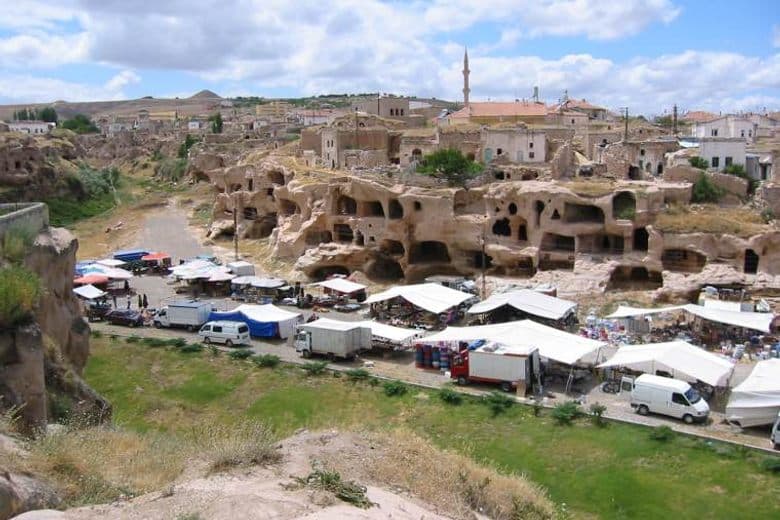
Özkonak Underground City is one of several ancient subterranean settlements in Cappadocia, offering a unique window into the defensive and communal lives of early inhabitants. Discovered in 1972, it stands out from its counterparts like Kaymaklı and Derinkuyu due to its distinctive communication system between levels and a clever defensive mechanism involving hot oil traps above its entrances. This site is a testament to the ingenuity of its builders, who carved out a complex network of chambers, ventilation shafts, and water systems deep beneath the earth.
Visitors consistently praise Özkonak for being less crowded than the more famous underground cities, allowing for a more intimate and reflective experience. Many reviewers highlight the knowledgeable local guides, often available at the entrance, who enhance the visit with historical context and explanations of the city's unique features. The defensive hot oil traps, though no longer active, are a particular point of interest, sparking imagination about the challenges faced by its ancient residents. However, some visitors find the site less extensive or impressive compared to Derinkuyu or Kaymaklı, noting that only four of its ten levels are accessible.
For a comfortable visit, wear sturdy shoes as the ground can be uneven and dusty. Bring a light jacket, as temperatures underground are consistently cooler. Most visitors spend about 1 to 1.5 hours exploring the accessible levels. It's best to visit in the morning or late afternoon to avoid larger tour groups, though Özkonak is generally less busy. Consider hiring a local guide at the entrance; their insights are often cited as invaluable. There are no specific money-saving tips beyond standard travel practices, as the entry fee is modest.
Özkonak is located near the town of Özkonak, approximately 14 kilometers (9 miles) north of Avanos. The most common way to reach it is by car or as part of an organized tour from Göreme, Avanos, or Ürgüp. Public transport options are limited; local dolmuş (minibus) services might connect to nearby towns, but a taxi or private transfer is usually required for the final leg. Parking is available on-site. The entrance is clearly marked from the main road.
A common complaint among visitors is the limited accessibility, with only a fraction of the city open to the public. To mitigate this, manage your expectations by understanding that Özkonak offers a focused, rather than sprawling, experience. Some also mention the narrow and low passages, which can be challenging for those with claustrophobia or mobility issues. If you are prone to claustrophobia, consider the shorter duration of the visit and the generally less crowded environment compared to other underground cities.