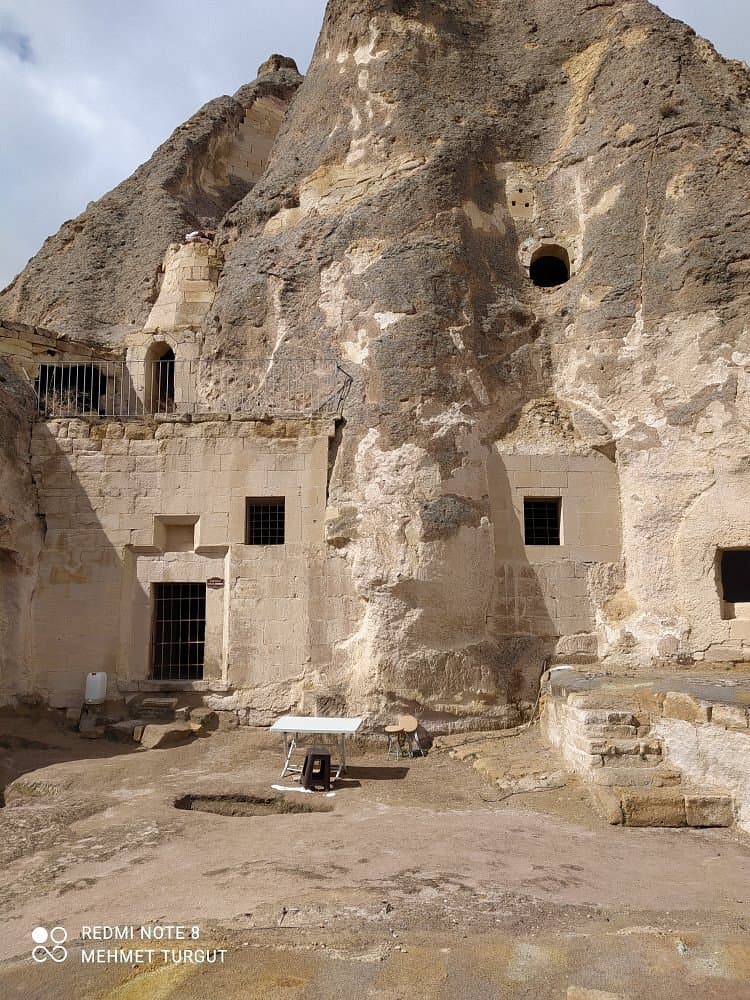
The Keslik Monastery, dating from the 7th to the 13th century, is a fascinating rock-cut complex nestled in the Cappadocian landscape. It comprises several structures carved into fairy chimneys, including churches, living quarters, and a kitchen, offering a rare glimpse into the monastic life of early Christians in the region. Its historical significance lies in its well-preserved frescoes and its status as a less-visited, authentic site.
Visitors frequently highlight the monastery's serene and uncrowded atmosphere, a stark contrast to some of Cappadocia's more popular attractions. Many reviewers commend the friendly and knowledgeable local caretaker, Cabir, who often provides personalized tours and explanations in multiple languages, including English and French. This personal interaction, sometimes accompanied by Turkish tea and apricots, significantly enhances the visitor experience, making the history come alive. The frescoes, particularly in the main church hall, are noted for their clarity, though some are in darker areas, prompting advice to bring a strong torch.
To make the most of your visit, allocate about 1 to 1.5 hours to explore the site thoroughly. Reviewers suggest bringing a strong flashlight or torch to better appreciate the frescoes in dimly lit sections. While the site is generally accessible, some steps can be slippery or steep, so comfortable, sturdy shoes are recommended, especially for older visitors or those with mobility concerns. The monastery is particularly pleasant in the morning or late afternoon when the light is softer and temperatures are milder. Consider purchasing postcards from the caretaker, as they often offer clearer images of the frescoes than photos taken on-site.
The Keslik Monastery is located a short drive from Mustafapaşa (Sinasos) and approximately 10 km from Ürgüp. Many visitors reach it by rental car, often combining it with a trip to the Soganli Valley. While there isn't specific public transport mentioned in reviews, its proximity to these towns suggests it's best accessed by private vehicle, taxi, or as part of an organized tour. Parking is generally available on-site.
A common complaint, though minor, is the difficulty in seeing some frescoes due to poor lighting. This can be easily mitigated by bringing your own strong flashlight. Some visitors also note that climbing certain sections can be tiring, especially for older individuals or children, due to slippery or uneven steps. Taking your time and wearing appropriate footwear will help manage this.