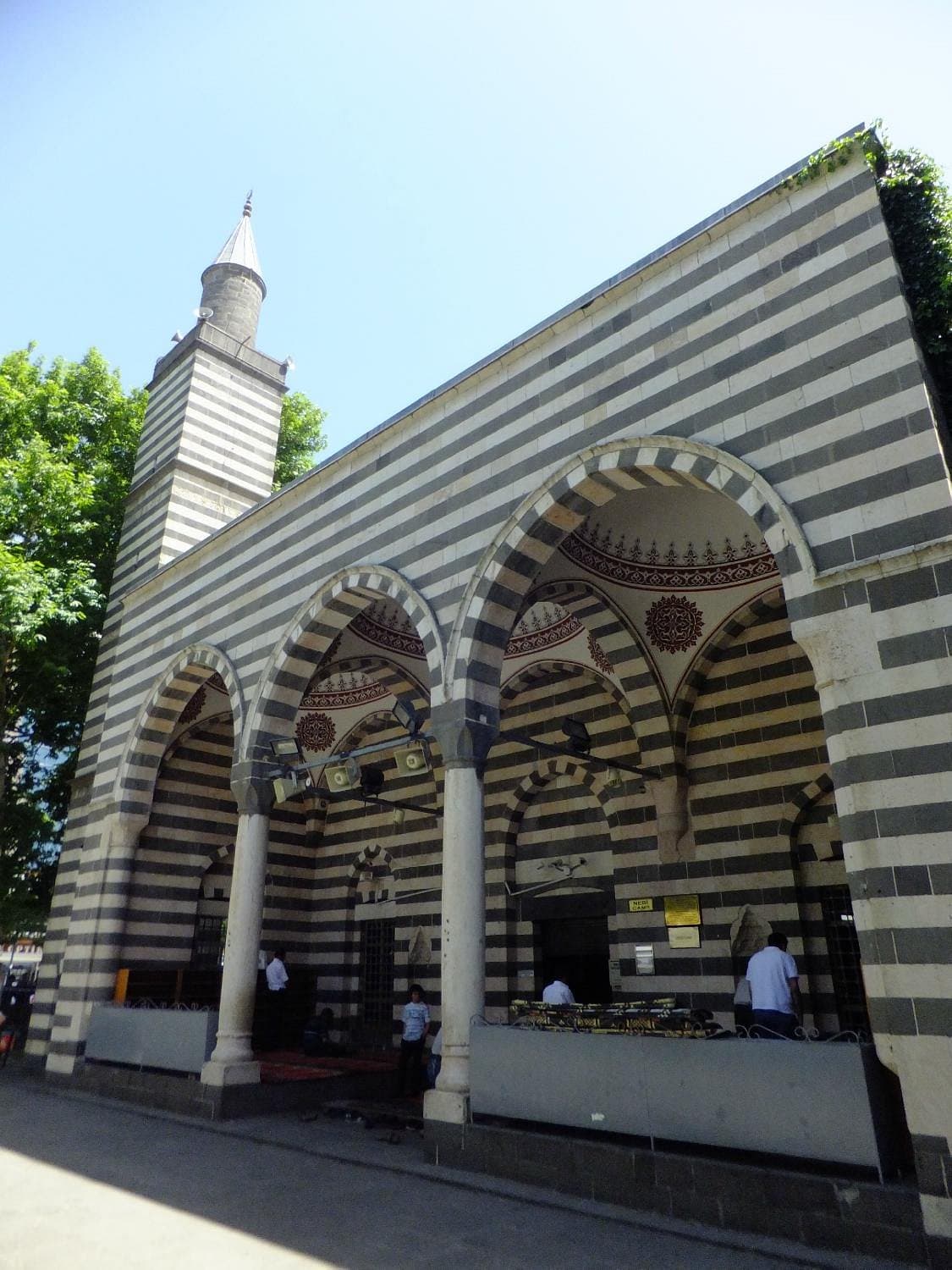
The Nebii Mosque, also known as the Prophet's Mosque, is a historical place of worship in Diyarbakır, notable for its distinctive architectural style. Built in the final years of the Aq Qoyunlu (White Sheep Turcoman) empire, it predates much of the Ottoman influence seen in the region, offering a unique blend of local tradition and early Islamic design. Its significance lies in its representation of Diyarbakır's rich and layered past, showcasing the craftsmanship of a period when different empires vied for control.
Visitors consistently highlight the mosque's striking black and white striped stonework, a characteristic feature of Diyarbakır's architecture. The minaret, in particular, draws attention with its intricate calligraphic bands and interesting inlays. While the interior is described as resembling an Ottoman mosque, its pre-Ottoman origins provide a fascinating historical context. Many reviewers find it a pleasant, albeit small, example of local mosque design, appreciating its rugged charm.
For a visit, allocate about 15-30 minutes, as it is a relatively small site. The best time to visit is during daylight hours to fully appreciate the details of the stonework and minaret. There is no entry fee, making it an accessible cultural stop. Visitors recommend combining a visit here with other attractions in the old city, particularly those near the northern gate, to make the most of your time.
The Nebii Mosque is located in the Nebiicamii Mahallesi, within the old city of Diyarbakır. It is situated near the old town's northern gate, making it easily reachable on foot if you are exploring the historical center. Public transportation options within Diyarbakır would likely involve reaching the old city walls and then walking to the mosque. As it's within a historic district, driving directly to the mosque might be challenging, and walking is generally the preferred method of exploration.
A recurring point of feedback concerns the cleanliness and modernity of the restrooms, with some visitors suggesting improvements for comfort and accessibility. While this doesn't detract from the mosque's historical and architectural value, it's a practical consideration for those planning a visit. There are also suggestions for better accessibility features like ramps for those with mobility challenges, which are currently lacking.