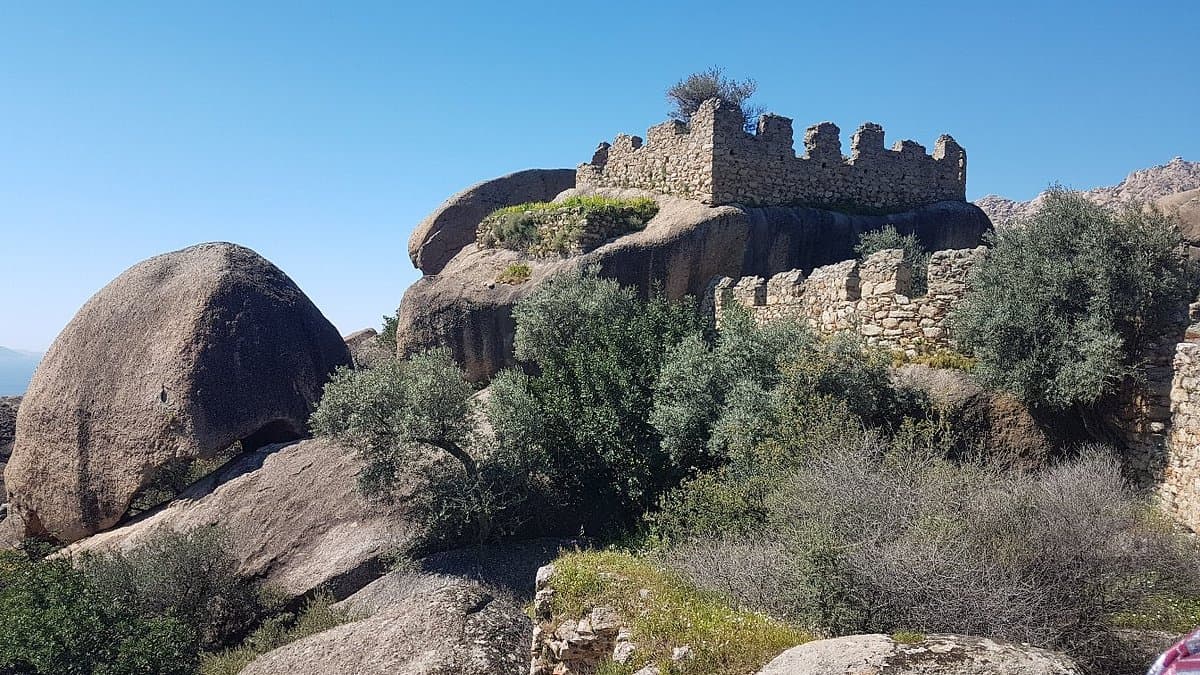
Yediler Monastery, or the Monastery of the Seven Sleepers, is a Byzantine-era monastic complex nestled in the hills near Milas. While largely in ruins, it holds historical significance and offers a glimpse into the region's past, particularly through its rock paintings. It's not a grand, preserved monument, but rather an atmospheric site for those interested in history and archaeology.
Visitors consistently highlight the journey to the monastery as a significant part of the experience. The ascent from Gölyaka village is described as a pleasant, not overly difficult walk, offering peaceful natural surroundings. Reviewers enjoy observing local life, such as olive harvesting and villagers using donkeys, especially during the winter months. The rock paintings, though part of a ruined complex, are noted as remarkable by those who make the trek.
To make the most of your visit, wear comfortable walking shoes suitable for uneven terrain. Bring water, especially on warmer days, as there are no facilities at the monastery itself. Plan to spend about 2-3 hours, including the hike up and down, to fully appreciate the scenery and the ruins. The best time to visit is during cooler months, like January, when the weather is pleasant for hiking and you might witness local activities like the olive harvest. There are no entry fees, making it a budget-friendly outing.
The monastery is accessed via a walk from Gölyaka village, which is located near Milas. Reviewers suggest driving to Gölyaka and then starting the hike from there. There is no direct public transport to the monastery itself, and a car is recommended to reach the starting point of the trail. The path is generally clear but can be rocky in places.
A common complaint is the ruined state of the monastery, which might disappoint those expecting a well-preserved historical site. To mitigate this, approach the visit as a scenic hike with historical points of interest rather than a museum-like experience. The focus should be on the journey and the natural environment as much as the ruins themselves.