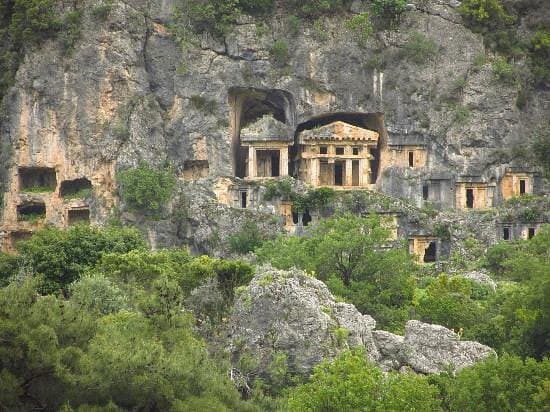
Pinara Antique City is a remarkably preserved Lycian and Roman settlement, nestled in a remote, mountainous landscape. Unlike more heavily excavated sites, Pinara retains a wild, untouched feel, offering a profound sense of history and connection to the past. Its most striking feature is the dramatic cliff face adorned with hundreds of rock-cut tombs, often described as resembling a honeycomb, alongside an impressive amphitheater, agora, and various other ruins scattered across its vast terrain.
Visitors consistently highlight the site's serene and uncrowded atmosphere, often finding themselves to be among only a few explorers. This allows for an immersive experience, free from the usual tourist hustle. Many reviewers are captivated by the sheer scale and engineering marvel of the rock tombs, particularly the so-called 'Royal Tomb' with its intricate carvings. The stunning natural beauty, with pine forests, wild tortoises, and panoramic views, significantly enhances the visit. However, several visitors note the lack of extensive on-site information, suggesting that reading up on Pinara's history beforehand can greatly enrich the experience.
To make the most of your visit, wear sturdy, comfortable shoes with good grip, as paths are often uneven, steep, and can be slippery, especially after rain. Bring plenty of water, especially during warmer months, as facilities are minimal. Sunscreen and a hat are also advisable due to limited shade. Plan for at least 2-3 hours to explore the main areas, though many find themselves spending half a day or more, drawn in by the extensive ruins and tranquil ambiance. Reviewers suggest following the red dots for a guided trail, but also encourage venturing off the main path to discover hidden gems. The best time to visit is in the morning or late afternoon to avoid the midday heat and enjoy the softer light for photography; sunset views are particularly praised.
Reaching Pinara requires some effort, but recent road upgrades have made it more accessible. The site is well signposted off the D400 main road. The final 2-3 kilometers involve driving on an unpaved, gravel, and sometimes potholed track. While many visitors successfully navigate this in a standard rental car, some recommend a 4x4 for greater comfort, especially if you are nervous about rough roads. There is ample parking at the entrance. Public transport is not ideal; while you can take a bus to the turn-off point at Minare, it's still several kilometers to the site, making a taxi or private car the most practical option.
The most common complaint revolves around the challenging access road and the lack of detailed interpretive signage at the site. To mitigate this, drive slowly and carefully on the final stretch of road, and consider a vehicle with higher clearance if possible. For the lack of information, download a guide or research the site's history before your visit to fully appreciate its significance. Some visitors also mention the vastness of the site and the lack of clear directional arrows, which can lead to feeling lost; however, this also contributes to the sense of discovery for many.