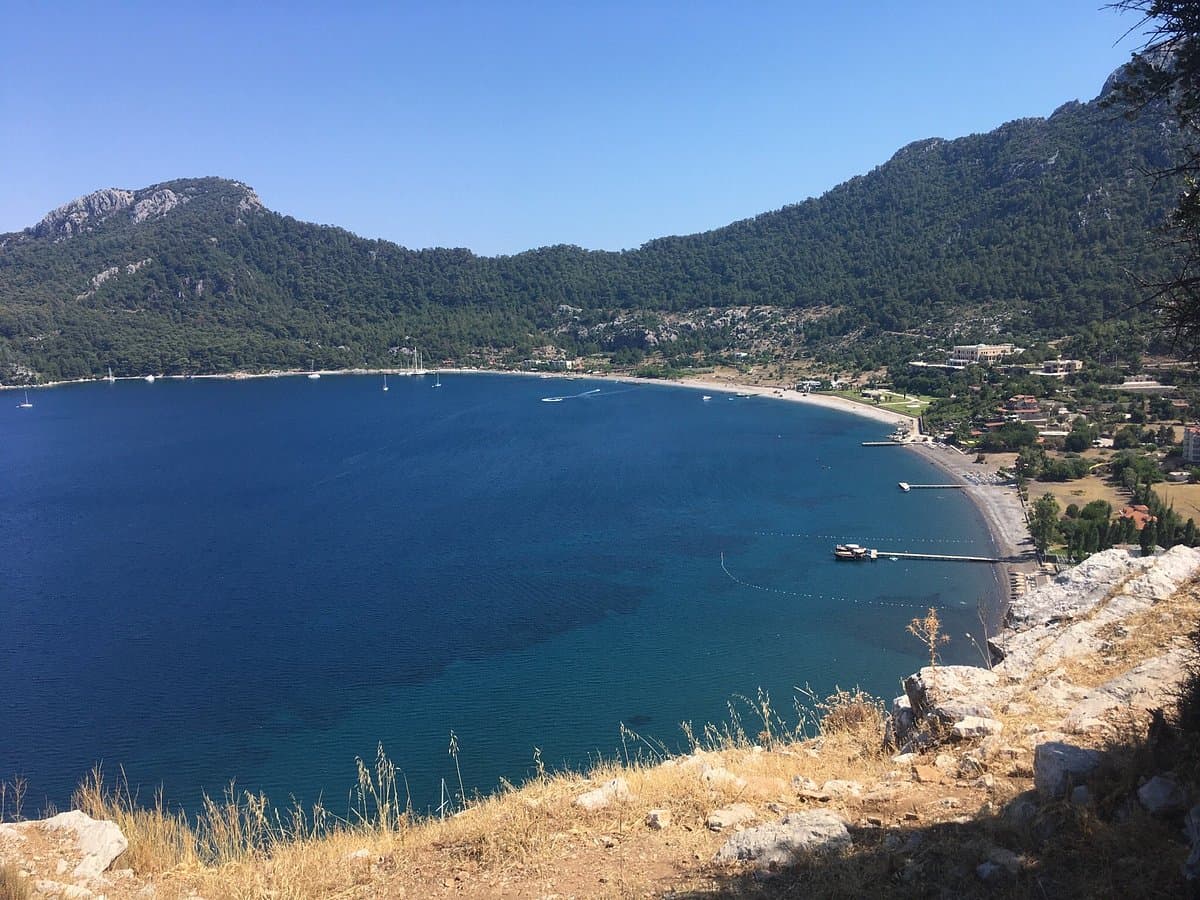
The Ancient City Amos, dating back to the 2nd-5th centuries BC, is a Hellenistic settlement offering a glimpse into Turkey's rich ancient past. While not as extensive as some other sites, its well-preserved amphitheater, remnants of city walls, and cisterns provide enough historical context to engage those interested in archaeology. Its strategic location, overlooking both Amos and Kumlubük bays and even the island of Rhodes, underscores its historical importance as a defensive and observational outpost.
Visitors consistently highlight the stunning panoramic views as the main draw, often describing them as "worth the climb alone." The site's uncrowded nature is also frequently praised, allowing for a peaceful exploration and a chance to sit in the ancient amphitheater, imagining its past. Many appreciate the opportunity to wander freely among the ruins without the usual tourist infrastructure, noting the clean and green surroundings. However, some reviewers caution that there isn't a great deal to see beyond the amphitheater and the views, so managing expectations is key.
For a rewarding visit, consider going in the early morning or late afternoon, especially during warmer months, to avoid the heat and enjoy the best light for photography. Reviewers recommend wearing stout, comfortable footwear due to the uphill walk and uneven terrain. Bring water, as there are no facilities or refreshment options directly at the site. Most visitors find that 30 minutes to an hour is sufficient to explore the ruins and soak in the views. Combining your visit with a meal at a nearby restaurant in Kumlubük or Turunç, or a swim in Amos Bay, is a popular suggestion.
Reaching Amos requires some planning. From Marmaris, take a dolmuş (minibus) to Turunç. Dolmuşes run approximately hourly from the main bus station or stops along the main street. From Turunç, it's about a 3 km uphill walk to Amos. Many visitors enjoy this scenic walk, but a taxi or moped is an alternative for those preferring not to walk. Some reviewers mention that the dolmuş service to Turunç can be infrequent or full, especially during peak times, so checking schedules in advance is advisable. If driving, there's typically parking available, though the road can be narrow. Be aware that recent fires may have altered some walking routes, so verify current conditions if planning a longer hike.
The primary complaint is the limited extent of the ruins themselves, with some visitors feeling there isn't "much to see." To mitigate this, focus on the experience: the historical atmosphere, the impressive amphitheater, and especially the spectacular views. Don't expect a sprawling archaeological park; instead, appreciate it as a compact site offering a unique blend of history and natural beauty. The lack of facilities (toilets, shops) is also noted, reinforcing the advice to bring your own water and plan for refreshments elsewhere.