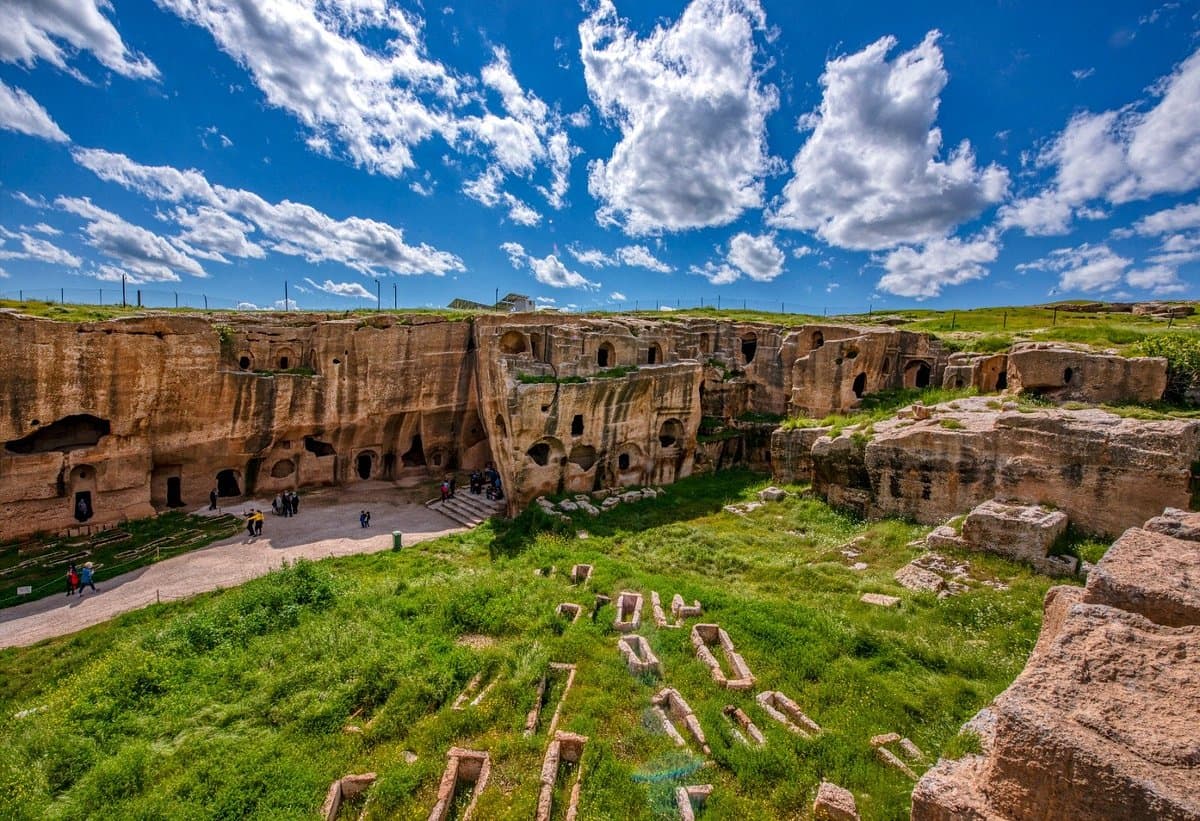
Dara Mesopotamia Ruins represent the remains of an important Roman and Byzantine frontier city, established in 505-507 AD by Emperor Anastasius to defend against the Sassanids. Often dubbed the "Ephesus of the East," this sprawling site offers a profound connection to ancient military and civilian life. While much of the ancient city lies beneath the modern village, the excavated necropolis, impressive cisterns, and remnants of city walls provide a compelling glimpse into its past significance.
Visitors frequently praise the sheer scale and historical depth of Dara, particularly highlighting the necropolis with its visible human bones and the engineering marvel of the underground cisterns. Many find the atmosphere uniquely historical and less touristy compared to more developed sites, appreciating the opportunity to explore at their own pace. However, some reviewers note the lack of comprehensive signage and information in English, which can make independent exploration challenging without prior research or a guide.
To make the most of your visit, allocate at least 2-3 hours, as the sites are spread out. It is highly recommended to hire a local guide, as many visitors found their experience significantly enhanced by the narratives and insights provided. These guides, often local youths, can be found at the entrance and work for tips. Bring comfortable shoes for walking over uneven terrain, and consider visiting in the cooler months (spring or autumn) to avoid the intense summer heat. While entrance is free, supporting local vendors by purchasing a drink or snack is a nice gesture.
Dara is located approximately 30-35 km southeast of Mardin. The most practical way to reach the ruins is by taxi from Mardin, with a round-trip fare typically around 200 TL (as of older reviews, prices may vary). It's advisable to negotiate the fare with the driver beforehand and arrange for them to wait or drive you between the scattered points of interest, as public transport options are limited. Some visitors have successfully combined a trip to Dara with other nearby attractions like the Deyrulzafaran Monastery. Be aware that the site is close to the Syrian border, though visitors generally report feeling safe.
A common complaint is the lack of clear directions and English explanations, leading some visitors to miss key areas like the main cistern, which is often located under a local's home. To mitigate this, either hire a guide or thoroughly research the layout and specific locations of the necropolis, cisterns, and other ruins before your visit. Some parts of the site, like certain churches, may be closed due to safety concerns, so manage expectations regarding full accessibility.