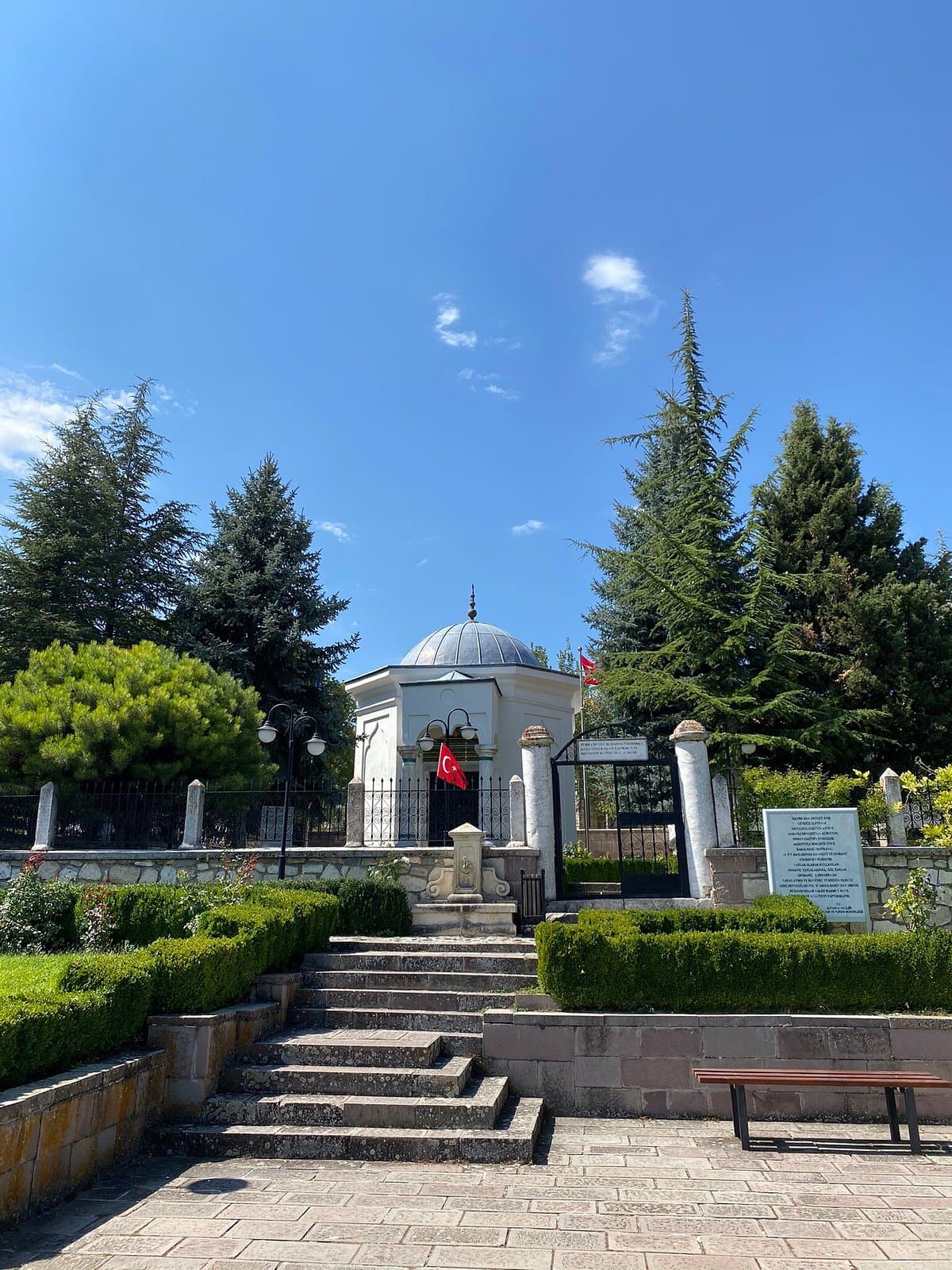
The Hayme Ana Tomb (Hayme Ana Türbesi) is a significant historical site dedicated to Hayme Ana, the grandmother of Osman I, the founder of the Ottoman Empire, and mother of Ertuğrul Gazi. Located in the Domaniç district of Kütahya, this türbe (tomb) marks the resting place of a pivotal figure in early Ottoman history, offering a tangible link to the empire's nomadic origins before its settlement and expansion.
Visitors consistently describe the site as peaceful and historically resonant, providing a quiet moment for reflection on the foundational period of the Ottoman Empire. Reviewers often highlight the sense of connection to history, especially for those familiar with the popular Turkish historical series "Diriliş: Ertuğrul." The small, unassuming nature of the tomb allows for a more intimate experience compared to grander, later Ottoman structures. While the site itself is modest, its historical importance is paramount for those tracing the roots of the empire.
To make the most of your visit, allocate about 30 minutes to an hour to explore the tomb and its immediate surroundings. The best time to visit is during daylight hours, particularly in spring or autumn, to avoid extreme temperatures and enjoy the scenic drive. There are no specific items to bring, but comfortable shoes are advisable. Visitors note that the area can be snowy in winter, so check weather conditions if traveling during colder months.
The Hayme Ana Tomb is situated in Çarşamba Köyü, Domaniç, Kütahya. Given its rural location, reaching the site typically requires a private vehicle. Reviewers mention driving through snowy roads to get there, indicating that public transport options are likely limited or non-existent. It is approximately 50 km south of Kütahya. Plan your route in advance, as signage might be sparse in the more remote sections of the journey.
A common observation is the site's remote and somewhat isolated nature. This can be mitigated by combining the visit with other attractions in the Kütahya or Domaniç region, making it part of a larger historical tour rather than a standalone destination. Ensure your vehicle is suitable for potentially challenging road conditions, especially outside of peak season.