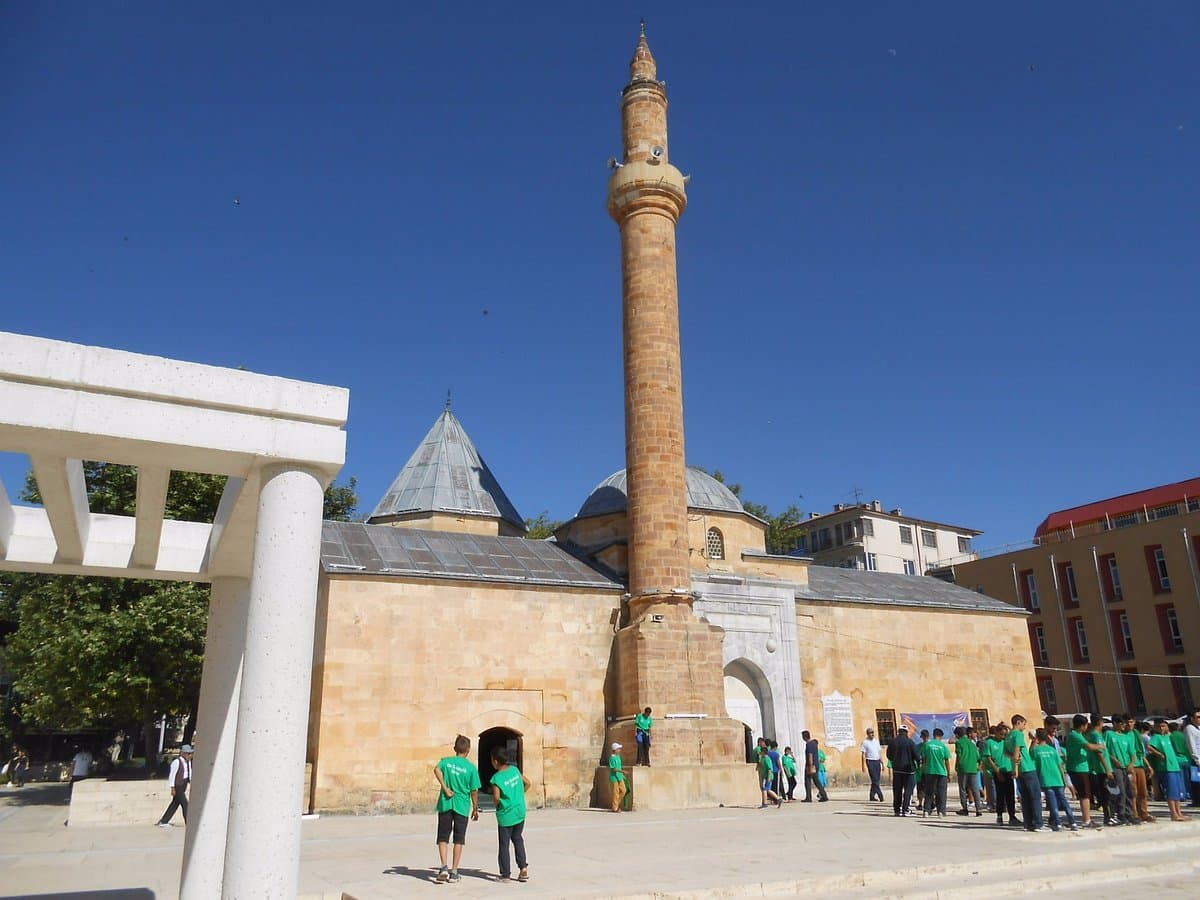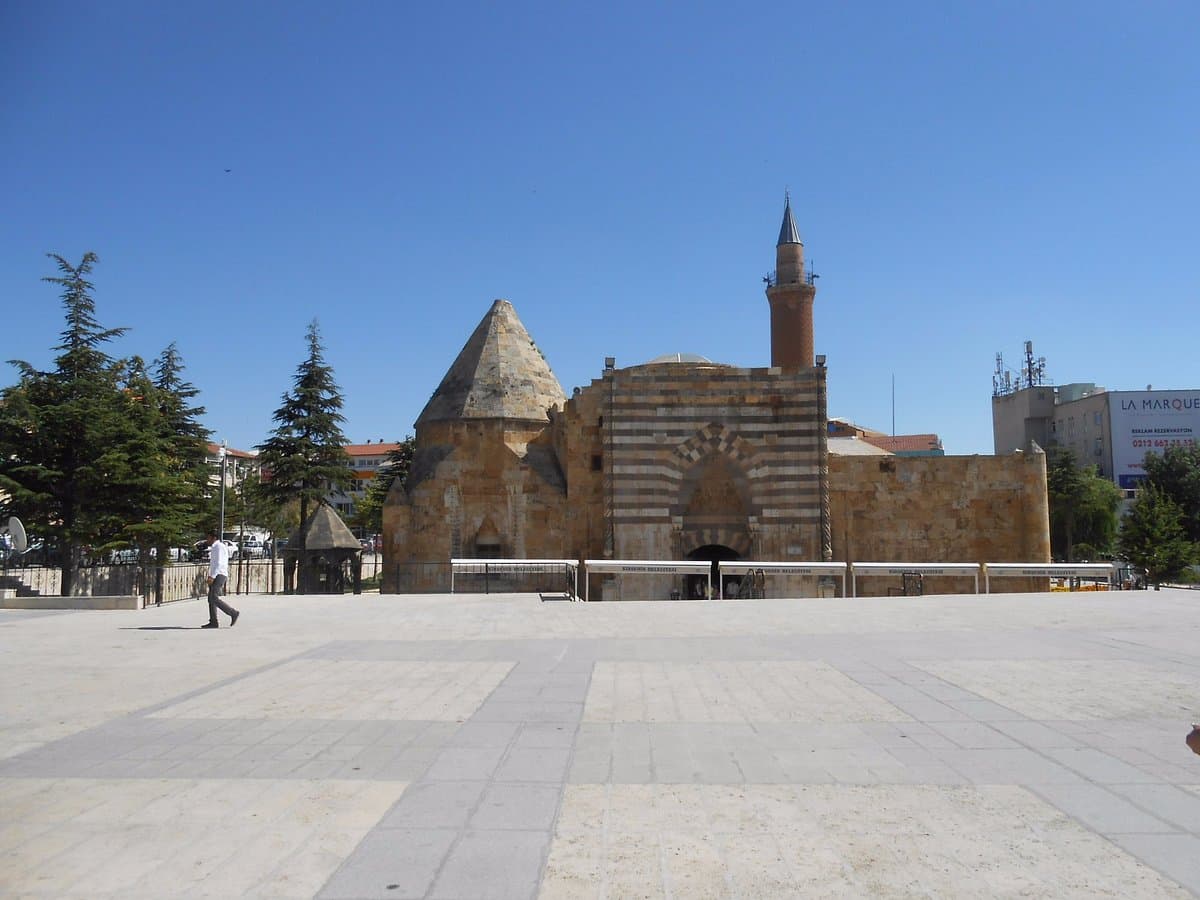
The Cacabey Madrasa, also known as the Cacabey Mosque, is a remarkable 13th-century structure located in Kırşehir, Turkey. Built in 1272 during the Seljuk period, it originally functioned as a madrasa (Islamic school) with a strong focus on astronomy, earning it the moniker of an early 'space school' or observatory. Its significance lies in its advanced architectural design and its role as a center for scientific research centuries before similar institutions emerged in Europe.
Visitors consistently praise the madrasa's unique and intricate stone-cut workmanship, particularly the conical shapes on its columns and the detailed carvings that some interpret as celestial motifs, including planets and what appear to be 'rocket figures.' Many reviewers highlight the fascinating historical context of star observation using a well, a method that captures the imagination. The building's conversion into a mosque means it remains a living historical site, blending its scientific past with its ongoing religious function. Several visitors recommend taking the time to appreciate the historical context and the architectural details, suggesting that a guide or prior reading can significantly enhance the experience.
To fully appreciate the site, visitors should allocate about 1-2 hours. It's advisable to visit during daylight hours to best see the architectural details. Bringing a guidebook or doing some research beforehand is highly recommended to understand the historical and astronomical significance, as the site itself may not have extensive interpretive signs in English. Don't forget to look for Cacabey's mysterious tomb, located at the bottom left of the mosque, which adds another layer of historical intrigue.
The Cacabey Madrasa is conveniently located in the city center of Kırşehir. Kırşehir itself is about 100 km from the popular Cappadocia region, making it a feasible stop for those traveling through the area. As it's centrally located, it is easily accessible by walking if you are already in Kırşehir. For those driving, parking should be available nearby in the city center.
While most reviews are highly positive, some visitors express skepticism about the more speculative interpretations of the architectural elements, such as the 'rocket' shapes or the exact number of planets depicted. However, even these reviewers acknowledge the building's historical importance and unique design. To mitigate any disappointment, approach the site with an appreciation for its historical context as an early center of learning and its impressive Seljuk architecture, rather than focusing solely on potentially exaggerated claims about its astronomical depictions.