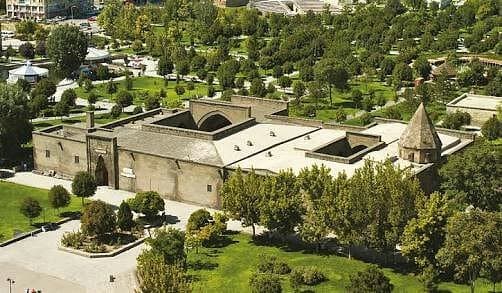
The Gevher Nesibe Museum of Seljuk Civilization, also known as the Çifte Medrese (Double Madrasa), is a remarkable historical complex dating back to the early 13th century. Originally built as a hospital and medical school by the Seljuk Sultan Gıyaseddin Keyhüsrev I in memory of his sister Gevher Nesibe, it stands as one of the world's earliest examples of a dedicated medical facility. Today, it serves as a museum, offering a comprehensive overview of the Seljuk civilization in Anatolia, with a particular focus on their advancements in medicine, science, and culture.
Visitors consistently praise the museum for its well-preserved architecture and the engaging way it presents history. Many are impressed by the detailed exhibits on early medical practices, including water and music therapy, and the display of ancient medical tools. The interactive explanations and provisions for visually impaired visitors are also frequently highlighted as positive aspects. Reviewers often describe the experience as a journey back in time, appreciating the depth of information provided about the Seljuk Empire's contributions to various fields.
However, a recurring point of concern among international visitors is the language barrier. Several reviewers note that much of the information, especially the detailed descriptions on screens, is primarily in Turkish, which can limit the experience for non-Turkish speakers. To make the most of your visit, consider bringing a translation app or hiring a local guide if you don't understand Turkish. Allow approximately 1.5 to 2 hours to explore the museum thoroughly. It's a cool spot, literally, making it a pleasant escape on a hot day. There is also a souvenir shop inside for those looking for mementos.
The museum is conveniently located in the heart of Kayseri, within the Mimar Sinan Park. Its central position makes it easily accessible on foot from many parts of the city center. Public transportation options in Kayseri, such as buses or trams, would likely have stops nearby due to its central location. For those driving, the museum is situated on Prof. Dr. Turhan Feyzioğlu Cad., and while specific parking details aren't frequently mentioned in reviews, being in a park area might offer some parking possibilities.
The main complaint revolves around the lack of English translations for many exhibits. While the architectural beauty and some visual displays are universally appreciable, the educational value can be diminished for non-Turkish speakers. To mitigate this, consider researching the Seljuk period and the history of the Gevher Nesibe complex beforehand. This pre-reading can provide a valuable context that enhances your understanding even without extensive in-situ translations.