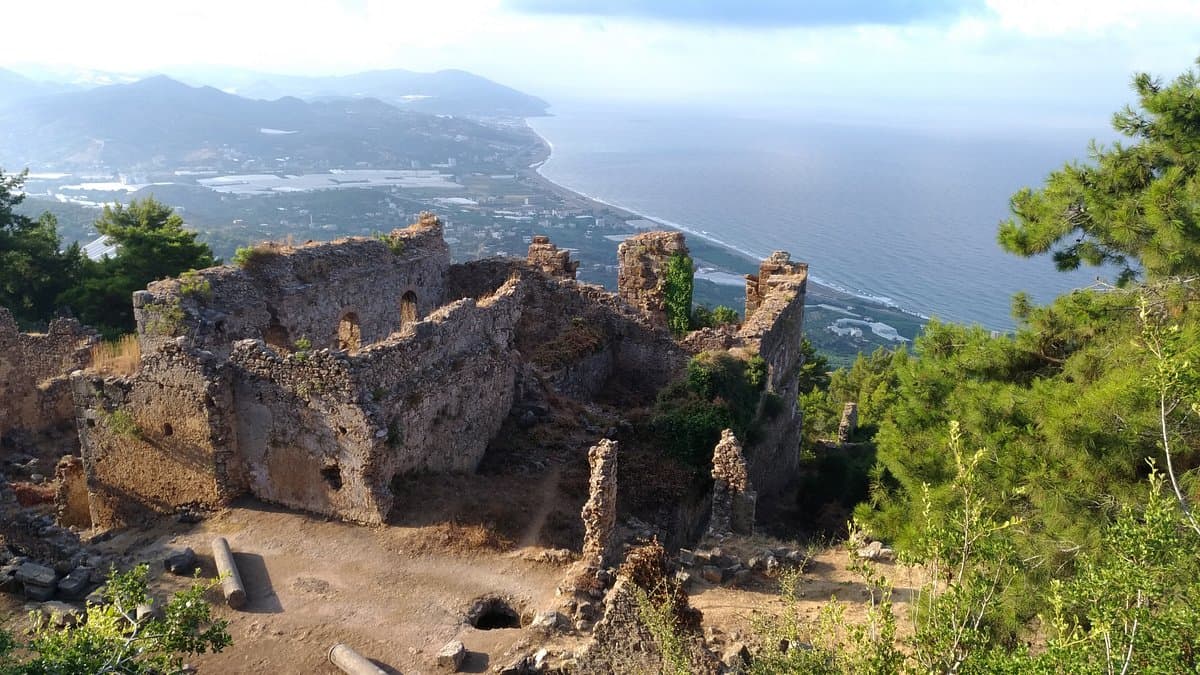
Syedra Ancient City, dating back to the 7th century BC with significant Roman influence, is an archaeological site perched on a hill overlooking the Mediterranean Sea, approximately 400 meters above sea level. It offers a glimpse into ancient life with well-preserved structures and ongoing excavation efforts. Its historical significance lies in its long occupation and strategic location, providing insights into the region's past.
Visitors consistently praise the site for its breathtaking panoramic views, especially overlooking Alanya and the coastline. Many appreciate the peaceful, uncrowded atmosphere, often finding themselves to be among only a few visitors. The ongoing excavations and renovations are noted, with some speculating that entry fees might be introduced in the future. While some ruins are not in pristine condition, the overall experience of exploring the colonnaded street, monumental tomb, and other scattered structures is considered highly rewarding. The presence of wooden pathways and trees adds to the park-like feel, making exploration more accessible and enjoyable.
To make the most of your visit, wear comfortable walking shoes or sneakers, as the site involves climbing stairs and navigating uneven terrain. Bringing water is advisable, especially on sunny days, as there are currently no shops on site, though one reviewer mentioned a cafe on the premises. Plan to spend 2-3 hours exploring the extensive ruins. The best time to visit is during cooler months or early morning/late afternoon to avoid the midday heat. Entry is currently free, offering a budget-friendly historical excursion.
Reaching Syedra Ancient City requires some effort. It's located off the D400 highway, near the village of Seki, towards Gazipaşa from Alanya. While the steep road leading up to the site is newly paved and easily driveable, many visitors opt for a taxi from Alanya, which costs around €50 for a round trip. For those using public transport, one reviewer mentioned taking a bus from Alanya to Demirtas (approximately 30 minutes) and then facing a challenging 4.4 km uphill walk from the main road to the site. Driving yourself or taking a taxi is generally recommended for convenience, especially given the significant uphill climb.
A common complaint is the sparse information available on-site about the different buildings, which can make it challenging to fully understand the historical context without prior research. To mitigate this, consider researching the site's history before your visit or hiring a guide if available. While the climb to the site is steep, the well-surfaced road and wooden pathways within the ruins help manage the physical exertion, but visitors with mobility issues should be aware of the challenging terrain.