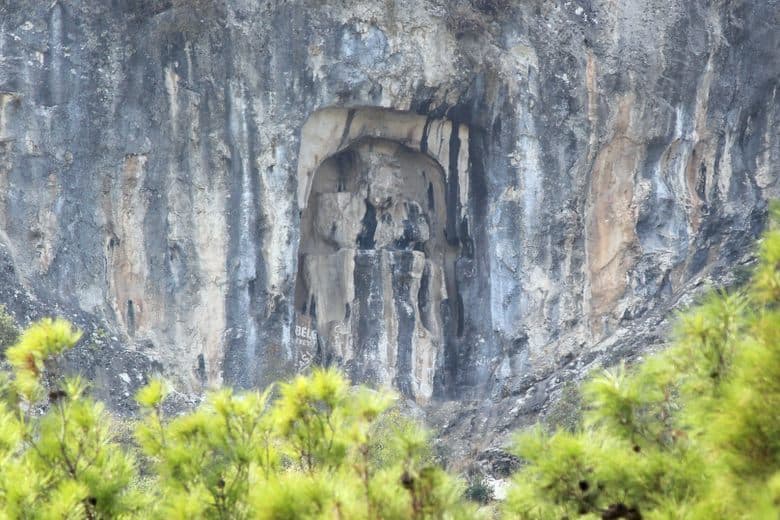
The Manisa Relief is an ancient rock carving located on Mount Sipylus, overlooking the city of Manisa in Turkey. Believed to be of Hittite origin, dating back to the 14th century BC, this relief is a significant, albeit enigmatic, piece of Anatolian history. Scholars suggest it depicts a deity, possibly Cybele, the Anatolian mother goddess, or a weather/mountain god, reflecting the religious practices of the Hittite civilization.
Visitors consistently note the relief's highly eroded state. Many describe it as difficult to discern, requiring a keen eye and some imagination to make out the seated human figure with its tall headdress and arms across its chest. Reviewers often mention that the site is more about the historical significance and the journey to find it than the visual impact of the carving itself. There are no facilities or interpretive signs at the site, so visitors should come prepared with their own research.
To make the most of a visit, it is advisable to bring binoculars to get a clearer view of the relief from a distance, as getting very close can be challenging. A visit typically takes about 30-60 minutes, primarily for the viewing and contemplation. The best time to visit is during daylight hours, preferably in the morning or late afternoon to avoid harsh midday sun which can make the already faded carving even harder to see. There are no specific money-saving tips as the site is freely accessible.
The Manisa Relief is located on Mount Sipylus near Şehzadeler, Manisa. Access typically involves driving or taking a taxi to the general area of Mount Sipylus. Specific public transport options directly to the relief are not commonly mentioned in visitor accounts, suggesting a private vehicle or taxi is the most practical way to reach it. Visitors should be prepared for some walking or light hiking on uneven terrain to get a good vantage point for viewing the relief.
The primary complaint from visitors is the extreme erosion of the relief, making it hard to appreciate. To mitigate this, manage expectations by understanding that this is an archaeological site valued for its historical context rather than its visual grandeur. Bringing reference photos of what the relief might have looked like in its prime can also enhance the experience.