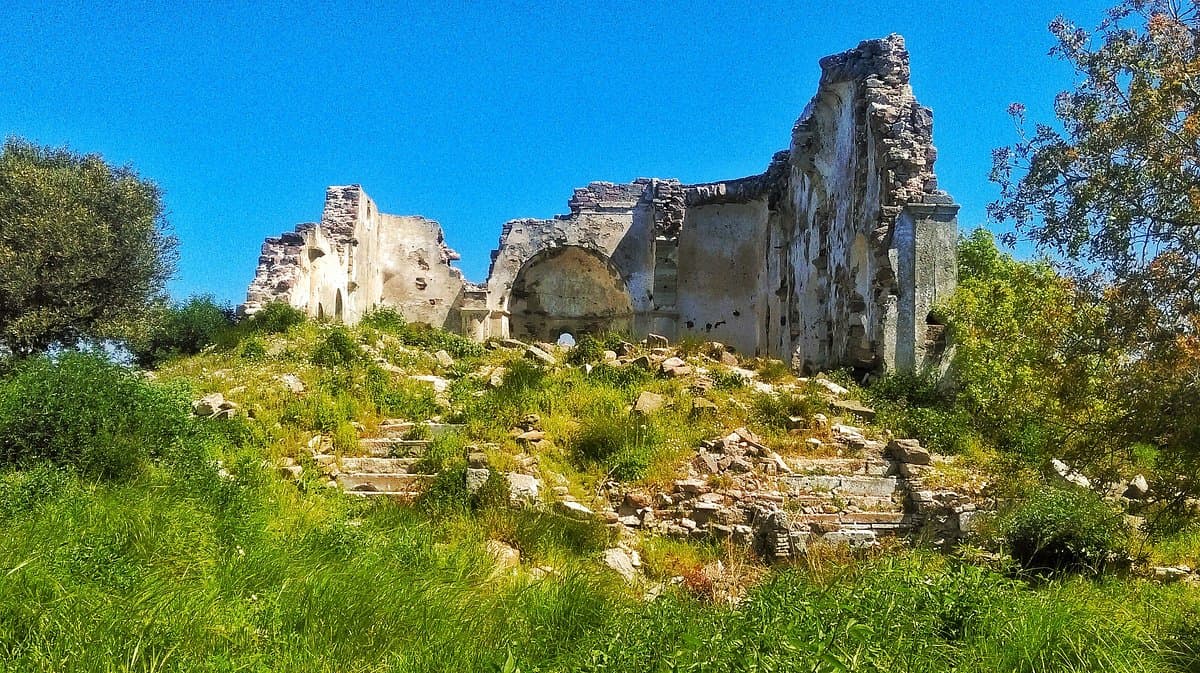
The Erythrai Archaeological Site, or Erythrai Örenyeri, preserves the remains of one of the twelve Ionian cities, a significant Greek and Roman trading port that flourished from 88 BC into the Roman period. Visited even by Alexander the Great, this extensive site offers a tangible connection to ancient history, with remnants of its past spread across a sleepy village.
Visitors consistently praise the site's large scale and the remarkable lack of crowds, allowing for a more intimate exploration. The panoramic views from the top of the ancient city, especially at sunset, are frequently highlighted as a major draw. Reviewers often mention the uncovered theater, the remains of an older Temple of Athena (dating back to about 800 BC), and a Byzantine basilica as key points of interest. The staff are noted for being friendly and helpful, contributing to a pleasant visit.
To make the most of your visit, wear decent footwear as the terrain can be steep and uneven, especially for the climb to the overgrown theater and the path to the Byzantine remains. While some buildings are only ruins, others are well-preserved and worth the effort. Allocate 1.5 to 2 hours to explore the site thoroughly, allowing time to ascend to the acropolis for the best views. Bringing water is advisable, especially during warmer months, as the site is exposed. There is a lack of information boards, so consider researching the site beforehand or using a guide to enhance your understanding.
The site is accessible by dolmuş (minibus) from Çeşme. The journey takes approximately an hour and a quarter, and the dolmuş will drop you a short walk from the amphitheater. An hourly dolmuş service runs from Çeşme to Ildırı, which is near the site. Driving is also an option, offering more flexibility, though specific parking information is not widely detailed in reviews.
A common complaint among visitors is the general state of neglect and the lack of comprehensive information at the site, which can make it challenging to fully appreciate the historical significance of some ruins. To mitigate this, consider downloading an audio guide or a historical overview of Erythrai before your visit. While the site is free to enter, the lack of interpretive signage means you'll need to be proactive in your learning.