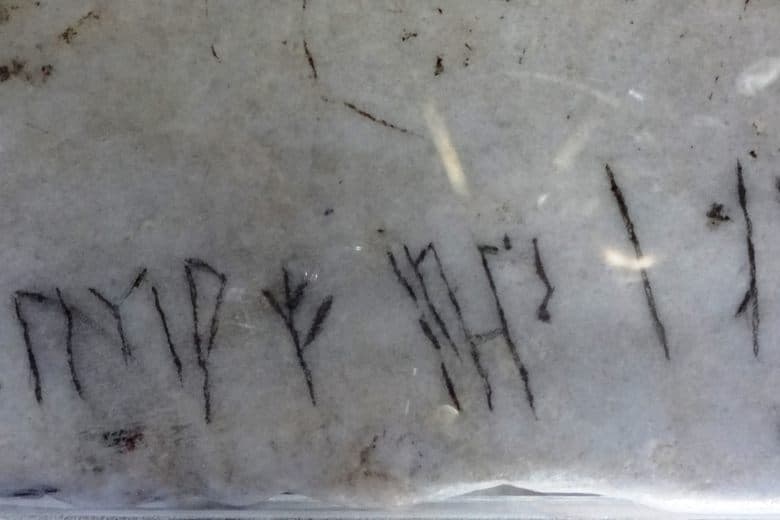
The Viking Runes at Hagia Sophia represent a fascinating, albeit small, historical artifact within one of Istanbul's most iconic landmarks. Carved into a marble parapet in the upper gallery, this runic inscription is attributed to a Varangian Guard member, likely named Halfdan, who served the Byzantine Empire around the 9th to 11th centuries. It serves as a tangible reminder of the diverse history of Constantinople and the presence of Norse warriors far from their homelands.
Visitors consistently find this detail intriguing, often describing it as a 'hidden gem' or a 'must-see for history buffs.' Many appreciate the sense of connection to a distant past and the human urge to leave one's mark, even in such a grand setting. However, some reviewers note that the inscription itself is small and can be difficult to locate without prior knowledge or a guide. The protective plastic slab, while necessary for preservation, can sometimes obscure the view.
To make the most of your visit, it's highly recommended to research the exact location of the runes within the upper gallery before you go, as signage is minimal. Bring a good camera with zoom capabilities if you wish to capture a clear image. Plan to spend only a few minutes specifically looking for the runes, as the main attraction is the Hagia Sophia itself. This is an excellent detail to seek out if you have a particular interest in Viking history or the Varangian Guard, but it should not be the sole purpose of your visit. Consider visiting during off-peak hours to avoid crowds in the upper gallery, which can make it easier to find and view the inscription.
The Viking Runes are located within the Hagia Sophia, which is centrally located in Sultanahmet, Istanbul. The easiest way to reach Hagia Sophia is by tram (T1 line) to the Sultanahmet stop, which is just a short walk away. Many visitors also arrive by taxi or on foot if staying in the immediate vicinity. Once inside Hagia Sophia, proceed to the upper gallery, which is accessible via a ramp. The runes are situated on a marble parapet in this gallery, typically on the northern side, though their exact position can be tricky to pinpoint without guidance.
A common complaint is the difficulty in finding the runes due to their small size and the lack of prominent signage. To mitigate this, consider hiring a knowledgeable guide who can point them out, or use a detailed map or online resource that specifies their location. Some visitors also express disappointment that the inscription is not more clearly visible or accessible, but this is a necessary measure for its preservation.