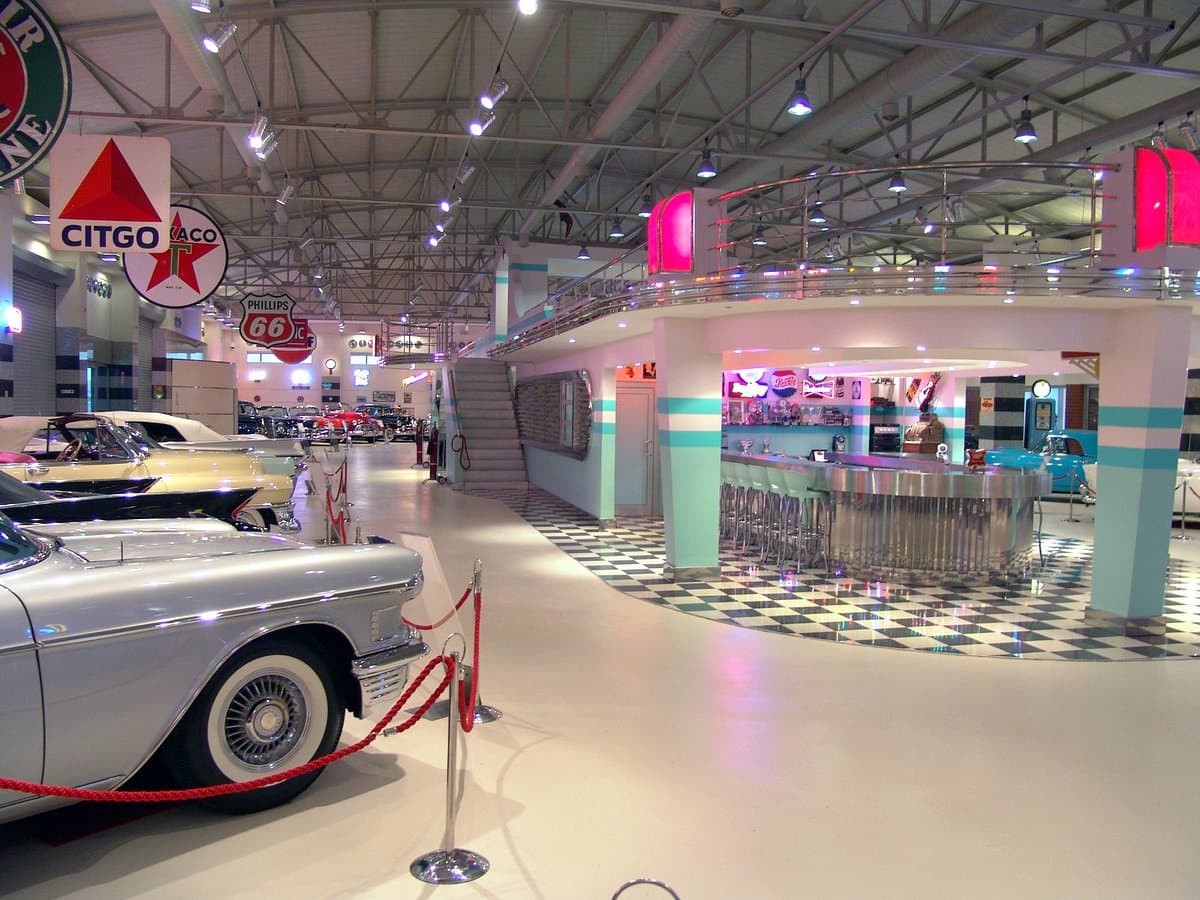
The Ural Ataman Classic Car Museum is a privately owned collection specialising in meticulously restored classic automobiles, primarily from the 1950s and 1960s, though vehicles span from the 1920s to the 1970s. The museum features approximately 70–100 cars alongside motorcycles, vintage commercial vehicles, and a substantial collection of die-cast model cars and period memorabilia. The collection emphasises American classics—Chevrolets, Cadillacs, Ford Mustangs, Corvettes, and Impalas—but also includes notable European marques such as Jaguar E-Types, Mercedes-Benz (including a rare 1955 Mercedes-Benz 300 SL Gullwing), British sports cars, and German vehicles. Each vehicle is presented in pristine condition with bilingual (Turkish and English) informational placards detailing specifications and history.
Visitors consistently praise the museum's immersive 1950s–1960s themed interior design, featuring neon signage, period-appropriate music, and a retro diner aesthetic that transports guests to a specific era. The space is air-conditioned, well-lit, and meticulously clean—a detail many reviewers highlight as exceptional. The staff are noted as friendly, English-speaking, and accommodating. The museum also hosts private events, corporate functions, and celebrations. A small café serves refreshments, and visitors mention the option to relax by the seaside after touring. The collection appeals to both dedicated car enthusiasts and families with children, as the visual spectacle and nostalgic atmosphere engage visitors regardless of automotive knowledge.
Plan to spend 1–2 hours at the museum depending on your interest level. Casual visitors who photograph the cars typically complete a tour in 45 minutes to an hour; those who read the detailed specifications and study each vehicle can easily spend 2–3 hours. Bring comfortable walking shoes, as the layout requires standing and moving between displays. The museum is air-conditioned, so dress accordingly. Photography is permitted with standard cameras and smartphones, but DSLR cameras with detachable lenses are not allowed—clarify this at reception if you plan to bring professional equipment. Entry fees have varied in recent years (ranging from 5–50 TL depending on the period and any special pricing); current rates are typically 10–20 TL, making it one of Istanbul's most affordable attractions. An optional guidebook detailing the cars is available for purchase and highly recommended for those seeking deeper information. Visiting on weekends (particularly Saturday and Sunday) is advisable, as the museum operates on limited hours and is occasionally closed on weekdays.
The museum is located in Tarabya, a residential neighbourhood on the European shore of the Bosphorus, approximately 20–25 km north of central Istanbul. Public transport is the most practical option. Take the M2 metro (green line, T4) to Hacıosman station, the terminus. From there, board bus 29D or 29E, which runs directly to the museum area; the journey takes approximately 15–20 minutes. Alternatively, some visitors report success using Google Maps' public transport directions to identify the most current bus routes. A taxi from central Istanbul (Sultanahmet or Taksim) costs approximately 80–120 TL and takes 30–45 minutes depending on traffic; the museum staff will call a taxi for your return journey. The museum has a small dedicated parking lot with street parking available nearby, making it accessible by private car. The address is Ferahevler Mahallesi, Nuri Paşa Caddesi, No. 81, Tarabya, Istanbul. Note that the location is somewhat residential and unassuming from the exterior, so verify the address before arrival.
Common challenges include the museum's limited operating hours (typically Friday–Sunday, though hours vary seasonally) and its distance from central Istanbul's main tourist zones. Visitors unfamiliar with Istanbul's public transport system may find the journey daunting; however, multiple reviewers confirm that Google Maps public transport navigation is reliable and the bus journey is straightforward without transfers. Some visitors note that the museum's remote location means it is rarely crowded, which enhances the experience. Confirm opening hours by phone or online before visiting, as schedules can change. The museum's location in a wealthy residential area means nearby dining and shopping options are limited; plan meals accordingly or take advantage of the on-site café. The museum's policy of not allowing DSLR photography may disappoint professional photographers, but smartphone and compact camera photography is unrestricted.