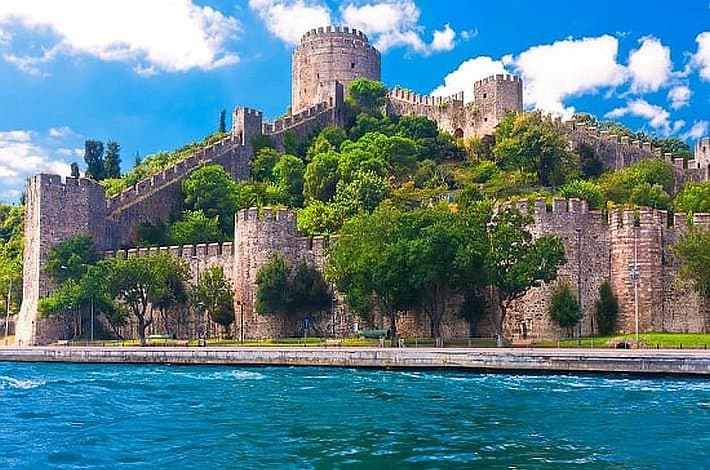
Rumeli Fortress, or Rumeli Hisarı, is a monumental Ottoman fortress built by Sultan Mehmed II in a remarkable four months in 1452, just prior to the conquest of Constantinople. Strategically located at the narrowest point of the Bosphorus on the European side, it was designed to cut off naval aid to the Byzantine capital, earning it the nickname "Throat Cutter." Today, it stands as a powerful symbol of Ottoman military prowess and offers a unique historical perspective on the city's pivotal moment.
Visitors consistently highlight the fortress's impressive scale and its commanding views over the Bosphorus, the Fatih Sultan Mehmet Bridge, and the Asian side of Istanbul. Many find the sheer size of the walls and towers awe-inspiring, especially considering the speed of its construction. The historical context, particularly its role in the Fall of Constantinople, deeply resonates with those interested in history. Reviewers frequently mention the beautiful scenery, the peaceful atmosphere, and the opportunity for excellent photography, especially from higher accessible points within the grounds. The presence of friendly cats throughout the fortress is also a charming detail noted by several visitors.
However, a recurring theme in recent reviews is the ongoing extensive restoration work. Many areas, including the battlements and most towers, are currently closed to the public, which can be disappointing for visitors hoping to climb the walls. Despite this, many still find the visit worthwhile for the views and the historical ambiance. It's advisable to wear comfortable shoes as there are many stairs and uneven paths, and some areas involve uphill walking. While some visitors suggest spending 1-2 hours, others recommend longer to fully soak in the atmosphere and views. The fortress is generally less crowded than central Istanbul attractions, offering a more tranquil experience. Consider visiting in the morning or late afternoon for the best light and fewer crowds.
Reaching Rumeli Fortress requires a bit of travel from central Istanbul. Public transport options include taking the T1 tram to Kabataş, then a bus (such as 25E, 40, 40T, or 42M) along the Bosphorus to the Rumeli Hisarı stop. Alternatively, some visitors take the M2 metro to Boğaziçi Üniversitesi station, which is about a 30-minute walk downhill to the fortress. Taxis are another convenient option, especially if traveling from further afield. Many visitors also enjoy seeing the fortress from a Bosphorus boat tour, which provides excellent photographic opportunities of its exterior before or after an interior visit. The entrance is often described as somewhat hidden; look for a gap in the yellow fence from the main road.
The main complaint revolves around the limited access due to renovations. To mitigate disappointment, manage your expectations: understand that you will primarily be exploring the grounds and lower sections, not climbing the towers. Some visitors also note a lack of detailed informational signage inside, so bringing a guidebook or doing some research beforehand can enhance the experience. While the Museum Pass covers entry, some feel the full admission price is steep for the currently restricted access. Despite these limitations, the historical significance and stunning location continue to make Rumeli Fortress a recommended stop for those with sufficient time and interest.