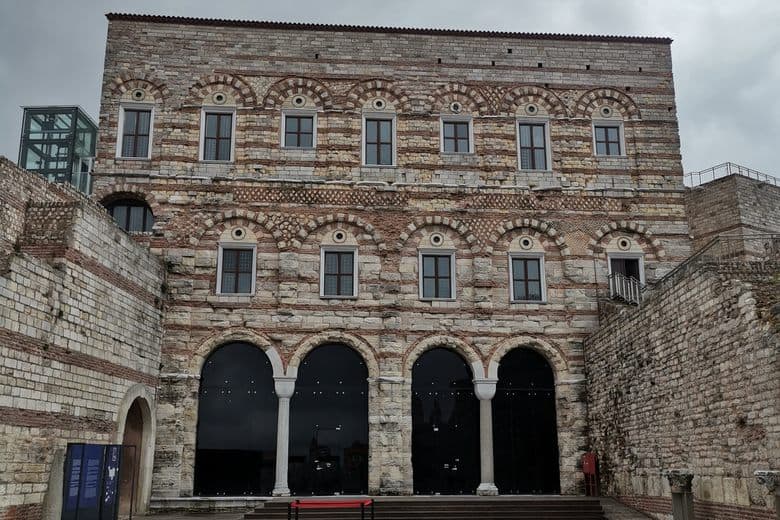
The Palace of the Porphyrogenitus, known locally as Tekfur Sarayı, is the last surviving secular Byzantine palace in Istanbul. Dating back to the late 13th century, it was once part of the larger Blachernae Palace complex, serving as a residence for Byzantine emperors. Its name, 'Porphyrogenitus' (purple-born), refers to children born to reigning emperors, signifying its imperial importance. Despite its historical significance, the current structure is a testament to centuries of decline and a controversial modern restoration.
Visitors often note the striking brick and stone facade, which hints at its Byzantine origins, but many are surprised by the extent of the 2010 restoration. Reviewers frequently mention that the interior feels very new, with modern floors, windows, and a roof, which can detract from the sense of ancient history. The museum primarily houses ceramics, which some find interesting, while others feel it doesn't fully capture the palace's imperial past. Those who appreciate architectural history, even with modern interventions, tend to enjoy their visit, focusing on the remaining Byzantine elements and the connection to the nearby Theodosian Walls.
To make the most of your visit, allocate about an hour. It's best visited during daylight hours to appreciate the exterior architecture. Consider combining your visit with the nearby Chora Church (Kariye Museum), as the palace is just a five-minute walk away. There isn't much in the immediate vicinity for food or extensive shopping, so plan accordingly. While the restoration is extensive, focusing on the remaining original brickwork and imagining the palace's strategic location along the city walls can enhance the experience.
The palace is located in the Ayvansaray neighborhood, close to the Theodosian Walls. The most convenient way to reach it is often by taking a bus or taxi. Several bus lines pass through the area; check local transport apps for the most current routes to stops like 'Ayvansaray' or 'Balat'. From these stops, it's a short walk. Alternatively, a taxi or ride-sharing service can drop you directly at the entrance. Parking in the narrow streets can be challenging, so public transport or a taxi is generally recommended.
A common complaint among visitors is the feeling that the extensive restoration has stripped the palace of its authentic historical atmosphere, making it feel more like a modern reconstruction than an ancient ruin. To mitigate this, manage your expectations: approach it as a site that showcases both Byzantine architecture and the challenges of preserving such structures. Focus on the exterior details and the strategic location rather than expecting a fully preserved ancient interior.