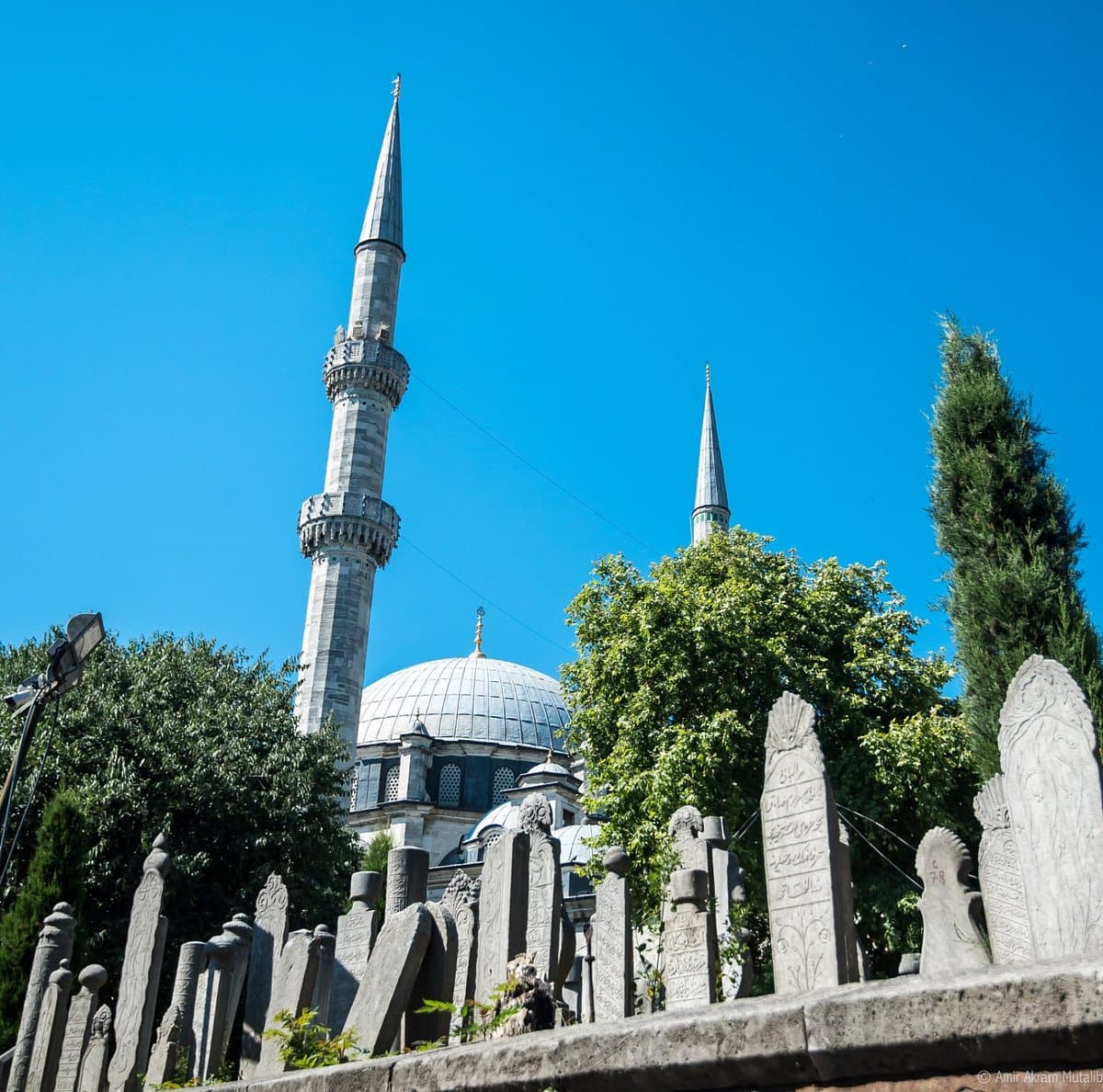
The Eyüp Sultan Mosque, or Eyüp Sultan Camii, is one of Istanbul's most sacred and historically significant Islamic sites. It was the first mosque built by the Ottomans after the conquest of Constantinople in 1453 and is revered as the burial place of Abu Ayyub al-Ansari, a close companion of Prophet Muhammad. This makes it a major pilgrimage destination, particularly for Muslims, and a place of profound spiritual importance.
Visitors frequently praise the mosque for its serene and peaceful atmosphere, noting it feels more authentic and less touristy than other major Istanbul mosques. Many describe a strong sense of spirituality and tranquility, especially around the tomb of Abu Ayyub al-Ansari. The mosque's architecture, though rebuilt in the 19th century in a Baroque style, is appreciated for its beauty, intricate tile designs, and vibrant blue carpets. The surrounding complex, with its historic cemetery, ancient trees, and 18th-century fountains, adds to the overall charm and sense of history. Reviewers often highlight the welcoming nature of locals and the opportunity to observe genuine worship.
To make the most of your visit, consider arriving early in the morning, especially on weekdays, to experience the mosque in a quieter state before it becomes crowded. Fridays, particularly during prayer times, are noted to be very busy. Dress modestly, covering shoulders and knees; women should bring a headscarf, though some are available on-site. Many visitors recommend combining the mosque visit with a trip to Pierre Loti Hill via the cable car (Teleferik) for panoramic views of the Golden Horn. The area around the mosque offers numerous local shops and eateries with more reasonable prices than central tourist areas, making it a good spot for souvenirs and authentic Turkish food. Allow 2-3 hours to fully explore the mosque, tomb, and surrounding area, including a potential trip to Pierre Loti Hill.
The Eyüp Sultan Mosque is located in the Eyüp district, outside the main tourist areas. Public transport is highly recommended. Many visitors suggest taking a bus from Eminönü (lines like 99A are mentioned) or a ferry along the Golden Horn, which offers scenic views and drops you directly at Eyüp. The T5 tram line from Eminönü is also a convenient option. If using an Istanbulkart, ensure it is sufficiently charged, as recharging stations might not always be readily available at the Eyüp Teleferik. Taxis are also an option, with fares from Sultanahmet noted to be around 40 TL by some reviewers. The mosque is easily walkable from the ferry or bus stops.
A common complaint among some non-Muslim visitors is the lack of clear signage or information in English regarding the historical significance of various parts of the complex, particularly the tomb. To mitigate this, it's advisable to research the history of Abu Ayyub al-Ansari and the mosque before your visit. While the mosque is generally welcoming, some female visitors have noted that the women's prayer area can be less ornate or separate from the main prayer hall. Be prepared for crowds, especially during peak pilgrimage times or on Fridays, and maintain respectful behavior as it is an active place of worship.