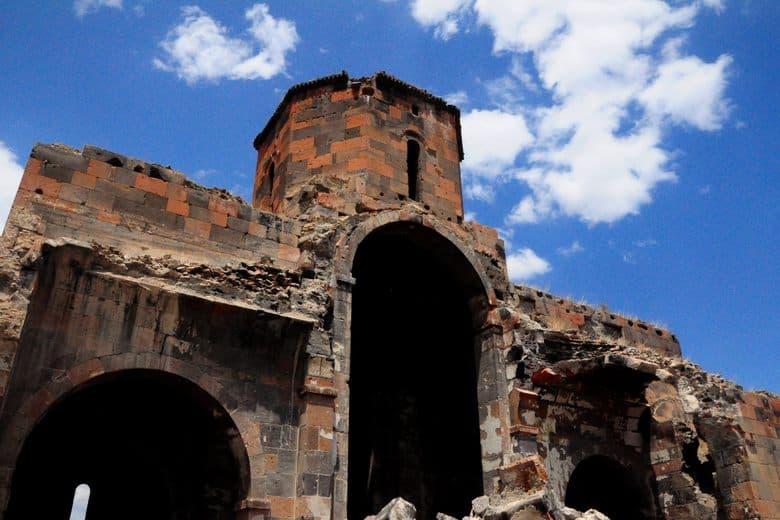
The Cathedral of Mren is a remarkable relic of early medieval Armenian architecture, dating back to the mid-7th century. Located in a remote area near the Turkish-Armenian border, it stands as a testament to a period of significant historical and cultural exchange. Its distinctive construction features alternating black and red masonry bricks, giving it a unique, almost Lego-like appearance. Inside, visitors might find surprisingly well-preserved devotional paintings and etchings, offering a glimpse into its past.
However, visitors should be aware that this site is not open to the public. Access requires explicit permission from the Turkish government, a process that can be lengthy and complex. This makes spontaneous visits impossible and limits its appeal to those with a deep, specialized interest in early Christian architecture or regional history who are willing to navigate bureaucratic hurdles.
Given its remote location and the requirement for special permits, practical advice for a visit is limited. There are no public transport options, and reaching the site would likely involve private transportation to Karabağ Köyü, followed by further arrangements. It is crucial to secure all necessary permissions well in advance of any travel plans. Without official approval, attempting to visit the site is not advisable.
The primary complaint from those interested in the site is its inaccessibility. The cathedral is in a state of disrepair, with parts of its structure, such as the southern wall, having already collapsed. While this protects it from human interference, it also means the site is unstable and potentially dangerous. Mitigation involves understanding that this is a site for academic or highly specialized interest rather than general tourism, and respecting the access restrictions.