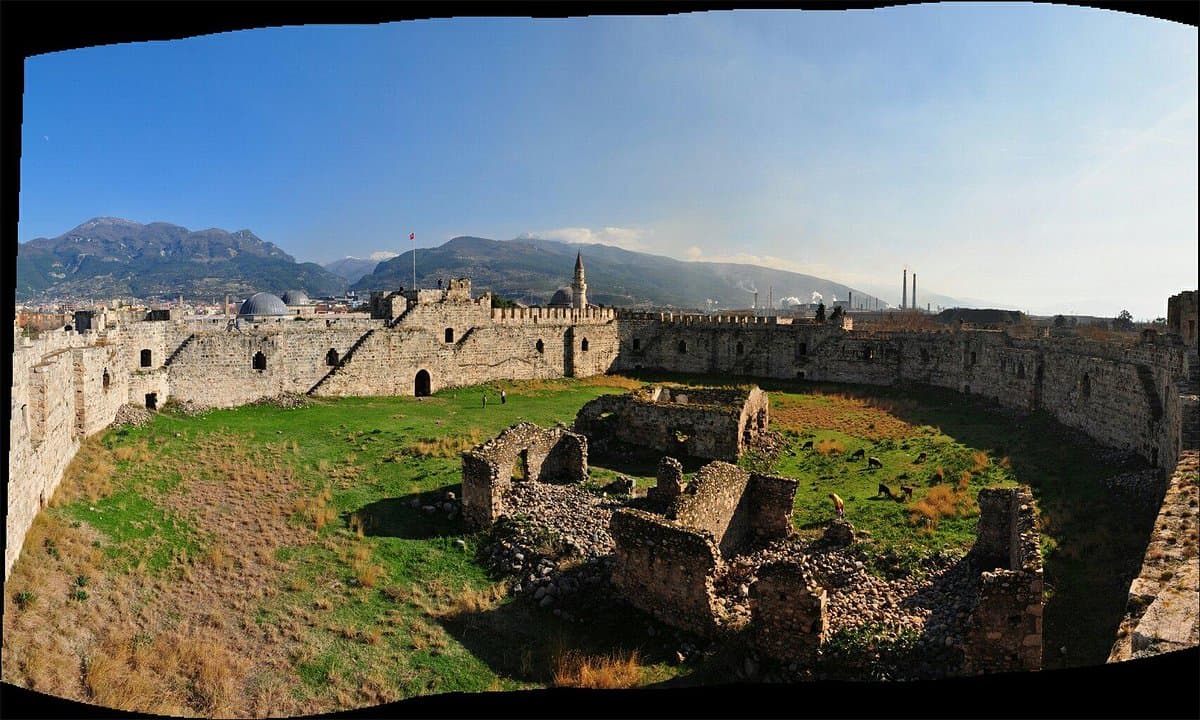
Payas Fortress is a significant historical site located in the Hatay Province of Turkey, forming part of a larger 16th-century Ottoman complex. This well-preserved compound, built during the reign of Sultan Selim II, served as a crucial stop on the trade routes and a defensive structure. It offers a tangible connection to the Ottoman Empire's strategic and architectural prowess, making it a valuable destination for those interested in regional history.
Visitors consistently praise the excellent condition of the entire complex, often highlighting the adjacent Sokollu Mehmet Pasha Caravanserai and the Sarı Selim Mosque as particularly impressive. Many reviewers note the intricate details, such as the hieroglyphics over the caravanserai's entrance, and the serene atmosphere within the mosque's courtyard, which features an ancient olive tree. The ability to explore the various structures, including the Turkish bath and bazaar within the caravanserai, adds to the immersive experience.
To make the most of your visit, allocate at least 1-2 hours to explore the fortress, caravanserai, and mosque. Reviewers suggest that the site is accessible throughout the day. Consider visiting in the morning or late afternoon to avoid the midday heat, especially during summer months. There are no specific items to bring beyond standard travel essentials, but comfortable shoes are advisable for walking around the historical grounds. The complex is generally easy to navigate, and visitors appreciate the freedom to explore at their own pace.
The fortress is located in Payas, near Dörtyol, and is approximately 20 kilometers from İskenderun. While specific public transport details are not widely mentioned in reviews, reaching Payas typically involves driving or taking a local bus from larger nearby towns like İskenderun or Antakya. Parking is generally available outside the complex, making it convenient for those traveling by car. Once in Payas, the fortress and its surrounding structures are centrally located and easily accessible on foot.
Common complaints are minimal, primarily stemming from the site being less well-known than other major Turkish attractions, which might lead to fewer amenities or English-language explanations. However, the well-preserved nature of the site and the ability to explore freely often outweigh these minor issues. Visitors recommend taking the time to appreciate the historical context of each building to fully enjoy the experience.