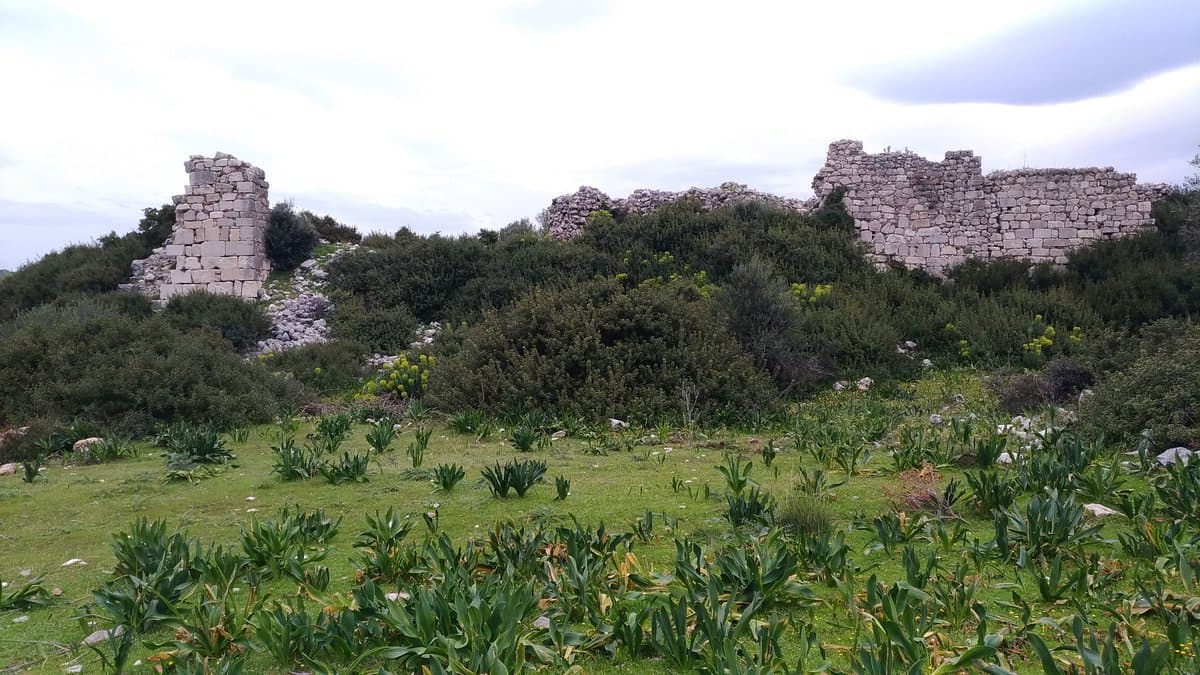
Hadrian's Granary, or the Horrea Hadriani, was a monumental Roman structure built in the 2nd century AD during the reign of Emperor Hadrian. Located in the ancient city of Patara, it served as a vital storage facility for grain, underscoring Patara's importance as a major port and trading hub in the Lycian region. Its substantial size reflects the scale of agricultural production and trade that passed through this bustling ancient city.
Visitors consistently note the granary's impressive scale, describing it as a "large building." However, its current state of reconstruction is a significant theme in recent reviews. Several visitors mention the presence of cranes and workers, indicating active restoration efforts. While some appreciate the opportunity to observe the rebuilding process, others might find the construction detracts from the ancient atmosphere.
Reaching the granary requires a dedicated effort. It is situated on the opposite side of what was once the ancient harbor, an area now largely silted up and marshy. Reviewers suggest a "long walk" to get close, which can be challenging, especially in the heat. There are no specific recommendations on what to bring, but comfortable walking shoes, water, and sun protection are advisable given the potential for a lengthy trek in an exposed area. Plan to spend about 30-60 minutes exploring the granary itself, once you arrive.
The granary is located within the broader Patara archaeological site. Access to Patara typically involves an entrance fee. From the main entrance of Patara, visitors will need to navigate towards the ancient harbor area. Given the distance and terrain, driving or taking a taxi within the site might be an option, though walking is also possible for those prepared for it. There is no specific public transport directly to the granary itself; it's part of the larger Patara complex which is usually accessed by car or local dolmuş (minibus) to the main site entrance.
The primary complaint revolves around the difficulty of access and the ongoing reconstruction. To mitigate this, visitors should be prepared for a substantial walk and understand that the site is not in a pristine, untouched state. Those seeking perfectly preserved ruins might be disappointed, but those interested in the archaeological process may find the active restoration fascinating.