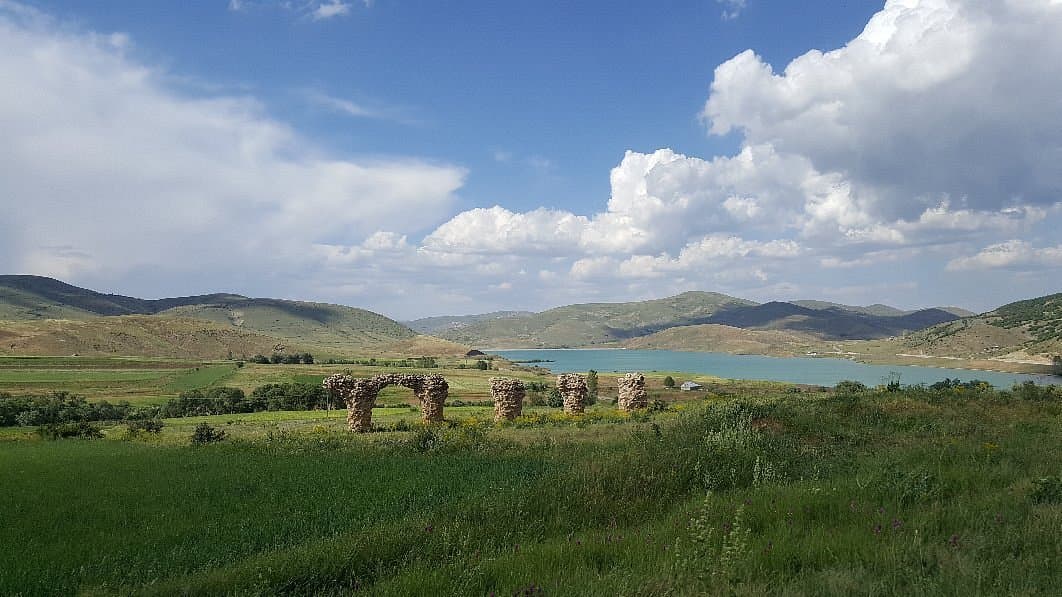
Satala Ancient City, known locally as Sadak, holds historical significance as the site of a major Roman legionary camp, specifically the base for Legio XV Apollinaris. Strategically located in what was once Armenia Minor, it served as a crucial outpost on the eastern frontier of the Roman Empire. While its past importance is undeniable, the visible remains today are modest, offering a quiet reflection on its former glory rather than grand architectural displays.
Visitors consistently note the site's tranquil atmosphere and its appeal to those who appreciate history without the crowds. Reviewers describe finding scattered architectural fragments, remnants of walls, and a general sense of an ancient settlement. The experience is often characterized by a peaceful walk through a rural landscape, where one can imagine the Roman presence. It's particularly praised by those who enjoy exploring less-commercialized historical locations and have an interest in Roman military history.
To make the most of your visit, allocate about 1-2 hours. Bring comfortable walking shoes, as the terrain can be uneven, and water, especially during warmer months, as there are no facilities on site. A good guidebook or prior research on Satala's history will significantly enhance your understanding and appreciation of the sparse remains. The best time to visit is during the cooler parts of the day, either early morning or late afternoon, to avoid the midday sun.
Satala Ancient City is located near the village of Sadak in the Kelkit district of Gümüşhane. Given its remote location, reaching the site typically requires a private vehicle or a taxi from nearby towns like Kelkit or Gümüşhane. Public transport options are limited, and visitors should plan their transportation in advance. The site is not well-signposted, so using GPS coordinates (40.1239, 39.43052) is highly recommended for navigation.
A common complaint among visitors is the lack of extensive visible ruins and interpretive signage. To mitigate this, manage your expectations by understanding that this is an archaeological site with limited standing structures. Bringing a detailed map or historical information about the site can help you identify what you are seeing and connect with its past importance.