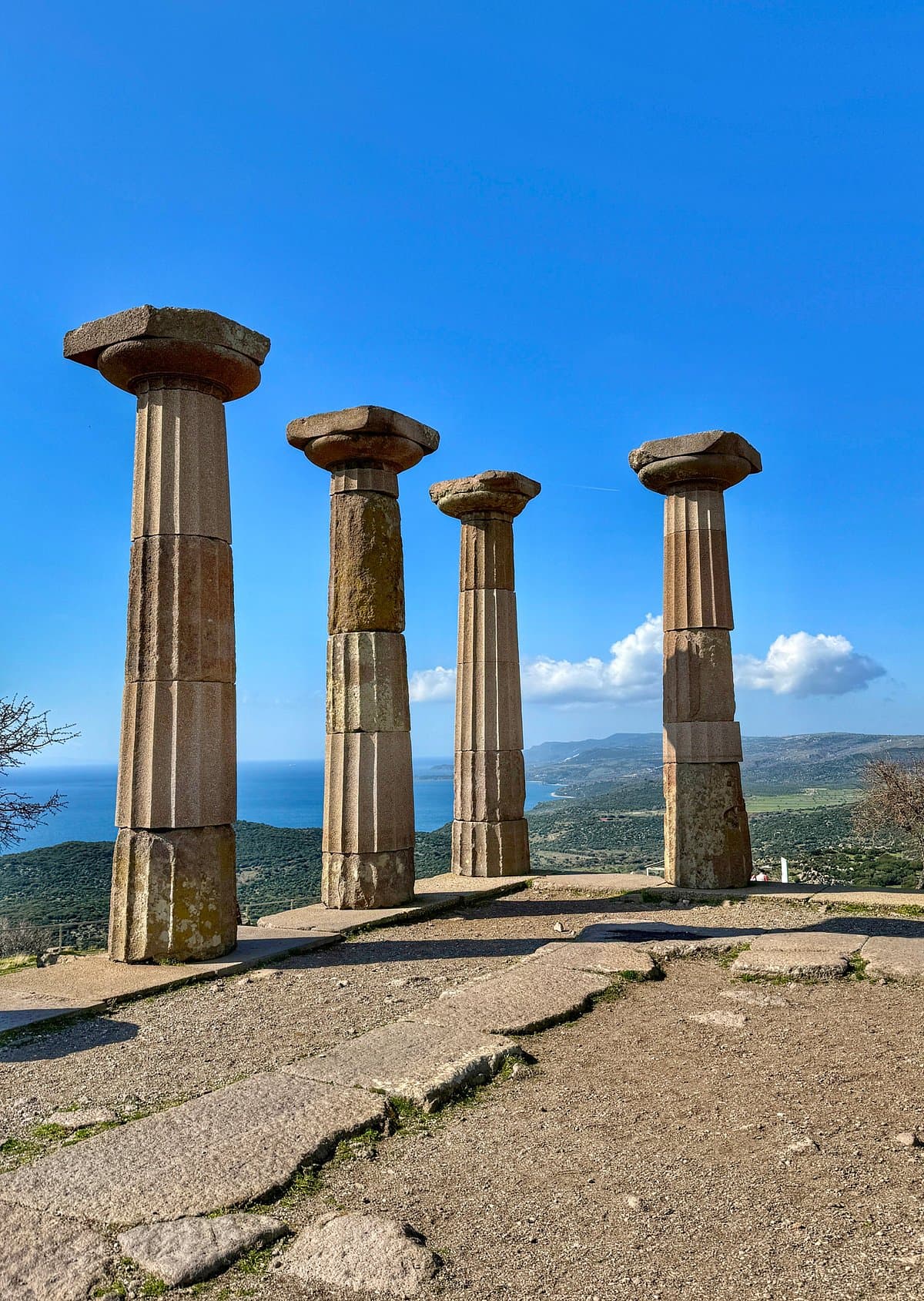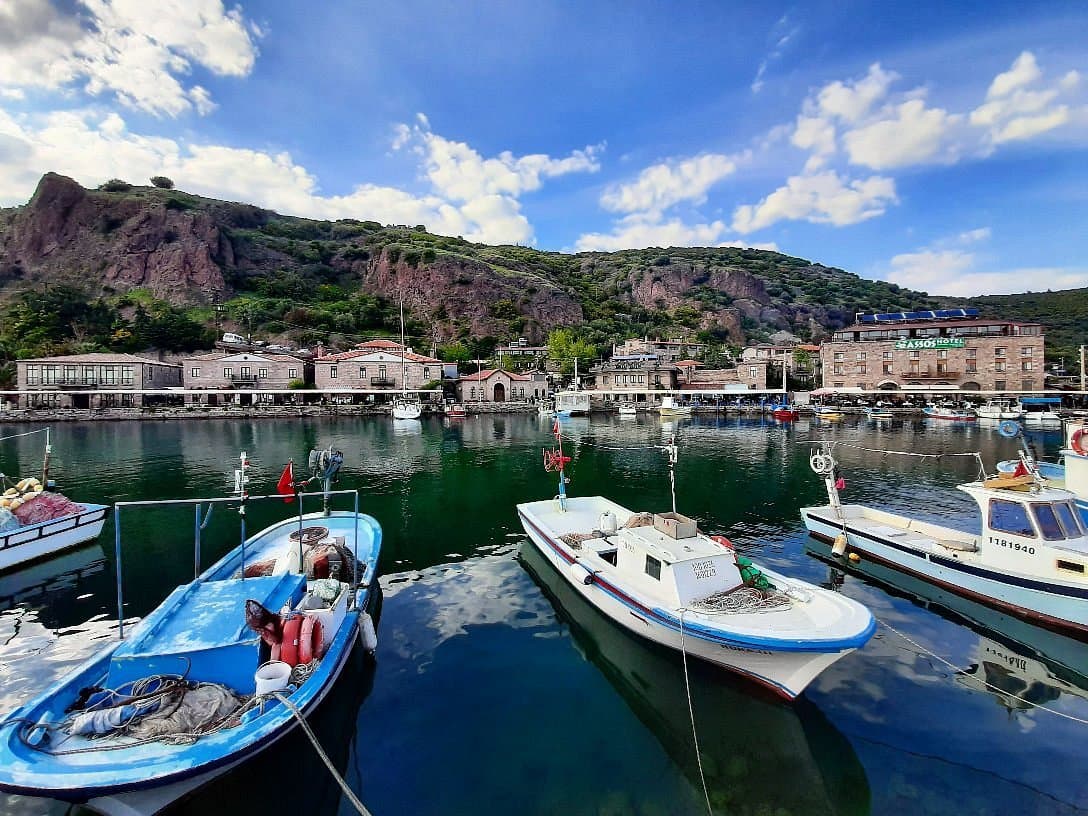
Behramkale, often referred to as the upper town of ancient Assos, is a captivating hilltop village that seamlessly blends historical significance with authentic local charm. It's home to the impressive ruins of the ancient city of Assos, including the Temple of Athena and a castle, alongside Ottoman-era structures like a mosque. This unique combination offers visitors a glimpse into millennia of history, from Greek antiquity to the present-day tranquil village life.
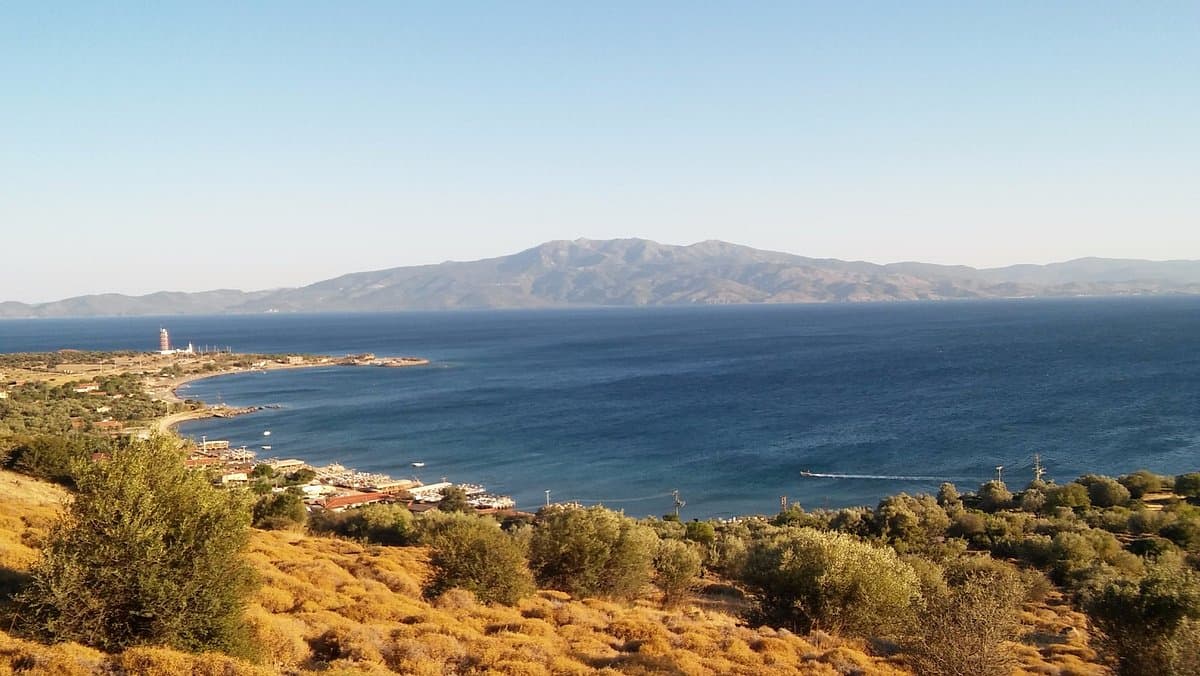
Visitors consistently praise Behramkale for its serene atmosphere, stunning Aegean Sea views, and the opportunity to experience a less commercialized side of Turkey. Many enjoy wandering the narrow, winding cobblestone streets, discovering small shops selling local products like organic soaps, olive oil, spices, and unique accessories. The village's stone house architecture is frequently highlighted as beautiful, contributing to its picturesque quality. The sunsets from the hilltop are particularly lauded as magnificent, making it a popular spot for evening visits.
To make the most of your visit, plan to spend 2-3 hours exploring the village and the ancient ruins. Many suggest arriving in the late afternoon to catch the sunset from the Temple of Athena. Wear comfortable shoes suitable for walking on uneven cobblestone streets and uphill paths. While there are numerous souvenir stalls, some visitors recommend seeking out unique artists in their workshops for more authentic finds. Don't miss trying local delicacies like black mulberry juice or cherry juice. For those seeking tranquility, consider an overnight stay in one of the village's charming hotels.
Reaching Behramkale requires navigating some challenging roads. Reviewers frequently mention narrow, rough, and winding roads, especially the ascent from the coast. While public minibusses (dolmuses) are available from nearby towns and stop directly in the village, driving offers more flexibility. If driving, be aware that parking can be limited; it's often advised to park on the side of the road before entering the village center, as the streets are very narrow. Some visitors note that the drive, though scenic, can be a bit daunting, especially for those with larger vehicles or during peak times.
A common complaint, though not universal, is the presence of some tourist traps and, in certain areas, litter. To mitigate this, focus on the historical sites and the upper village's more authentic artisan shops. While some areas might appear less pristine, the overall consensus is that the historical significance and natural beauty far outweigh these minor issues. If you're sensitive to animal welfare, be aware that some reviewers noted the presence of stray cats, which is common in many Turkish villages.