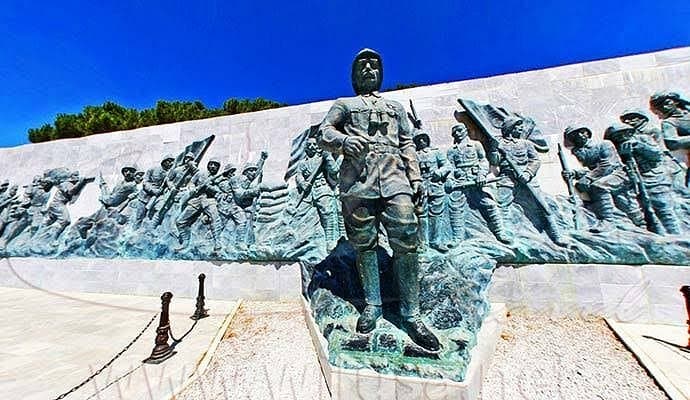
Akbaş Şehitliği, or Akbaş Martyrs' Memorial, is a significant historical site on the Gallipoli Peninsula, serving as a poignant reminder of the human toll during the First World War's Gallipoli Campaign. It functioned as a critical referral hospital and port during the war, where wounded soldiers were treated before being transported to Istanbul. This memorial is not a traditional burial ground but a representative site honoring the thousands who died from their injuries, often away from the front lines.
Visitors consistently praise the memorial for its well-organized and clean presentation, describing it as a place that evokes strong emotions and provides a clearer picture of the immense human sacrifice. Many reviewers highlight the solemn atmosphere and the goosebumps-inducing experience, emphasizing its importance as a first stop when entering the Gallipoli Peninsula from the Eceabat side. The site helps contextualize the brutality of the war, focusing on the suffering of those who died in medical care rather than directly in battle.
To fully appreciate the site, visitors recommend spending about 30-60 minutes here. It's best visited as part of a larger tour of the Gallipoli battlefields, ideally early in your itinerary to set the historical context. There is a souvenir and tea shop on-site, which can be a convenient stop. While the memorial itself is free to enter, consider bringing water, especially during warmer months, as you'll likely be doing a fair amount of walking across the peninsula.
Akbaş Şehitliği is located on the Gallipoli Peninsula, near Çanakkale. It is often the first significant memorial encountered when driving into the peninsula from the Eceabat side. There is no direct public transport to the memorial itself; visitors typically reach it by car, taxi, or as part of an organized tour from Çanakkale or Eceabat. Parking is generally available on-site.
A common point of clarification from visitors is that this is a memorial and not an actual burial ground with individual graves, which might be a misconception for some. Understanding its role as a representative martyrdom site for those who died in the referral hospital helps manage expectations and appreciate its historical significance more accurately.