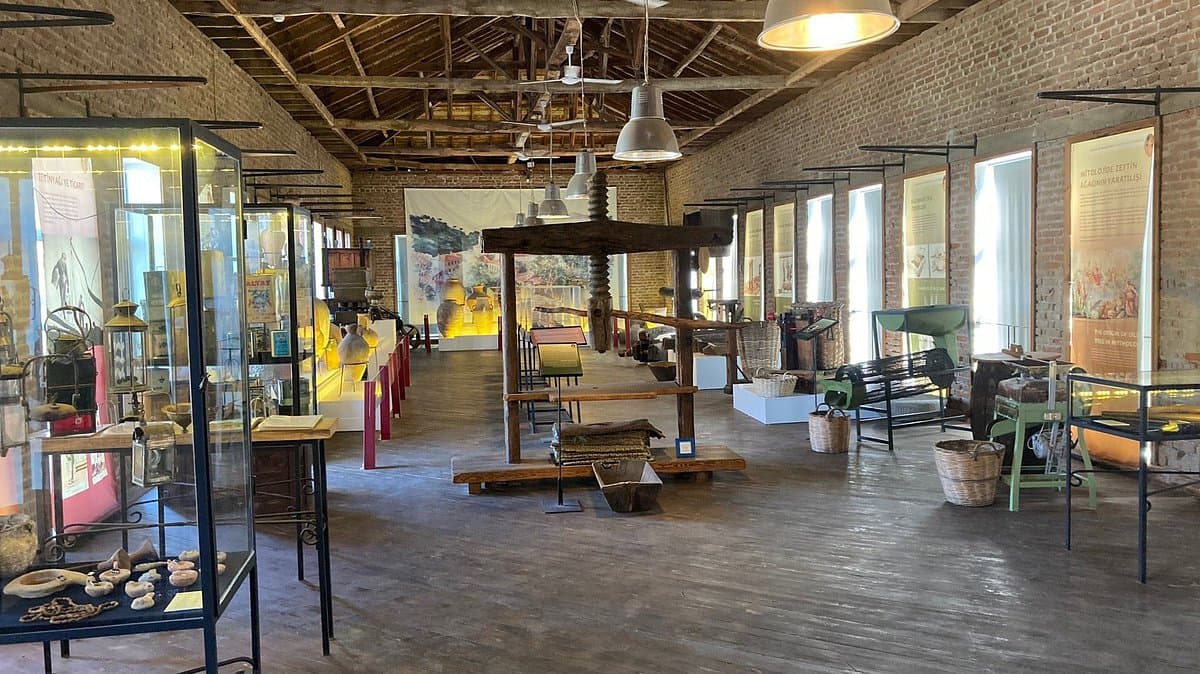
The Adatepe Olive Oil Museum, located near the village of Küçükkuyu, is a unique institution dedicated to preserving and showcasing the rich history of olive oil production in the North Aegean region of Turkey. Housed in a beautifully restored historic building that once served as a soap factory, the museum provides a comprehensive look at the evolution of olive oil extraction, from ancient techniques to more modern, yet still traditional, methods. It's an important cultural site that highlights the deep connection between the region and its most iconic agricultural product.
Visitors consistently praise the museum for its well-organized and informative displays, which feature original tools, machinery, and visual aids explaining the olive oil making process. Many reviewers highlight the museum's ability to transport them back in time, offering a clear understanding of the arduous journey from olive to oil. The bilingual (Turkish and English) explanations are frequently mentioned as a significant plus, making the exhibits accessible to a wider audience. Beyond the historical exhibits, the adjoining shop and café receive high marks. Reviewers often recommend purchasing local olive oils, soaps, and other olive-based products, noting their quality and the opportunity to taste various olive oils. The café is also a popular spot for a relaxing break, with some mentioning fresh bread dipped in olive oil and local beverages.
To make the most of your visit, allocate about 1 to 2 hours to explore the museum and browse the shop. While admission to the museum itself is free, visitors should budget for purchases at the well-stocked store, which offers a range of high-quality, albeit not always cheap, local products. The best time to visit is generally during daylight hours, allowing for comfortable viewing of both indoor and outdoor exhibits. Consider combining your visit with a trip to the nearby Zeus Altar or the charming village of Adatepe for a fuller experience of the area.
The museum is conveniently located on the highway connecting Çanakkale and Balıkesir, specifically within the Küçükkuyu district. Several reviewers mention its easy accessibility by car, suggesting it's simple to pull off the main road. While specific public transport details are not widely mentioned in reviews, its roadside location implies it's reachable by local buses or dolmuş (shared taxis) traveling between the larger towns in the region. Parking is generally available on-site or nearby, making it a hassle-free stop for those driving.
A common observation from visitors is that the museum, while informative, is relatively small. Some who have visited multiple olive oil museums found it less extensive than others. To mitigate any potential disappointment regarding its size, approach it as a focused, well-curated exhibition rather than a sprawling complex. The emphasis here is on quality of information and authentic artifacts, not sheer scale. Additionally, while the shop offers excellent products, some reviewers note that prices are not necessarily 'cheap,' so manage expectations if you're looking for bargains.