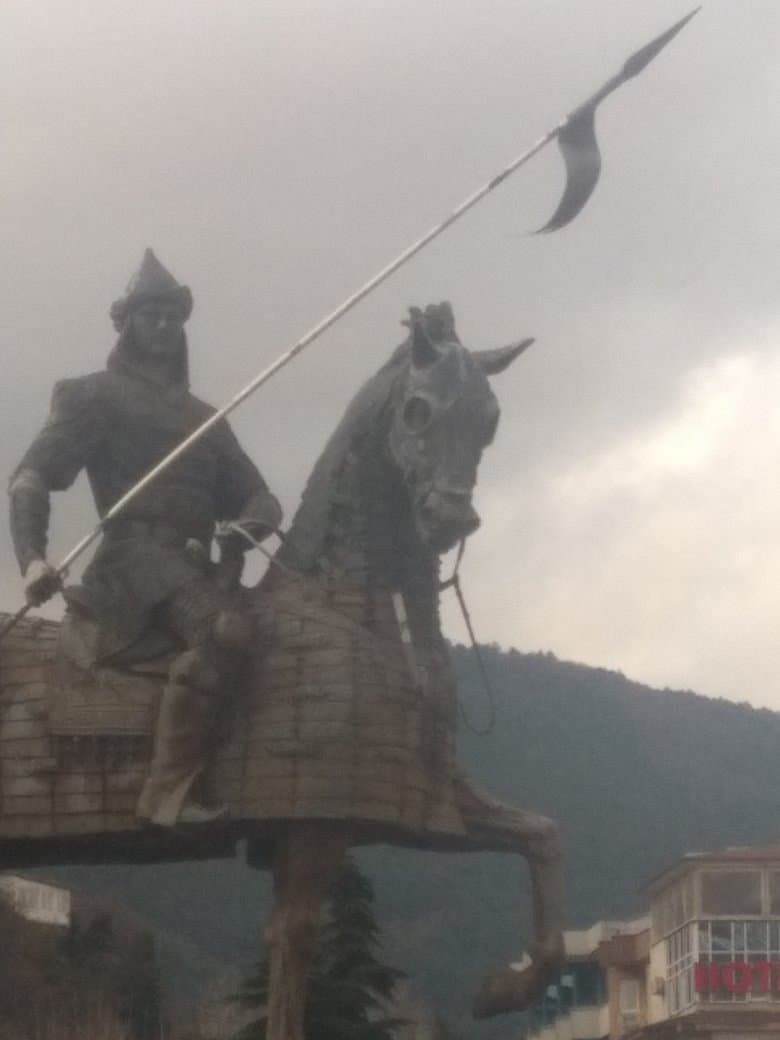
The Osman Gazi Heykeli Statue is a modern monument dedicated to Osman I, the revered founder of the Ottoman Empire. Located in Bursa, a city rich with early Ottoman history, the statue serves as a symbolic nod to the empire's origins. While its historical significance is undeniable, representing a pivotal figure in Turkish history, the statue itself is a contemporary work rather than an ancient artifact.
Visitors consistently describe the statue as a straightforward, modern depiction. Reviews suggest that while it's a nice tribute, it doesn't possess the grandeur or intricate detail that might make it a primary tourist attraction. It's often seen as a quick stop, primarily for those passing through Fomara Square or with a specific interest in the historical figure. There are no particular features that visitors praise or warn about, indicating a generally neutral experience.
For those who choose to visit, a brief stop of 5-10 minutes is sufficient to view the statue and perhaps take a photograph. There's no entry fee, and it's an open-air monument, accessible at any time. It's best viewed during daylight hours for clear visibility. No special items are needed, and there are no specific practical tips from visitors beyond acknowledging its modern aesthetic.
The statue is located in Fomara Square in Bursa, a central and easily accessible area. Public transportation options, such as local buses and dolmuş (shared taxis), frequently pass through or near the square. Visitors can typically reach Fomara Square by bus from various parts of Bursa. It's a prominent landmark, so local drivers and residents can easily direct you. Parking might be available in surrounding areas, but public transport is generally recommended for ease of access in city centers.
Common complaints are minimal, primarily stemming from visitors expecting a more elaborate or historically 'authentic' monument, given the importance of Osman Gazi. To mitigate this, approach the statue as a modern commemorative piece rather than an ancient relic. Its value lies more in its symbolic representation than its artistic complexity.