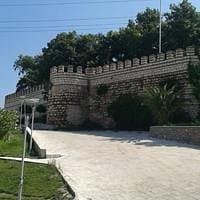
Kestel Castle, or Kestel Kalesi, stands as a historical remnant from the Byzantine era, having once functioned as a significant administrative center. While Bursa is more widely known for its Ottoman heritage as the empire's first capital, this castle provides a window into the region's earlier, less-explored past, offering a different historical perspective.
Visitors generally find the castle to be well-maintained and appreciate its historical significance. Several reviewers highlight the evening illumination as a particularly attractive feature, suggesting that a visit during dusk or after dark can enhance the experience. The castle's relatively preserved state allows for an imaginative journey back in time, even if the site itself is not extensive.
For those planning a visit, a short amount of time, perhaps 30 minutes to an hour, is sufficient to explore the castle. It is best visited by those with a specific interest in Byzantine history or as a brief detour if already in the eastern part of Bursa. There are no specific items to bring, but comfortable walking shoes are always advisable for historical sites. Consider visiting in the late afternoon to experience both daylight views and the illuminated castle.
Kestel Castle is situated approximately 12 kilometers east of Bursa city center. While Bursa itself has a good public transport system, including buses and a metro, reaching Kestel Castle specifically might require a combination of public transport and a short taxi ride, or a direct taxi/private car. If using public transport in Bursa, visitors are advised to purchase a Bursa travel card, which can be used by up to four people. The exact bus lines or metro stations connecting directly to Kestel Castle are not widely detailed in reviews, suggesting a taxi or ride-sharing service might be the most convenient option from the city center. The address is Hacilar Sokak 12, Bursa.
Common complaints are not explicitly detailed in reviews, but the castle's relatively small size and distance from the main city attractions mean it might not meet the expectations of those looking for a grand, expansive historical site. To mitigate this, set appropriate expectations and view it as a niche historical stop rather than a primary destination.