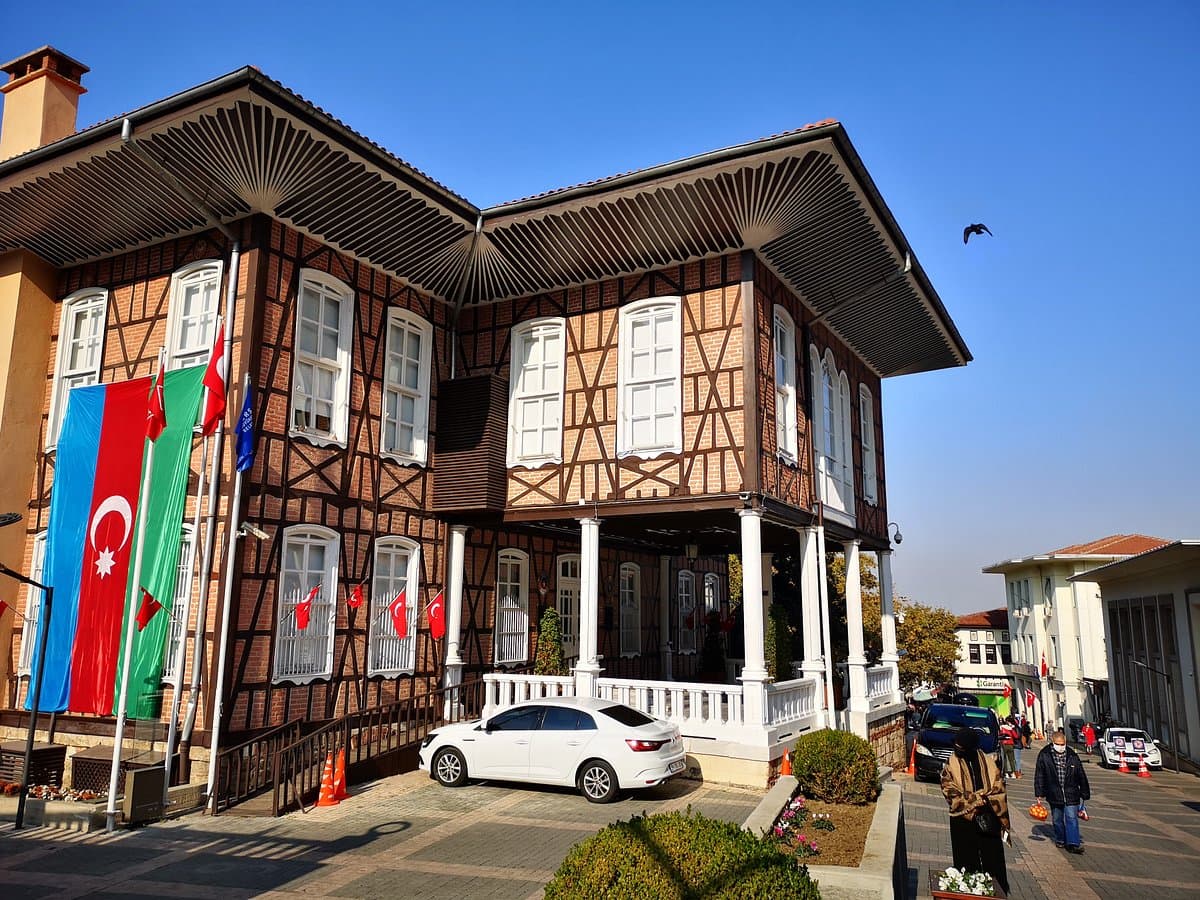
The Bursa Town Hall, or Bursa Belediye Binası, is a significant historical landmark in the city, with its construction dating back to 1867. Built during the time of Ahmet Vefik Pasha, it showcases Ottoman architectural features, yet visitors often note a distinct Western influence in its design, particularly its unique half-timbered style. It stands out from many older buildings in the Osmangazi area, representing a later period of Ottoman civic architecture.
Visitors consistently praise the building's striking appearance and its central location. Many reviewers describe it as an "eye-catcher" and "magnificent," appreciating its well-protected and maintained condition. While it no longer functions as the main administrative center, it frequently hosts art exhibitions, which several visitors found enjoyable. Some reviewers mention that it's worth slipping inside for a moment to appreciate the interior and the historical context, with one even noting the presence of English literature and the unique double stairs, reportedly used by grooms and brides separately.
To make the most of a visit, plan to spend about 30-60 minutes exploring the exterior and any current exhibitions. It's best visited during daylight hours to fully appreciate its architectural details. No specific items are required, but a camera is recommended for its photogenic facade. Since it's not a primary museum, don't expect extensive interpretive displays, but rather appreciate it as a historical structure and a venue for local art. There is no entry fee mentioned by reviewers, suggesting access to public areas or exhibitions is free.
The Town Hall is very easy to reach due to its central location in the heart of Bursa. Multiple reviewers highlight its accessibility by public transportation and shared taxis. It is situated on Atatürk Caddesi, a main thoroughfare, making it a convenient stop if you are exploring the city center on foot or using local transport.
A common sentiment among visitors is that while the building is beautiful, its potential as a public museum is underutilized. Some express a wish for it to be more openly accessible or to house more permanent historical exhibits. However, for those interested in architecture or local art, its current use as an exhibition space provides a pleasant, albeit brief, cultural experience.