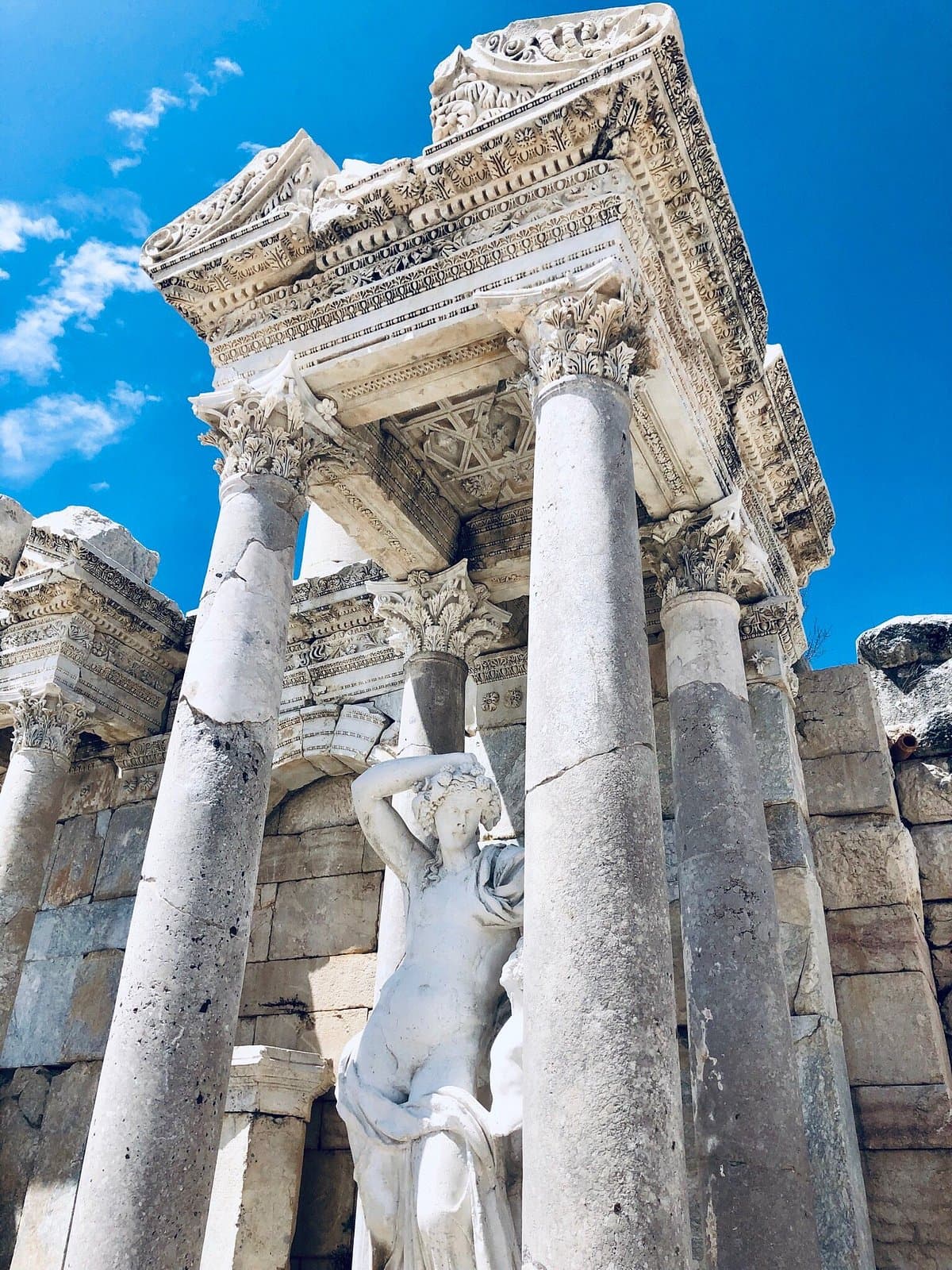
Sagalassos, an ancient city of Pisidia, stands majestically at an altitude of 1600 meters in the Taurus Mountains. Once a flourishing Roman city, it offers a captivating blend of history and natural beauty. Its significance lies not only in its impressive ruins, including a grand theater, agoras, and baths, but also in the ongoing, meticulous restoration efforts that bring its past to life, notably the Antonine Nymphaeum with its still-flowing water.
Visitors are consistently captivated by the stunning mountain views and the tranquil atmosphere, often noting the absence of large tourist crowds, which allows for a more immersive experience compared to more famous sites like Ephesus. The highlight for many is the Antonine Fountain, where water has continuously flowed for centuries, offering a tangible connection to the past. Reviewers frequently commend the quality of the explanatory signage, which provides valuable context without being overly academic. The site's expansive nature means there's a lot to explore, from the upper and lower agoras to the theater and various other structures, with many expressing a desire to spend more time than initially planned.
To make the most of your visit, wear comfortable walking shoes suitable for uneven terrain and bring plenty of water, especially during warmer months, as shade is limited and facilities might not always be open. Many suggest dedicating at least 3-4 hours to fully appreciate the site, with some recommending a full day. Visiting in the morning or late afternoon is advised for better light and cooler temperatures. For an enhanced experience, consider visiting the Burdur Museum either before or after Sagalassos, as it houses many original artifacts and statues from the site. Some visitors also recommend asking for the key to the library at the entrance to see a beautiful mosaic.
Sagalassos is somewhat off the beaten path, making personal transport the most convenient option. The drive from Antalya takes about 1.5 to 2 hours. The road leading up to the site from Ağlasun village is described as winding and mountainous, with some sections potentially unpaved or under construction, so caution is advised. While public transport to Ağlasun is possible (e.g., by dolmuş from Isparta), the 7 km uphill walk from the village to the site is strenuous and not recommended, especially in heat. Hitchhiking from Ağlasun has been mentioned by some, but a taxi or pre-arranged transfer is a more reliable alternative for those without a car. The site has a small car park, which is generally sufficient due to fewer visitors.
A common complaint, particularly from earlier reviews, was the lack of clear signage on-site, making it difficult to identify structures. However, more recent reviews indicate significant improvements in this area, with many praising the informative boards. Another point of concern is the limited availability of food and drink, with the cafe sometimes closed, so it's best to come prepared with snacks and drinks. The weather can also change quickly in the mountains, so bringing layers is a good idea, and visiting in winter might mean encountering snow, making some areas slippery.