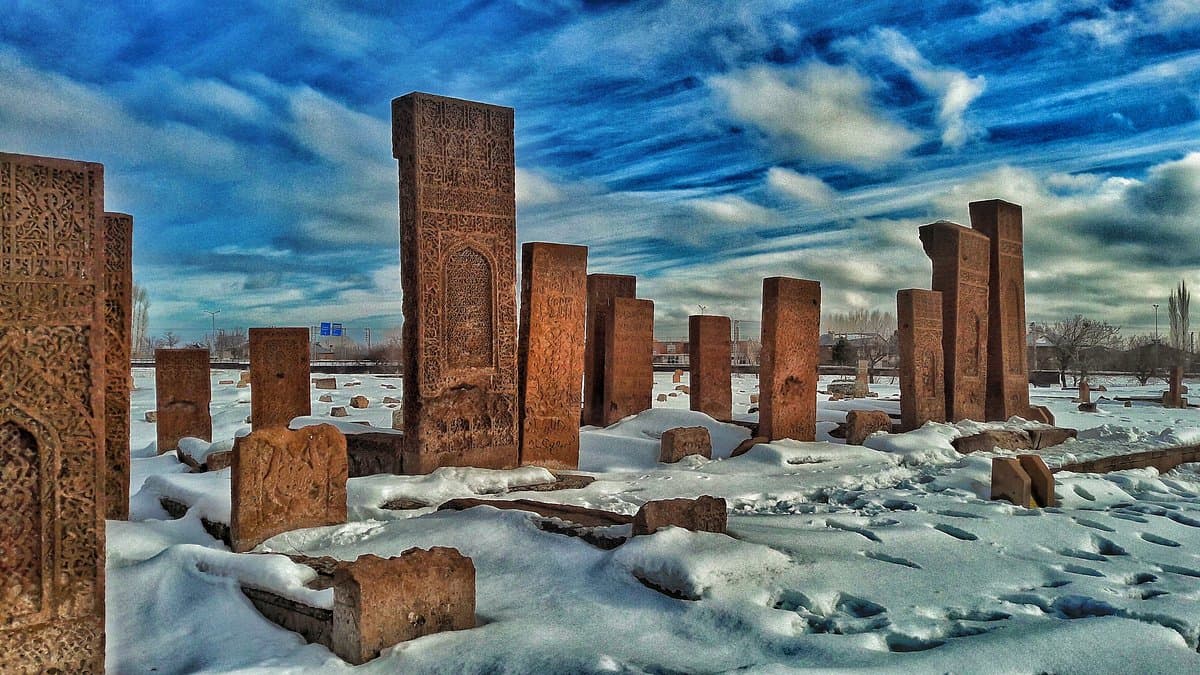
The Ahlat Seljuk Square Cemetery, also known as Ahlat Mezar Taşları, is one of the largest and most significant Seljuk cemeteries in the world, often referred to as the "Kubbetul Islam" (Dome of Islam) due to its historical importance. This sprawling site contains an estimated 8,000 to 10,000 tombstones, some dating back to the 12th century, showcasing exceptional craftsmanship and offering a unique glimpse into Seljuk funerary art and culture. The cemetery is a candidate for the UNESCO World Cultural Heritage List, underscoring its global significance.
Visitors consistently praise the unique and impressive nature of the tombstones, noting their intricate carvings and the sheer number spread across a vast area. Many are surprised by the scale of the site, which is much larger than anticipated. The dark brown volcanic stone used for the monuments, combined with the scenic backdrop of Lake Van and the snowy Mount Suphan, creates a highly atmospheric and photogenic experience. Reviewers frequently highlight the feeling of stepping back in time and the profound historical resonance of the place.
To make the most of your visit, allocate at least 1-2 hours to explore the site thoroughly. The cemetery is largely open-air, so wear comfortable walking shoes and consider bringing water, especially during warmer months. While there are pathways, the terrain can be uneven in places. Early mornings or late afternoons are recommended for softer light and fewer crowds. Entry is free, making it an accessible historical attraction. A small museum and café are available on-site, and explanations are provided in English.
The cemetery is conveniently located right alongside the main road (D965) near Ahlat, making it very easy to find. Several visitors mention taking minibuses (dolmuşes) from nearby Tatvan or Bitlis; simply ask the driver to drop you off at the cemetery. If driving, there is ample space to park. The site is a couple of kilometers west of Ahlat town center, directly on the lakeshore road.
While most visitors have overwhelmingly positive experiences, some note that the vastness of the site can be overwhelming without a guide or prior research. To mitigate this, consider reading up on the history and significance of Seljuk tombstones before your visit to better appreciate the details. Although the site is well-maintained, the sheer number of stones means some are leaning or partially obscured, which is part of their ancient charm but might require careful navigation.