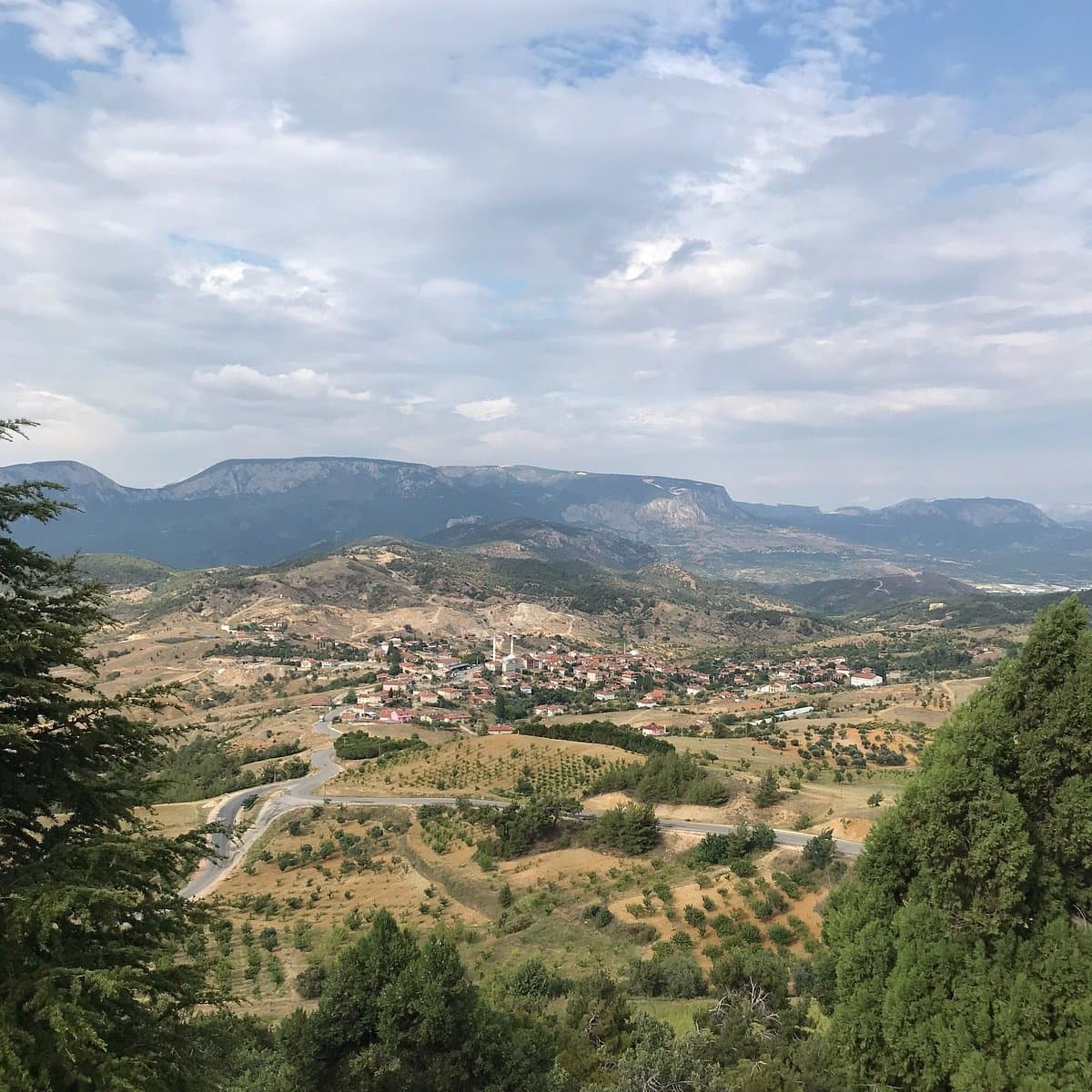
The Dursun Fakıh Tomb is a significant historical site located on a hill overlooking the town center of Söğüt. It comprises a mausoleum, a fountain, a mosque, and seating areas, forming a mini-complex dedicated to Dursun Fakıh. He was a pivotal figure in the early Ottoman Empire: a student and son-in-law of Sheikh Edebali, the first judge of the Ottoman Empire, and a witness to its foundation. His historical importance stems from his role as a Turkish scholar who lived in the 13th and died in the 14th century, contributing to the legal and religious framework of the nascent state.
Visitors consistently praise the peaceful and serene atmosphere of the complex, noting its well-maintained grounds and the beautiful panoramic views it offers over Söğüt. Many reviewers highlight the historical significance of Dursun Fakıh, emphasizing that the site provides a valuable connection to the foundational era of the Ottoman Empire. It's often described as a place for quiet reflection and learning about an important, albeit lesser-known, historical figure.
For a meaningful visit, allocate about an hour to explore the mausoleum, mosque, and enjoy the views. It's best visited during daylight hours to fully appreciate the scenery. There are no specific items to bring, but comfortable shoes are always advisable for exploring historical sites. This site is more about historical contemplation than grand architecture, so manage expectations accordingly.
The Dursun Fakıh Tomb is located in Bilecik, specifically in the Söğüt district. Reviewers indicate it's situated on a hill overlooking the town center. While specific public transport details are not readily available in reviews, reaching Söğüt typically involves intercity bus services. From Söğüt town center, it would likely be a short drive or taxi ride up the hill to the complex. Driving is a convenient option for those with a car, and parking is generally available on site or nearby.
A common point to consider is that while historically rich, the site might not offer extensive interactive exhibits or English-language signage beyond basic information. Visitors who are not well-versed in Ottoman history might find the experience less engaging without prior research. To mitigate this, consider reading up on Dursun Fakıh and the early Ottoman period before your visit to fully appreciate its significance.